
How US-Iran war affects fertiliser prices
Conflict in Iran and the Middle East is heightening global energy, fertiliser, and agri-food risks. Nigeria is already experiencing the effects of rising energy prices, which are impacting various sectors of the economy. On Monday, the Food and Agriculture Organization of the United Nations (FAO) raised an alarm that many countries in Africa and Asia […]
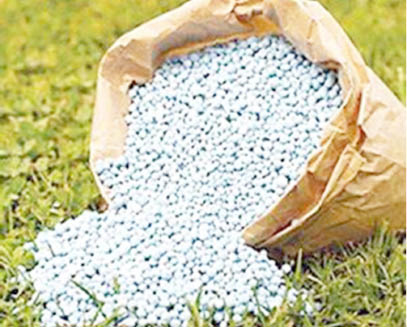
Fertiliser Application
Conflict in Iran and the Middle East is heightening global energy, fertiliser, and agri-food risks.
Nigeria is already experiencing the effects of rising energy prices, which are impacting various sectors of the economy.
On Monday, the Food and Agriculture Organization of the United Nations (FAO) raised an alarm that many countries in Africa and Asia are on the brink of a major disaster if the conflict persists.
The UN agency warned that reduced input usage by farmers will lead to lower crop production starting this year and continuing through 2027, increasing food prices and retail food inflation over the next few years.
Current prices
Fertiliser prices are already rising across major cities and farming communities.
A 50kg bag of urea fertiliser (Indorama and Dangote) sells for between N50,000 and N51,000, while NPK 15:15:15 goes for an average of N57,000 according to reports from major cities.
On the other hand, NPK 20:10:10, which was sold at the price of N5,000 during Buhari, goes for an average N51,000 in most shops.
Prices may vary slightly across locations due to logistics, distance, and accessibility.
Mr Samuel Ali, a Senior Fertiliser Market Specialist with the International Fertiliser Development Centre (IFDC), Abuja, said in an interview with Daily Trust that the industry will be negatively impacted to some extent.
“Nigeria is an import-dependent country. Even in our fertiliser manufacturing, more than half of the constituent elements required to make NPK are imported. You have MOP, DAP, and GAS (granular ammonium sulphate), which is currently one of our largest imports. Now, even though we have urea production plants here, the production itself is not spared. This is because when there is a global disruption in the flow of a commodity, demand for that commodity will exceed supply, as there is already a disruption,” he said.
The expert hinted that companies producing urea in Nigeria are now receiving huge orders from Brazil and other countries willing to pay higher prices.
Mr Ali said prices are escalating due to two primary factors. First, there is an imbalance between supply and demand in the global market, leading to increased costs. Second, domestic transportation and logistics expenses are rising, further contributing to the price hike.
Producers’ perspectives
Alhaji Sadiq Kassim, President of the Fertilizer Producers and Suppliers Association of Nigeria (FEPSAN), said there is no need for extreme concern for now, even though Nigeria is not isolated.
“This war will definitely have an impact on Nigeria because Nigeria is not an island. However, rather than viewing it purely as a disruption, geographically, Nigeria is far from the conflict zone. What has happened is that countries that previously sourced supplies from the conflict region are now turning their attention to us. Nigerian companies have now become attractive to countries that require fertiliser.
“As a country and as businesses, this is something we can strategically leverage—not because we seek conflict-driven gains, but to expand our reach and take over markets that were not previously ours,” Kassim said.
The FEPSAN president added that Nigeria might not be significantly affected because, in the case of NPK, the major raw materials that are not locally sourced come from countries outside the conflict zone.
“If you look at the three major inputs we import in large volumes—the phosphates from Morocco, potash from Russia, and ammonium sulphate from China—none are from the conflict zone. So, in that respect, we are not directly affected.
“However, Nigeria is part of the global economic system, so the impact is both positive and negative. There is a price spike due to anticipated shortages, increased logistics costs, and rising demand,” he said.
He noted that the country had already pre-ordered raw materials required up to the end of June 2026 before the conflict escalated adding that about 700,000 metric tonnes of NPK fertiliser and one million tonnes of urea sold locally.
“This year, our target is to produce 1.5 million tonnes of NPK fertiliser and balance the urea supply. We are still pursuing this target and have placed orders for at least one million tonnes of raw materials for production up to June,” he said.
He assured Nigerian farmers of adequate supply up to June, as most raw materials for blending are already available.
Muhammad Rufai Sule, Managing Director of Rusbi Agricultural Processing Company Limited, said fertiliser firms are expecting an impending hike in NPK fertiliser prices this season.
He said the primary driver is the sharp 40% increase in the cost of locally sourced urea from major suppliers, which he attributed to the global surge in natural gas prices caused by the conflict.
According to him, rising diesel costs are also escalating operational and logistics expenses.
Adulteration may spike – Expert
A seed systems expert, Dr Teryima Iorlamen, warned that the ongoing tensions involving the United States, Israel, and Iran could not only disrupt fertiliser supply and increase costs in Nigeria but also spur adulteration, with serious implications for food security.
Iorlamen, a Seed Systems Principal Investigator at Joseph Sarwuan Tarka University, said the conflict may trigger an influx of adulterated fertilisers into the Nigerian market.
He explained that some dealers engage in sharp practices by diluting genuine fertilisers to produce substandard products, thereby reducing quality.
He noted that the circulation of fake or substandard fertilisers could lead to poor crop yields per hectare and threaten national food security.
The expert called on the Federal Government to urgently intervene by subsidising genuine fertilisers and strengthening regulatory measures to curb malpractice.
With 2026 being an election year, experts say fertiliser demand will rise, as governments and politicians procure and distribute it to electorates as campaign incentives.
The Minister of Agriculture and Food Security, Senator Abubakar Kyari, said the ministry plans to distribute over one million bags of fertiliser to farmers nationwide.
Also, the National Agricultural Development Fund has budgeted over N50 billion for the Renewed Hope fertiliser support programme this year.
Producers say this is also likely to increase demand and further push up prices.