
Humanitarian crisis deepens in Gaza six weeks after ceasefire
The humanitarian crisis in Gaza has worsened despite a ceasefire between Israel and Hamas last month. Al Jazeera reports that nearly 400 Israeli violations of the truce have been documented by Gaza’s Government Media Office, resulting in at least 280 Palestinian deaths and more than 650 injuries. The truce, brokered by the United States and […]
gaza
The humanitarian crisis in Gaza has worsened despite a ceasefire between Israel and Hamas last month. Al Jazeera reports that nearly 400 Israeli violations of the truce have been documented by Gaza’s Government Media Office, resulting in at least 280 Palestinian deaths and more than 650 injuries.
The truce, brokered by the United States and announced on October 10, 2025, was intended to halt more than two years of devastating war in Gaza.
The truce was hailed internationally as a chance to stabilise the enclave and allow humanitarian relief to reach millions of Palestinians displaced or injured since the conflict escalated in October 2023, when Israel launched a massive military campaign that killed more than 69,000 Palestinians and wounded over 170,000.
Yet, despite the ceasefire, there have been violations, including airstrikes, drone attacks, and artillery fire in southern Gaza, particularly in Khan Younis and Gaza City.
On November 18, 2025, Israeli strikes killed at least one Palestinian and injured a woman and her child in Khan Younis. A day later, November 19, Al Jazeera reported that 28 Palestinians were killed and 77 wounded in a wave of Israeli attacks, one of the largest breaches of the ceasefire. The following day, November 20, at least 32 Palestinians were killed, including 12 children and 8 women, in coordinated strikes across Gaza.
These incidents show the fragility of the ceasefire. Hamas has accused Israel of deliberate violations and obstruction of humanitarian aid, warning that renewed escalation could follow if the truce collapses.
Humanitarian crisis
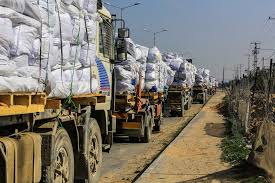
The humanitarian situation in Gaza remains dire. Despite the ceasefire, aid delivery has been restricted, with convoys often delayed or blocked.
Hospitals, already overwhelmed by years of bombardment, struggle to treat the wounded. Al Jazeera’s report from Gaza City highlights scenes of families carrying belongings past unexploded missiles, underscoring the daily risks civilians face.
The United Nations and aid agencies have repeatedly warned that Gaza’s population is on the brink of famine. Water shortages, collapsed sanitation systems, and destroyed housing have left hundreds of thousands in precarious conditions.
The ceasefire was supposed to allow large‑scale humanitarian assistance, but violations have hindered its implementation.
International reactions have been mixed. On November 17, 2025, Germany announced it was lifting restrictions on arms exports to Israel, citing the ceasefire as evidence of “stabilisation”.
Critics argue this move undermines humanitarian efforts, as Israeli strikes continue despite the truce. Meanwhile, mediators have floated the idea of an international stabilisation force for Gaza, though details remain unclear.
The humanitarian toll since the ceasefire is compounded by the legacy of the war. Families displaced in 2023 remain without permanent shelter. Schools and hospitals destroyed during earlier bombardments have not been rebuilt.
Al Jazeera reports that Palestinian civilians continue to bear the brunt of violence, with women and children disproportionately affected.
Meanwhile, Israeli strikes spilled over into Lebanon over the week as on Tuesday, November 18, 2025, Israeli warplanes struck the Ain al‑Hilweh Palestinian refugee camp near Sidon, killing at least 13 people and injuring four others, according to Lebanon’s Ministry of Public Health.
Israel claimed the camp was being used as a Hamas training compound, but Hamas denied the allegation. The attack marked one of the deadliest Israeli strikes in Lebanon since the ceasefire and highlighted the risk of the Gaza war spilling into neighbouring countries.
Just a day later, on November 19, 2025, Israeli forces carried out further airstrikes in southern Lebanon, targeting what they described as Hezbollah weapons storage facilities.
The strikes followed a drone attack earlier that day that killed one person and wounded several others, including students on a bus.
Analysts told Al Jazeera that Israel’s intensifying attacks on Lebanon suggest it may be preparing for a broader confrontation, raising fears of a new front opening along the northern border.
Timeline of key events since October 10 ceasefire
October 10, 2025: US‑brokered ceasefire between Israel and Hamas announced.
November 9, 2025: Hamas accuses Israel of repeated violations and obstruction of aid.
November 17, 2025: Germany lifts arms export restrictions to Israel, citing “stabilisation”.
November 18, 2025: Israeli strikes kill one Palestinian, injure a woman and child in Khan Younis.
November 19, 2025: At least 28 Palestinians killed, 77 wounded in Gaza attacks.
November 20, 2025: Israeli strikes kill 32 Palestinians, including 12 children and 8 women, in one of the deadliest days since the ceasefire.