
I resigned from PMAN to protect my name — Zaaki Azzay
Popular Nigerian musician, Zaaki Azzay, has been a household name since the 1990s. He is remembered for his trademark torchlight and socially conscious songs. After taking a break from the music scene, he is back with a remake of one of his classics, ‘Maata’, this time featuring a former Mavins star, Di’ja. In this interview, […]
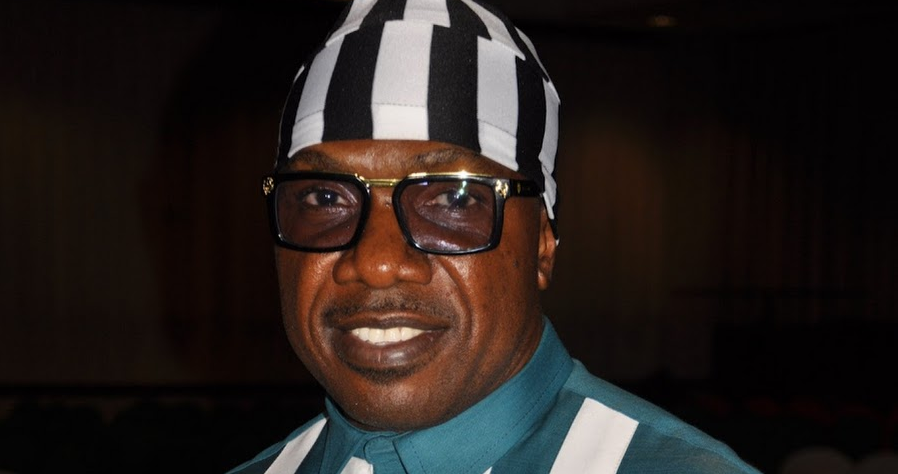
Popular Nigerian musician, Zaaki Azzay, has been a household name since the 1990s. He is remembered for his trademark torchlight and socially conscious songs. After taking a break from the music scene, he is back with a remake of one of his classics, ‘Maata’, this time featuring a former Mavins star, Di’ja. In this interview, he spoke about the inspiration behind the project, the changing face of the music industry, the internal crisis rocking PMAN and why he believes he can never stop making music.
I see you are still holding on to your torchlight. Why do you do that?
I won’t let it go. It is my covenant with God, so it has to stay. It is not just a fashion statement, it means something deeper to me.
You have a new song with Di’ja. What I find interesting is that it is a song you had over the years and decided to remake. Why now, after so many years?
Well, it is a very good song. A lot of people like it. It is evergreen. The meaning is good. I originally dedicated it to my mum for the respect I have for women and all that. It is a song about women empowerment. Respect women. Women are mothers; they are the first teachers to kids.
We are successful in most of the things we do because of the kind of mothers we have. It says a lot about women and their importance.
- How I defied stereotype to win councillorship election at 26 – Olubari
- Couple’s death: How we received news of our parents’ accident – Children
The idea came back through Di’ja. I was discussing with a friend and he said, “I was with Di’ja yesterday and she said your song is really nice. It would be nice to do a remix.” I said, okay, that’s a good idea. Maybe give me Di’ja’s number so I can call her and put her on the song since she likes it and is recommending a remix. That was how the idea was born and we did the song. It is a hit.
How different is it promoting music today compared to when you first released that song?
It is easier now, but promotions are more expensive. It is easier, but it is more taxing. At the time the song first came out, there was no social media. We had recording companies, proper recording companies that would sponsor the video and promotion. I was under EMI, an international recording company. They did the video, and then, it was only on television you got to watch it. We had Channel O, not even MTV Base at the time. I am sure you are too young to know Channel O. Do you know Channel O?
Of course, I know Channel O. That’s a very strong allegation.
So we had Channel O and some other foreign stations, NTA, then AIT. AIT was the first independent television at that time. It was really trending and gave us an edge. So back then you didn’t need TikTok or Instagram. The reach was restricted, but the attention was in one place. Now people are too busy. Some watch TV, some are on the phone. Back then, if you wanted to know what was going on, you had to watch TV. It was much easier.
Should we expect more collaborations with new generation artists?
Yeah; I have been doing that. Four songs back, I featured Ody Woods, he is a Gen Z artist. I featured XO, also Gen Z. Before me and Di’ja, I featured Magnito, also Gen Z. So I am evolving.
On the song I am working on right now, well, I am featuring 2Face on it. I am really willing to work with a lot of artists, but it depends on my opinion about them. I am choosy about who I work with. I selected those names because I felt they were unique and have done well.
There was a long gap between your last releases. Why? Was it creative block?
No. Mine is not about creative block; I just had a lot of other things I was doing. I have a TV programme, I do two to three events in a year. At this level, music has already paved the way. If you look at people like Dr Dre, Snoop, they are into other things. Music is not something I can ever stop. It is not even about money, music is life for me.
If I stop singing, I don’t think I would survive for long. It is something I love, it gives me joy. And I know what music does in the lives of people. The kind of messages I put in my songs are very rare these days. If I stop, it means that kind of music will stop. That’s why my fans were complaining. They said I was taking them for granted, so I promised them I won’t take long breaks again.
I just released this one, and in three months’ time, another one is coming out. I want to do at least two songs in a year. I am not a Gen Z, so I can’t be releasing every month, but at least two songs every year.
Let’s talk about PMAN. You joined at an executive level, what motivated that decision?
I have been in the Performing Musicians Association of Nigeria (PMAN) for a long time. Even before Pretty Okafor came, I was a vice president under Femi Lasode (may his soul rest in peace). When Pretty came in through a court injunction, he called me and said I should support him. And I did. I, Sunny Neji, Ruggedman, all came in.
For us, PMAN was like charity work. We wanted to use our contacts, fame and even money to help because for years, everything about PMAN was negative. We wanted to change that. I think the crisis started with the PMAN property in Abuja that was given during Babangida’s regime. By the time we checked, House on the Rock had already built on it. We had two options – demolish the church or negotiate. We negotiated and they paid about N620 million. For the first time in PMAN history, we used that money to acquire an office in Lekki, Chevron area. That was a huge achievement. But that was also when trouble started – when the money entered.
What exactly went wrong?
Decisions were being taken unilaterally. In PMAN, no one person has the right to take decisions. The constitution states that the executives must sit and decide, but decisions were being made without us. For over a year, we were not involved in any certain decision-making for PMAN. Every decision we made was collective.
The money House on the Rock paid was N620 million. Another developer was supposed to pay N350 million premium, but so far, only N220 million has been paid. I was shocked recently to hear that properties are already being sold.
That’s what we are talking about – decisions being taken without our knowledge. Foreign trips were being made and he told the Spaniard ambassador that he was travelling with PMAN executives. But we were here in Nigeria. He went with his wife and children. We queried him and he didn’t give us satisfactory answers. We suspended him, hoping that he would come and explain. Instead, we started getting police invitations – sometimes two in one day. Then we started hearing some funny allegations against us, such as that we stole battery from generator, we broke into our own offices and stole money.
There were also allegations that you personally received large sums of money; what would you say to this?
From who? That’s the mistake they always make – talking as if one person alone is PMAN. There is no “I” in a union. If they say I collected money, they should bring proof. Who gave me? For what? Let them bring receipts, evidence; otherwise it is just talk.
Was that why you resigned?
Yes, that’s the main reason. I don’t like being dragged in things that are not straight. I don’t like anything that soils my name. I came into the PMAN to help. When I heard that properties were already being sold, I knew I had to resign. I value my name, I value my faith. I wouldd rather step aside than allow my name to be tied to something that’s not transparent.
Some people now say that musicians can’t lead; that once you enter PMAN, it becomes politics. Do you agree?
I don’t. One bad leader doesn’t mean all leaders are bad. Musicians can lead. The last team I worked with – Sunny Neji, Ruggedman – was the most dedicated I have seen in PMAN. We trusted each other, we worked together. There was unity, oneness and progress. It only changed when funds came in.
Do you still believe in PMAN as an institution?
Yes, I do. PMAN has a lot to offer. It should be the bridge between musicians and the government. It should protect the welfare of artists. It should defend intellectual rights. I learned a lot about intellectual rights in PMAN that I didn’t know before. Many Nigerian artists don’t know these things. They sign bad contracts every day. That’s what PMAN should correct. But unfortunately, most Gen Z artists don’t want to join because all they hear about PMAN is crisis. That’s why I resigned. But I still believe in PMAN.
Outside music and the PMAN, what else should fans expect from you?
I have my events. The True Nigerian Party is coming up, the True Nigerian Award is coming up. I also have another surprise I won’t reveal yet. And musically, I have promised my fans at least two songs every year. I just released Maata remix and another one is coming before the year ends.