
IBB at 84 and his fire dance with the Nigerian press
Every August 17, the Nigerian media undergoes the Stockholm syndrome ritual of publishing birthday messages celebrating the life of one of the most controversial figures in Nigerian history, General Ibrahim Badamasi Babangida, who this year turned 84. A lot has been said about his governance of the country and controversial decisions while in power. Today, […]
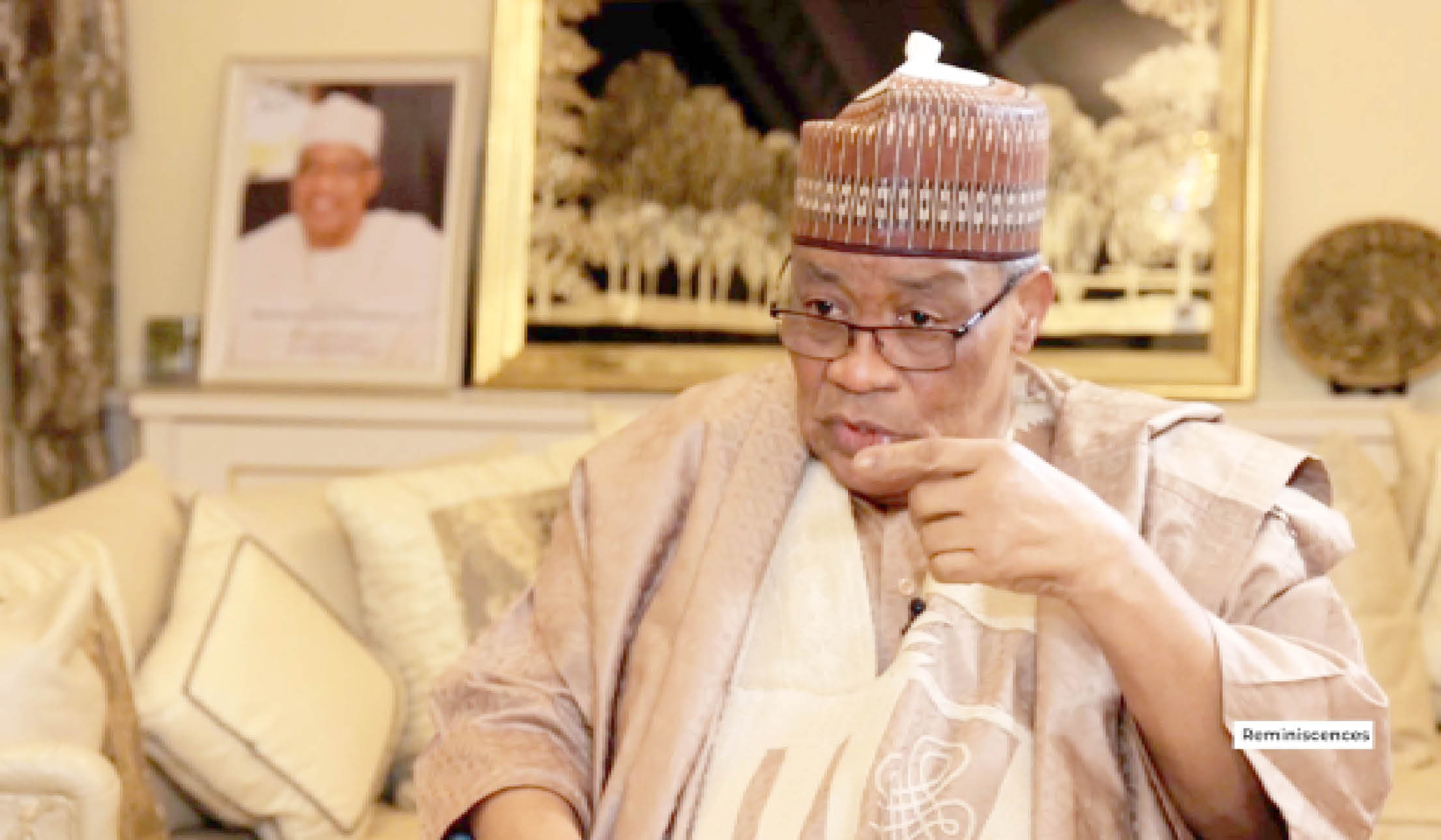
General Babangida
Every August 17, the Nigerian media undergoes the Stockholm syndrome ritual of publishing birthday messages celebrating the life of one of the most controversial figures in Nigerian history, General Ibrahim Badamasi Babangida, who this year turned 84.
A lot has been said about his governance of the country and controversial decisions while in power. Today, however, I choose to focus on his love-hate relationship with the press and the lasting impact both have had on each other.
I have always believed that the Nigerian press, in its thundering defiance and occasional lamentations, mirrors the soul of our nation. And if you seek the perfect tempest that defines the Nigerian media’s complex relationship with power, look no further than IBB’s era. From lofty promises of openness to the thesis of control by covert strikes, Babangida’s dance with the Nigerian press was one part masterclass, one part magic trick—sometimes sharp criticism, other times outright would-be suffocation. It is like watching a fire dance, in which the spectacle mesmerises both the audience and spectators, and masks the infliction of pain and torture by the dancers.
Thanks to insights from his media interviews and most crucially his recently published memoir, A Journey in Service, IBB has revealed his three perceptions of the press. First, he sees the media as a catalyst for open governance and human rights. Second, the media as an adversarial and critical force; and third, media as propagator of information and misinformation. In each of these phases, General Babangida approached the media differently.
First, as a catalyst for open governance and human rights, when Gen. Babangida first seized power in 1985. After General Buhari’s caustic relationship with the press and Nigerians, he faced the Herculean task of convincing Nigerians that military rule could coexist with the acceptable authoritarianism he was trying to establish. His initial overtures towards the media were surprisingly generous. He struck off the infamous Decree No. 4 of 1984, the very legislation that muzzled press freedom under Buhari’s regimes, and threw open the jail doors for high-profile detained journalists like Nduka Irabor and Tunde Thompson of The Guardian to walk free. This gesture was touted as a “commitment to human rights.”
Babangida professed the noble belief that a freer society would inevitably require a free and accessible press. This almost Shakespearean paradox of military governance promoting “openness” was eagerly broadcast. Babangida granted more interviews than any Nigerian leader before or since, courting the media rather enthusiastically. In his book, he boasts that “I have granted the most media interviews of all former Nigerian leaders!”
If Nigerian journalism was a caged bird under previous military rulers, Babangida promised it a tempered golden cage — not exactly singing from the rooftops, but no longer silent. Still caged, though.
The illusion of warm embrace did not last. It was shattered by the controversial murder of journalist Dele Giwa, who IBB described as a “good friend.” Fela, in his song “Suffer Head,” dropped the infamous verse, “Who kill Dele Giwa? Na Baba; if you put am gida, na you sabi.” The press was quick to blame IBB’s government for the murder. IBB blamed the press for the government’s inability to find the murderer when he argued in his book that “the hysteria of the media did not help the investigation of the Giwa murder,” and that directing public focus to only one suspect (the administration) “limited the chances of success.” It is a very unconvincing claim if you ask me because the administration’s best defence would have been to find the actual murderers.
Still, Babangida even liberalised the broadcasting sector, allowing private radio and TV stations, breaking the government’s near-monopoly. New voices sprang up, new creativity flowed, and Nigerian airwaves buzzed with the promise of competition and quality.
But here’s the rub: coming from a man steeped in military strategy and cunning, this camaraderie with the press had a chess player’s subtlety. Liberalisation was carefully measured, and so was what the government tolerated beyond the buzz of official announcements.
This brings us to the second phase in which Babangida saw the media as an adversarial and critical force. The Nigerian press, historically steeped in a culture of adversarial journalism, didn’t exactly turn a blind eye to Babangida’s limitations. Far from being lapdogs, newspapers quickly sharpened their pens—and cartoons—skewering policies like the Structural Adjustment Programme (SAP) which Babangida’s administration pushed. I remember those iconic comics: the exaggerated necks symbolising the public’s aching swallow of austerity. The editors didn’t hold back because politics sells papers, after all.
Yet, this relationship was strained. As Babangida himself noted, many within the military command circle and even among political heavyweights regarded such independent media criticism as a personal affront. Some leaders recoiled at Babangida’s media openness, fearing its potential to destabilise the regime. As Babangida writes in his book, there was palpable outrage in the barracks, culminating in threats of resignation from senior military officers and a venomous press onslaught labelling Babangida as a “power-hungry dictator,” especially in the wake of the June 12 annulment.
The press didn’t just criticise policy alone, it questioned the very legitimacy of Babangida’s prolonged rule, especially as he danced around extending his stay as power broker.
It is therefore no surprise that in the third phase, Babangida perceives the media as a propagator of information and misinformation. This perception has its roots in the swirling chaos of Nigeria’s late 1980s and early ‘90s politics, where the press also inadvertently became a propagator, not just of hard news but of rumours, half-truths, and sometimes outright misinformation. The competitive scramble among newspapers for scoops bred a marketplace where editorial lines blurred. Headlines grew more dramatic and the narratives sometimes less scrutinised.
At the same time, the government learned to master the art of selective press freedom. While allowing critical voices, it also co-opted media organs. The launch of government-friendly outlets, clandestine press monitoring, and the use of “brown envelopes” or, in some rumoured cases, “cartons of milk” to sway reports ensured the government’s version of truth maintained prominence.
This duality was, perhaps, Babangida’s greatest wizardry: dismantle one oppressive decree (No. 4), then resurrect media control through a proliferation of lesser-known decrees and subtle regulations. It was a strategic “Maradonic” move—first dazzling defenders by striking off the notorious measure, then slipping others in unnoticed.
Babangida’s regime began with a promise of renewal; yet, the regime’s later phase was marked by legal camouflage, imposing new decrees that quietly reinstated media censorship and repression. The difference? These new decrees bore less catchy names but served the same stifling purpose.
Between 1988 and 1993, a patchwork of decrees effectively reintroduced the machinery to sanction, seize, or shut down newspapers deemed antagonistic to the regime. The government’s regulatory agencies, such as the Nigerian Broadcasting Commission (NBC), were vested with powers to license and control broadcast media tightly, creating a gap soon filled with broadcasting licences awarded to friendly parties.
The climax of Babangida’s media fire dance was the 1993 proscription of the press following the annulment of the June 12 presidential election, a watershed moment in Nigerian democracy. The government banned key newspapers like Newswatch, The Guardian, The Concord Group, and Punch, among others—silencing the independent voices most critical of the annulment and military rule.
It wasn’t just an opportunistic crackdown; it was a calculated final nail in the coffin of meaningful press freedom under Babangida. The new decrees disguised under the legal guise of “Defamation,” “Public Safety,” or “Offensive Publications” decrees, gave the regime sweeping powers to suppress dissent without judicial oversight.
This phase saw many journalists jailed, newspapers shut, and the press driven underground or into exile. Those once welcomed into Babangida’s media mix now faced relentless persecution.
The relationship between Babangida and the Nigerian media was not a tale of absolutes but of paradoxes. He courted the press like a suitor at first—holding interviews, liberalising the broadcast space, releasing detained journalists. Yet beneath the duets of rhetoric lay a calculated control over the narrative and dissent.
His policy illustrates a classic authoritarian formula, first offering freedom as a carrot, wielding repression as a stick, and frequently using one to distract from the other. Deregulation was real but bounded; openness was partial, often performative.
As Babangida himself admitted, he might be the most interviewed Nigerian leader ever, but that visibility came with vilification and a legacy of mistrust. The Nigerian press’s adversarial spirit survived, however, adapting, resisting, satire in hand, and became the frontline crucible for democracy’s eventual resurgence.
And that’s the punchline worth remembering: even the most meticulous “Maradonic” move to silence the press can’t cage the Nigerian journalist for long. The clock of history ticks to a rhythm where truth, though sometimes muted, rarely stays imprisoned indefinitely. This tango between IBB and the press has imprinted on both in ways far more significant than we realise.