
If Atiku or Buhari wins
Congratulation is proper as our country celebrates the survival of electoral democracy for twenty unbroken years. And for good measure, 82 million of us would determine who gets the nod among the 72 candidates vying for the presidential slot. With a 40 per cent illiteracy rate, there would be many void votes in Saturday’s ballot […]
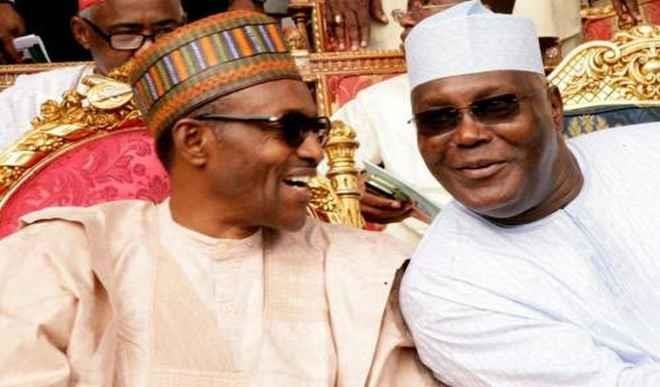
Congratulation is proper as our country celebrates the survival of electoral democracy for twenty unbroken years. And for good measure, 82 million of us would determine who gets the nod among the 72 candidates vying for the presidential slot. With a 40 per cent illiteracy rate, there would be many void votes in Saturday’s ballot count in spite of INEC’s enlightenment programmes. The ballot paper is like a book on its own, obviously confusing.
In spite of the crowd, analysts have rightly posited that Saturday’s presidential election is a two-horse race between two northern Muslims – Muhammadu Buhari and Atiku Abubakar. For balance, both have chosen Christian running mates. Other presidential wannabes would find out their true worth in votes and perhaps readjust their true weight accordingly.
If ever there was a clash of titans, this race between the candidates of the All Progressive Congress, APC and the People’s Democratic Party, PDP is one. In the not too distant past, Atiku and Buhari were in the same party as the iconic picture of past campaigns saw Buhari sitting comfortably in Atiku’s jet. Apparently, Atiku suspended his presidential ambition to support his brother, who promised one term to fix what he perceived as Naija’s problems but lately changed his mind. Politricians should never be taken at their words. Atiku once swore never to return to the PDP until political expediency made him change his mind.
If Buhari wins Saturday’s polls, he’ll swear on popular approval of his three-pronged change promise to improve security, fight corruption and create jobs. Depends on who you ask, Buhari has delivered, derailed or under-delivered on those promises. Those who lost the 3,000 souls in the Benue trough wouldn’t agree that security has improved neither would the people on the Kaduna-Zamfara-Katsina axis living with fear of life-wasting brigands. Residents of displaced camps are likely to be on this plane along with members of the Shia community who have buried 300 members. Apparently, no part of this country is safe from insecurity – from herdsmen to ritualists. Government supporters point at the relative security in Abuja where government and diplomatic missions have been able to conduct business without fear as evidence of improved security.
Government’s anti-corruption war has seen smart politicians switching from the PDP to the APC because it guarantees immunity from prosecution. But government point at the conviction of Dariye and other trials as evidence that it’s on track. In the area of employment, statistics from government-controlled agencies have shown that more people are out of jobs now than they were in 2015. The Naira has lost more than 50% of its 2015 value, but government blames it all on 16 years of PDP profligate spending even when the culprits have now switched camps.
Atiku Abubakar comes with a huge baggage. He was vice president for eight years of the 16 years of PDP, during which he basically headed the economic team. Over the years, his former boss has accused him of corruption but turned round to endorse him for president. Atiku has done nothing to shake off that horrible tag except to hide under failure to prosecute him. To charges that his economic team sold the nation’s patrimony to cronies, Atiku has brushed it off by saying the so-called cronies are citizens. He is unlikely to do anything different if he wins. It still remains to be seen what Atiku would bring to the table of governance as his own man. Saturday’s poll results might help the nation see.
The history of all democracies is a history of switching lanes. There are several political parties in America, but the federal elections have always been between the democrats and the republicans. Britain has switched between labour and the conservatives. In Canada, the contest is usually between the liberals and the conservatives. The difference between developed democracies and the Naija experience is that our politicians are united by greed and positioning instead of party ideology or loyalty.
Experts say that a first term is suitable for bridge building while a second term reveals a leader or party’s true capabilities. We cannot prove this from experience. Would Buhari be a different person now that he’ll have nothing to lose if he wins this, or would he just return to the same lethargic leadership or even adopt the I-owe-you-nothing attitude? Only Saturday’s results would determine that. Would Atiku, as his own man reveal that leopards could change habit while retaining legendary spots? Only time would tell.
As is common in other parts of Africa, the opposition is divided. That division gives non-performing behemoths undue advantage. The Young Turks in Saturday’s elections seem to have forgotten the power of coalition. For his touted talakawa popularity, it was not until Buhari decided to work with other regional parties that he tasted victory. Are there lessons to learn from here?
Whoever wins Saturday’s poll would need to hit the ground running. The tasks ahead could barely wait for the umpire’s whistle.