
Impact of Nigeria’s growing population on education in northern Nigeria
Nigeria is experiencing a population boom, and nowhere is the strain being more felt than in the northern part of the country. Nigeria, which has an estimated population of more than 200 million people, will be the world’s third most populous country by 2050. Northern Nigeria, which has more than half of Nigeria’s population, is […]
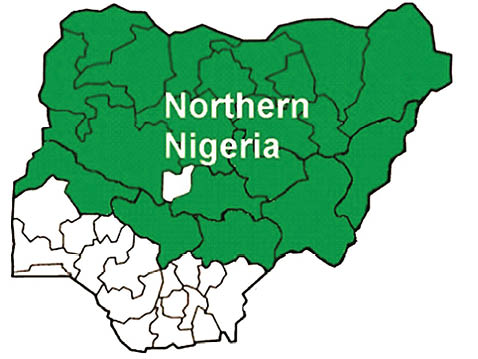
North
Nigeria is experiencing a population boom, and nowhere is the strain being more felt than in the northern part of the country. Nigeria, which has an estimated population of more than 200 million people, will be the world’s third most populous country by 2050. Northern Nigeria, which has more than half of Nigeria’s population, is taking the brunt of the population boom, particularly in its education sector. Although education is a key driver of development, Northern Nigeria is confronted with overcrowded classrooms, under-equipped schools, and an education system that is increasingly unable to meet the needs of its expanding youth population.
In the past 10 years, the northern states have witnessed enormous growth in school enrollment through population and efforts towards opening up access to education. The growth in enrolment has not, however, been accompanied by an equivalent increase in resources. It is estimated that Nigeria has over 10 million out-of-school children, of which the northern states account for most of them. Despite efforts to boost admissions, the majority of children in the region remain deprived of education due to the lack of infrastructure, low numbers of teachers, and lack of finances. The situation is particularly serious for girls, and the majority of them are faced with additional cultural, socioeconomic and systemic barriers that hinder access to education.
One of the biggest issues that confronts education in northern Nigeria is the issue of classroom overpopulation. As children are born and enrolled in school, the number of students per class has increased exponentially. In some states, it is not uncommon to have classrooms filled with 80 to 100 students, far from the recommended pupil-teacher ratio of 40:1. This crowding not only detracts from the education’s quality but also places a tremendous burden on the teachers, who are often underqualified and underpaid. With so many kids in one class, the teachers cannot possibly provide each student with the attention that student requires, and the students have fewer opportunities to become engaged in their lessons.
Lack of appropriate infrastructure is another major issue. Northern Nigerian schools are, for the most part, in poor condition, with rundown buildings, inadequate sanitation, and an acute shortage of study material such as textbooks and desks. In the north, nearly 60 per cent of schools lack basic water and sanitation facilities, which makes it difficult for students, particularly girls, to attend school on a daily basis. In rural areas, it is even more difficult, with children having to trek long distances to the nearest school, only to find poorly stocked and overcrowded classrooms.
- Nigeria to AU: Prevent incursion of mercenaries into Africa
- That controversial terrorism alert in Kano
Besides the infrastructural challenges, the population boom is escalating the shortage of teachers. The northern states are already facing difficulties in recruiting and keeping high-quality teachers, and the rising number of students is burdening the system even more. In the majority of rural areas, there are simply not enough trained teachers to distribute. As a result, the majority of schools have no choice but to employ untrained or inadequately trained teachers, further devaluing the quality of education. Northern Nigeria, by estimates of the Universal Basic Education Commission (UBEC), will need to employ at least 300,000 more teachers over the next decade to meet the population explosion, a daunting task with few resources to draw upon in the region.
The high rate of population increase is also placing more stress on families, some of whom are increasingly finding it hard to survive. Large families are the order of the day in the North of Nigeria, where each family averages six to seven children according to the National Population Commission. Though kids are generally thought of as an economic resource—assisting in farm work or small enterprises—the cost of education can be prohibitively expensive for poor families. Hence, parents are forced to choose between sending their children to school or keeping them at home to contribute to family income. This economic restriction affects girls disproportionately, who are most often the first to be removed from school when there are shortages.
In spite of these issues, there are positives. Some of the states in the north have implemented programmes that are aimed at curbing the crisis in education. Borno State, which has been affected by decades of insurgency, has made significant improvements in reviving its education sector. Its government has collaborated with international organisations such as UNICEF and the World Bank to rehabilitate schools destroyed by the insurgency and provide psychosocial support to the students and teachers. In addition, it has launched the “Better Education Service Delivery for All” (BESDA) scheme, with the target of increasing school attendance and reducing the number of out-of-school children, particularly girls. These initiatives have resulted in a considerable increase in school enrolment and an assurance of enhancing education quality.
Zamfara State has also demonstrated remarkable strides in solving its own education issues. After decades of not participating in WAEC, the state recently came to an agreed payment plan to clear its debt with a negotiated N1.4 billion payment deal. This allowed Zamfara students to enrol and sit for the 2024 WAEC exam, ending years-long absence.
In Kano, the state government has declared a state of emergency in the educational sector and, as a reaction, has recruited 5,000 new educators and initiated continuous professional development programmes for existing instructors. Furthermore, the government is also building new schools, revamping dilapidated ones, awarding scholarships and reviving the Kwankwasiya girl-child initiative buses. Likewise, Kaduna State is financing the construction of new schools, the rehabilitation of existing ones, and the implementation of digital learning programs to improve the quality of education.
All of these states are demonstrating how strategic leadership can lead to meaningful progress and that targeted investment and policy interventions can deliver quantifiable improvement.
However, these measures are still a long way from being sufficient to address the magnitude of the problem. To be able to effectively deal with population growth’s impact on education in northern Nigeria, there must be a concerted, long-term initiative involving both increased investment in education and population growth control measures for the region. Increasing access to family planning services, raising awareness about the importance of education—particularly girls’ education—and improving the quality of teacher training are all measures in this direction that are critical.
The state and federal governments must also accord high priority to the construction of infrastructure so that schools are equipped with the facilities needed to accommodate the growing number of students. Foreign aid and global partnerships can be of immense assistance in providing the economic and technical support needed to address these problems. On top of all this, it is also very important to engage communities. Educators, parents, and leaders in the area must work together and make sure they build a setting that has education as the priority and removes barriers preventing children from accessing education.
In the story of northern Nigeria is a rich brocade of challenge and potential. Each crowded classroom, each child out of school, is a bitter reminder of the troubles of the region, but also a call to do better.
Imagine a future where every child, no matter circumstance or gender, has access to quality education—a future in which learning unleashes creativity, transforms communities, and ends poverty. That tomorrow is within sight but it calls for vision, courage, and relentless effort. Seeds sown today through school reconstruction, training of teachers, or community empowerment will be tomorrow’s harvest. Let’s utilise the challenges of Arewa as stepping stones to an enduring legacy of change.