
Imperatives of blood donation
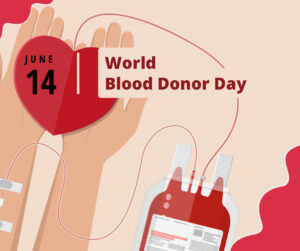
June 14, 2025 was observed as World Blood Donor Day (WBDD). First organised in 2004, the date commemorates the birthday of Nobel Prize laureate in Medicine and Physiology, Karl Landsteiner, who is renowned as the “father of blood typing” for his discovery of the ABO blood group system. The marking of the day, spearheaded by […]
blood donor day
June 14, 2025 was observed as World Blood Donor Day (WBDD). First organised in 2004, the date commemorates the birthday of Nobel Prize laureate in Medicine and Physiology, Karl Landsteiner, who is renowned as the “father of blood typing” for his discovery of the ABO blood group system.
The marking of the day, spearheaded by four core international organisations – World Health Organisation (WHO), International Federation of Red Cross and Red Crescent Societies, International Federation of Blood Donor Organisations (IFBDO) and the International Society of Blood Transfusion (ISBT), was to raise awareness of the need for safe blood and blood products and to thank blood donors for their voluntary, life-saving gifts of blood.
This year’s theme – “Give blood, give hope: together we save lives,” highlights the importance of solidarity in blood donation. The demand for blood is so vital, especially for individuals involved in accidents and those living with transfusion-dependent illnesses like thalassaemia, sickle cell disease, and other chronic conditions that require lifelong regular blood transfusions.
These patients require blood to survive and live healthy, productive lives and as part of prevention for severe complications, reduction of morbidity. Otherwise, their lives would be at risk as their treatment would be compromised.
Unfortunately, blood donation is not a universal practice in Nigeria, causing the country to face severe and persistent shortage in its blood banks as it collects less than 30 per cent of its annual blood transfusion needs. Indeed, the blood challenge is such that while 1,230,000 units of blood are collected annually, 90 per cent comes from paid commercial donors, and the country needs an additional 1.8 million units per year.
This deficit, estimated at nearly 67 per cent, has dire consequences for patients, especially in emergencies, thereby putting strain on healthcare facilities. The shortfall is attributed to a combination of factors, including low rate of voluntary blood donation, inadequate infrastructure, poor funding, and a lack of trust in the system. The shortages have forced some families to turn to informal networks as they face delays, patronising unsafe blood with the prevalent high costs, while waiting for transfusions.
Therefore, a stable base of voluntary, non-remunerated blood donors committed to donating regularly is the cornerstone of a safe and sustainable blood supply for these patients. By giving blood, donors are not only saving lives but also giving hope to thousands of families affected by such lifelong medical conditions.
We at Daily Trust extend our profound gratitude to the voluntary, non-remunerated blood donors who have saved millions of lives, particularly those individuals who donate regularly and repeatedly. By their acts, they offer lifelines, giving others a second chance at life just as their act of kindness strengthens communities and embodies the spirit of solidarity which reinforces hope and healing to those in urgent need of blood.
We also appeal to both new and existing donors, more so the eligible individuals aged 17-65, to volunteer and donate blood regularly in order to ensure a stable and sufficient supply as they contribute to a healthier, more equitable and compassionate world. We enjoin the young to join the crusade and become lifelong blood donors.
We also call for a renewed awareness campaign on blood donation especially by young people as they are in the healthiest age bracket whose participation in building a strong culture of voluntary blood donation will help bridge the gap of shortages and contribute to a safe and adequate blood supply in the country.
The National Blood Service Agency (NBSA) should lead in educating all Nigerians on the importance and their eligibility to participate in regular voluntary blood donations through visits to designated centres and hospitals across the country. Indeed, voluntary and non-remunerated donation of blood should become a pastime for Nigerians.
We also urge governments, through the NBSA, to work with international partners, including the United Nations (UN) and the UNICEF to conduct annual blood drives among UN staff and the generality of the citizens, and helping in building capacity for strengthening national blood systems and expanding access to safe, quality-assured blood products. This includes improving donor education, retention, and recognition.
It is noteworthy that screening of blood using the 4th generation Enzyme-linked Immunosorbent Assay (ELISA) has been upgraded in all NBSA centres to enhance the quality and proficiency of screening for the four WHO-mandated transfusion-transmissible infection, namely, HIV, hepatitis B, hepatitis C and syphilis.
We also urge the NBSA to expand beyond its current 17 blood collection, testing, and distribution centres in the 6 geo-political zones of the country to all states and local government areas of the country, including specialised security and civilian hospitals to ensure availability of blood for medical emergencies.
Therefore, there is an urgent need for the NBSA to gear up and address blood shortages, especially during medical emergencies by ensuring that blood collection facilities are easily accessible.
The availability and universal access to safe blood transfusion is part of building a healthier society. And we expect Nigerians to actively participate in blood donation campaigns.