
Imperatives, recommendations for Nigeria’s NASS
This month marks an important timeline for Nigeria’s National Assembly – the first anniversary of its 9th Assembly and usually a period of momentary review of policies and progress of the legislative arm. Unfortunately, this year’s progress report will be coming in the midst of what is arguably the most tumultuous period in the global […]
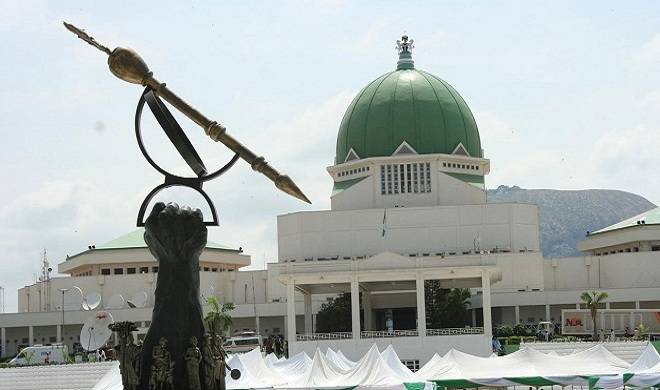
This month marks an important timeline for Nigeria’s National Assembly – the first anniversary of its 9th Assembly and usually a period of momentary review of policies and progress of the legislative arm. Unfortunately, this year’s progress report will be coming in the midst of what is arguably the most tumultuous period in the global order in decades.
Constitutionally, the legislature is premised on the need for checks on the powers of the executive, and a further realisation that the concerns and aspirations of the average Nigerian is best articulated and expressed by one of them through a representative democracy. This means that the duty of a legislator is the mandate of lawmaking, and effective representation, oversight, executive checks and balance, appropriation, and targeted advisory while the executive implements these resolutions and laws.
Simply put, it is the government’s responsibility to implement good governance, while it is the responsibility of parliament to ensure the legislative framework for the implementation of these good governance policies by the executive.
Given the exigencies of the current political and economic climate in the country, the following recommendations are proffered to improve legislative outcomes of the National Assembly especially as the country navigates the murky waters of COVID-19 with the drastic fall in national income:
- Digitisation of the parliament for effective communication – E-parliament
Historically, lack of effective communication has been the bane of constituent–legislator relationship in Nigeria. Bridging this gap has never been more imperative, especially given the all too often complicated image attached to the duties and activities of the National Assembly by the electorate. For instance, accusations of bloated legislative budgets and salaries with the instance of the proposed N9bn approval for renovations, unilateral policy making with the amendment to the Quarantine Act 1926, and insinuations of an acquiesced 9th Assembly can be sustainably addressed with the right communication. Effective use of digital platforms that are capable of simplifying the legislature, legislators, and legislative activities on-demand and accurately to constituents, and also give them the opportunity beyond public hearings to have meaningful input in governance issues will help address this impasse.
An example is the E-Parliament initiative that has traversed the National Assembly for two administrations without a consolidated policy. An enhanced E-Parliament policy for the National Assembly will not only digitise the activities of the representatives at a time it is needed the most but will also limit the gap between them and the people. To achieve this however, it should go beyond the initial objective of an only parliament plan and incorporate the masses in this digital transformation.
- Affirmative action on gender and inclusion in policy matters.
General issues and discourse on gender in Nigeria has traditionally centered on inclusion and safety. Since the inception of the fourth republic in 1999, women have occupied only 146 seats out of 2814 cumulative federal parliamentary seats. That is, of the 21 democratic years in the Senate and the House of Representatives, only 5% of their composition have been women, a statistic worthy of concern especially for a gender that constitutes more than half of the population. Now more than ever, the policy vacuum left by a lack of consolidated female caucus in governance is evident and yearning to be addressed, especially with the pervasive exploitation of women and young girls.
Unfortunately, policies on gender protection and equity have traditionally lacked tangible impact.
The Women Participation in Elections Support Bill, 2018 was stepped down for mirroring the inefficiencies of affirmative action of the civil service rules, the Gender and Equal Opportunities Bill, 2018 also failed to pass through the parliament, while the Sexual Harassment in Tertiary Educational Institutions Prohibitions Bill 2016, then sponsored by Sen. Ovie Omo-Agege, the current Deputy President of the Senate was passed in the Senate but rejected in the House of Representatives for its limited reach. The National Assembly, in addition to the task of ensuring an encompassing domestication of the Violence Against Persons Act and the Child Rights Act will require concerted partnership between the legislature, critical agencies of government and the civil society for holistic articulation of ideas.
Practical legislative options to the ongoing crisis in the country include a reform of the existing electoral law for affirmative action or the introduction of an entirely new legislation that will be consistent with the objectives of the former. On the safety aspect of gender policies however, the objective should be two-pronged; to have proactive laws that can forestall dehumanising acts against women and the girl child, and to have enforceable instruments that can ensure maximum action is meted out to the letter.
- Urgency of police reform
A reformed police service is not only essential to keep up with democratic best practices but imperative to ensure efficient responsiveness to a growing community of enlightened citizens.
In Nigeria, the quest for police reform has been unsuccessful on numerous occasions but a new Police Bill 2020 that seeks to repeal the existing Police Act 1943 is making inroads at both chambers. Presidential accent to the Police Trust Fund is a move in the right direction because it should sustainably address funding gaps with regards to police remuneration, training, housing, and equipment supply. However, the road to being at par with international standards is still miles away as the trust fund is mainly targeting paucity of funds; an internal aspect of police reform. For the police to engender trust, efficiency, accountability and transparency in service delivery, there should be holistic reform of the country’s security structure and the National Assembly should be at the forefront of that agenda.
- Emphasis on talent retention in the Legislature
All over the world and across public and private spheres, emphasis on talent retention as a key development strategy is acknowledged and has become the norm. It is more so important for the legislature to create a policy on talent retention within the parliament as an avenue to improving legislative outcomes. This will change the status quo and lead to overall reduction on cost of governance (due to reduced turnover), increased productivity, effective policymaking, reduction in unemployment, and efficiency in documentation and legislative databank. This does not preclude the role of staff under the National Assembly Service Commission who are routinely posted to legislative offices nor prohibit relevant political appointments, instead, it is a recommendation to improve policy outcomes by nurturing and preserving careers of legislative technocrats in the National Assembly.
This can be achieved with the right partnership between the National Assembly and the National Institute for Legislative and Democratic Studies (NILDS), whose role include but not limited to periodic training of parliamentary staff and advancing legislative research and studies in the country.
- Health and education reform
Virtually all countries are learning on the job with COVID-19. This is why the decision to cut the 2020 national health and education budgets by 42% and 54% respectively in the face of a rising pandemic remains a pivotal moment in the fight to curb the spread of the virus. Expectations would have been to augment the education budget to allow public institutions and administrators to successfully navigate the requirements of virtual learning at this critical time and prioritise health safety measures for the youthful population.
Nigeria lacks sustainable health infrastructure as it is ranked 187th out of 191 countries according to the World Health Organisation. Budget cuts to a critical sector such as health remain inconsistent with Nigeria’s commitment to the realisation of the Sustainable Development Goals and the Abuja Declaration of 15 percent to the health sector.
This move by the federal government will inadvertently increase the pool of Nigeria’s extreme poor, drastically limit access to existing healthcare, encourage capital flight and massive brain drain, as well as widen the socio-economic gap in the country. The approval of 1% of Consolidated Revenue for Basic Healthcare Provision Fund in 2018 remains a hallmark achievement of the legislature.
- Electoral Law Reform
This is arguably the most sought after and possibly the most strategic piece of reform in the country after constitution amendment. Renewed calls for electoral reform have followed Nigeria’s Democracy Day celebration marking the botched 1993 democratic election that was adjudged the freest and fairest in the country’s history. Amendments to the 2010 Electoral Act was passed by the National Assembly in 2018 just before the 2019 elections but failed to get presidential accent in time for the general elections. Critical submissions to this proposed legislation are the integration of new technologies in the electoral process especially in the accreditation of voters, and e-transmission of votes. It further seeks the reduction of nomination fees charged by political parties, proposes the right of party representatives to inspect original electoral materials before commencement of polls and recommends a suspension of the electoral process in the event of the demise of a candidate prior to or during elections. The National Assembly in its bid to guarantee timely passage should also ensure a foolproof legislation that will be consistent with the realities of COVID-19 and the future of global elections. This will entail adapting technological, health, and safety variables while INEC test runs the amended law before 2023 general elections.
In conclusion, as the world grapples with what is fast turning out to be the most unpredictable and onerous period of the 21st century, Nigerians will be looking for answers to decade-long questions from their representatives.
Effective communication and engagement with the electorate should form core of this strategy. This integration should then be followed by a resolute resolve through oversight and executive checks and balances for equitable implementation. However, as the National Assembly is billed to continue on its summer-long recess by the end of this month, the country may have to wait till resumption in September for practical solutions.
Chinazo Muoneke is a public policy analyst of the Johns Hopkins University School of Advanced International Studies (SAIS).