
Importing food, exporting jobs
For decades, many developing nations, including Nigeria, have relied heavily on food importation as a quick response to shortages, inflation and rising demand. Governments often justify imports as temporary interventions meant to stabilise prices and cushion citizens against rising food costs. While such measures offer short-term relief, their long-term consequences are often deeply counterproductive. Excessive […]
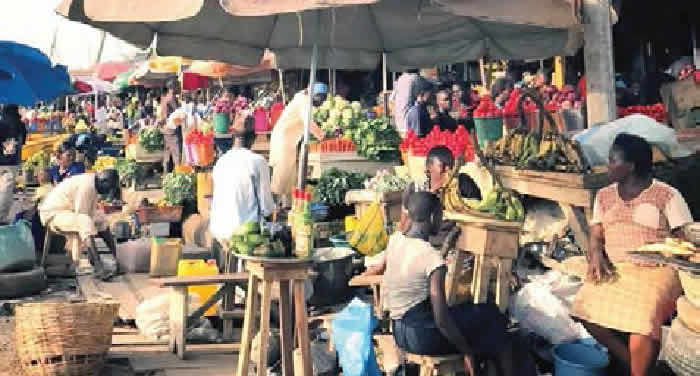
food market
For decades, many developing nations, including Nigeria, have relied heavily on food importation as a quick response to shortages, inflation and rising demand. Governments often justify imports as temporary interventions meant to stabilise prices and cushion citizens against rising food costs. While such measures offer short-term relief, their long-term consequences are often deeply counterproductive.
Excessive dependence on imported food weakens domestic agricultural production, undermines national food security, destroys rural livelihoods and worsens unemployment. Ultimately, the nation becomes trapped in a cycle of dependency that threatens both economic sovereignty and social stability.
The recent food importation window granted by the federal government illustrates this dangerous contradiction. Although the policy was intended to force down food prices and provide relief to consumers, its unintended consequences on local agriculture are becoming increasingly evident. Prices of locally produced grains have crashed sharply in many rural markets, leaving farmers in severe distress.
Today, many farmers are forced to sell between two and three bags of maize or rice merely to purchase one bag of fertiliser for the current planting season. With fertiliser prices remaining extremely high while produce prices continue to fall, farming is rapidly becoming economically unsustainable for thousands of smallholder producers. For many rural households, the returns from farming no longer justify the enormous financial risks and labour involved.
This dangerous imbalance is discouraging many farmers from returning to their farms this season. Some have reduced the size of land under cultivation, while others are contemplating abandoning farming entirely. The implication is obvious: lower planting activities Today will translate into reduced harvests tomorrow, thereby worsening future food shortages and inflation.
Food security is not merely about the temporary availability of cheap food in urban markets. It also concerns the ability of a nation to sustainably produce, process and distribute food to its population under both normal and crisis conditions. A country that cannot feed itself without relying excessively on foreign producers remains vulnerable to global disruptions, exchange rate instability, geopolitical conflicts and international supply chain shocks.
The COVID-19 pandemic and the Russia-Ukraine conflict exposed the fragility of global food systems. Countries that depended heavily on imported grains experienced severe shortages and unprecedented price increases when exporting nations restricted supplies to protect their own populations. Nigeria should have learnt important lessons from those crises. Unfortunately, current policies appear to be deepening import dependency rather than strengthening local resilience.
The situation is further compounded by the rising cost of petroleum products. Irrigation farming, which sustains dry season cultivation across many parts of Nigeria, has become increasingly expensive over the last year. Farmers who rely on petrol or diesel-powered water pumps are no longer operating profitably due to skyrocketing fuel prices. As a result, many irrigation farmers have drastically reduced activities during the last dry season, while others abandoned production altogether.
The consequence has been a significant decline in overall farm output across the country. Reduced dry season farming means lower supplies of vegetables, grains and other staple commodities entering the markets. This is combined with the growing disincentive facing rain-fed farmers, the country risks entering a dangerous cycle of declining domestic production and increasing dependence on food imports.
One of the greatest dangers of large-scale food importation is the destruction of local agricultural productivity. Imported food often enters domestic markets at artificially competitive prices because exporting countries heavily subsidise their farmers through grants, mechanisation support, irrigation systems and affordable credit facilities. Nigerian farmers operating under poor infrastructure, insecurity and expensive production costs cannot compete fairly under such conditions.
When governments open import windows without simultaneously protecting local producers, domestic agriculture suffers immensely. Farmers who lose money repeatedly will naturally reduce production or exit the sector entirely. The long-term effect is declining investment in agriculture, shrinking cultivated areas and growing disinterest among young people in farming as a viable profession.
Agriculture remains one of the few sectors capable of absorbing millions of unemployed youths in Nigeria. Beyond crop production, agriculture supports transportation, processing, storage, packaging, marketing and export industries. Every hectare cultivated productively creates employment opportunities across the value chain. However, when food is imported massively, those jobs are effectively exported to foreign economies.
In essence, the nation may temporarily import cheaper food, but it simultaneously imports unemployment and exports local prosperity. A country cannot genuinely tackle youth unemployment while undermining the very sector capable of mass job creation.
Massive food importation also places enormous pressure on foreign exchange reserves. Nigeria already struggles with limited foreign earnings outside crude oil exports. Spending billions of dollars importing food weakens the naira further, fuels inflation and increases economic vulnerability. Ironically, policies intended to lower food prices eventually contribute to higher living costs through currency depreciation and imported inflation.
Another serious concern is the growing abandonment of rural communities. As farming becomes less profitable, rural youths migrate to urban centres in search of non-existent jobs. This accelerates poverty, social frustration, criminality and insecurity. Rural economies that once depended on vibrant agricultural activities gradually collapse.
None of these arguments suggest that all food importation should stop completely. Strategic importation may sometimes be necessary during emergencies or temporary supply shortages. However, such interventions must never undermine local producers. Any import policy must be carefully calibrated to protect domestic agriculture while addressing immediate food needs.
Nigeria must, therefore, adopt policies that encourage local production rather than weaken it. Farmers need affordable fertilisers, access to credit, mechanisation services, improved seedlings, irrigation support and guaranteed markets. Most importantly, government policies must remain predictable and consistent so that investors and farmers can plan confidently.
The country must also urgently address the energy crisis affecting irrigation farming. Without affordable fuel or alternative energy solutions for water pumping, dry season agriculture will continue to decline. Expanding solar-powered irrigation systems could significantly reduce production costs while improving year-round farming activities.
Ultimately, genuine food security cannot be imported permanently. It must be cultivated deliberately through local productivity, strategic planning and sustained national commitment. A nation that abandons its farmers while depending excessively on foreign food suppliers mortgages its future.
Nigeria possesses the land, manpower and climate necessary to feed itself and even supply food to other African nations. But unless policies begin to prioritise and protect local producers, the current import-driven approach may only provide temporary relief while quietly destroying the foundation of national food security.
Ahmad resides at FMA2, off Yaya Abubbakar Road, Fadamar Mada, Bauchi [email protected]