
In defence of reason
In a poignant analogy that captures the enigma of Nigeria’s governance crisis, former President Goodluck Jonathan likened the Nigerian government’s posture to “a person pretending to sleep”—a figure so committed to the charade of unconsciousness that it becomes impervious to awakening. This metaphor, hauntingly resonant today, transcends mere rhetoric. It unveils a chilling reality: Nigeria’s […]
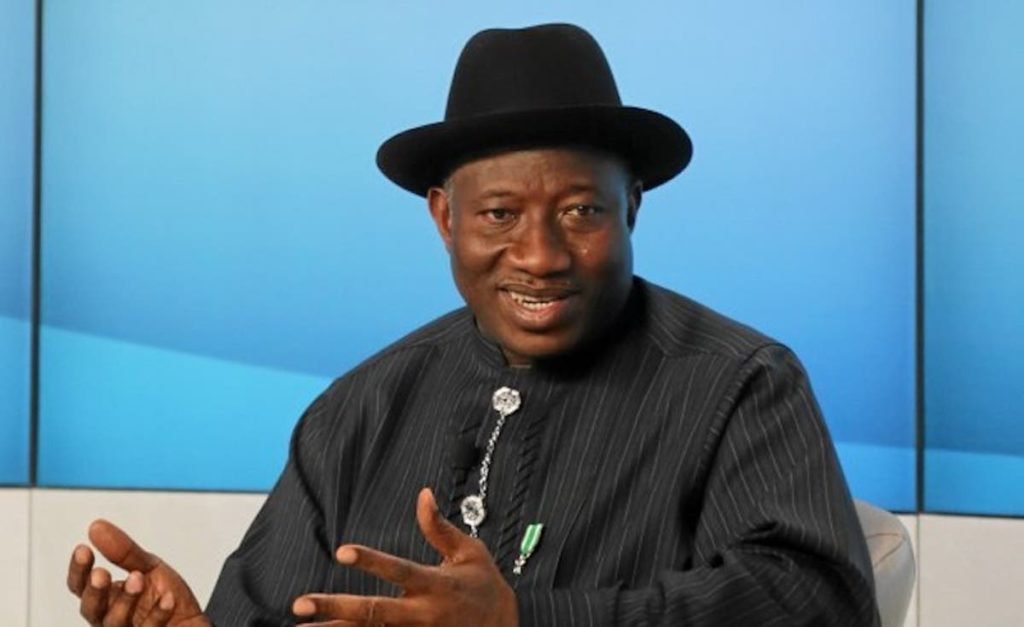
Goodluck Jonathan
In a poignant analogy that captures the enigma of Nigeria’s governance crisis, former President Goodluck Jonathan likened the Nigerian government’s posture to “a person pretending to sleep”—a figure so committed to the charade of unconsciousness that it becomes impervious to awakening. This metaphor, hauntingly resonant today, transcends mere rhetoric. It unveils a chilling reality: Nigeria’s governance institutions have perfected the theatrics of pretentious slumber, a strategic inertia designed to evade accountability, stifle progress, and entrench a culture of self-serving control.
To “pretend to sleep” is not ignorance; it is a calculated performance. Like an actor on stage, Nigeria’s governing elite feign obliviousness to the cries of citizens, the collapse of institutions, and the nation’s descent into economic paralysis. Power outages cripple industries, yet the government “sleeps.” Insecurity metastasises, yet leaders “doze.” Inflation erodes livelihoods, yet policymakers “snore.” This is not incompetence—it is “orchestrated neglect’’. The pretense of slumber allows the ruling class to deflect demands for action while advancing agendas that prioritise personal enrichment and political survival over national interest.
President Jonathan’s analogy cuts deeper: a person pretending to sleep knows they are being shaken but resists rousing. Similarly, Nigeria’s government is acutely aware of the citizenry’s anguish. It hears the protests over fuel subsidies, the outrage over electoral fraud, and the clamour for functional healthcare and education. Yet, it chooses to remain “asleep,” deploying bureaucratic delays, empty promises, and tokenistic reforms to simulate responsiveness. The goal? To exhaust public pressure while exploiting the conquered territory.
What makes this charade treacherous is its deliberate duality. The government is neither unconscious nor incapacitated—it is wide awake and scheming. Consider the brazen opacity in resource allocation, where budgets are passed with phantom projects, or the deliberate underfunding of critical sectors like security and infrastructure. These are not failures of governance but successes in a grand design to keep the state weak and malleable. When anti-corruption agencies target opposition figures while sparing allies, or when electoral reforms are shelved to preserve rigging machinery, the “sleeping” government reveals its alertness—to the art of manipulation.
This duality mirrors what philosopher Slavoj Žižek terms “the fetishism of the non-answer”: institutions perform the rituals of democracy (e.g., elections, legislative sittings) while hollowing out their substance. The National Assembly convenes, but laws favouring equity languish. Courts sit, but justice is auctioned to the highest bidder. The government’s “sleep” is thus a masquerade, a tool to gaslight citizens into doubting their own realities.
The tragedy of the “pretentious sleeper” lies in the futility of external intervention. How does one awaken an entity that refuses consciousness? Nigeria’s civil society, labour movements, media, and judiciary often resemble desperate bystanders, shaking a body that insists on its own paralysis. Protesters are met with violence or hollow dialogue. Journalism is hatchet and investigative professional one faces threat. Each act of resistance is absorbed into the spectacle, leaving citizens disillusioned and the system intact.
Yet, history offers a grim lesson: no sleeper can feign forever. The danger for Nigeria’s rulers is that the masses may eventually stop pleading for an awakening and instead force one—through sustained dissent, electoral revolt, or worse, total disengagement from a state that abdicates its purpose. The Arab Spring and #EndSARS protests are reminders that even the most entrenched “sleepers” can be jolted awake by collective fury.
President Jonathan’s metaphor, is a wakeup call; it is a call to clarity. Nigeria’s governance crisis is not a passive failure but an active strategy. To dismantle the pretence, citizens and institutions must confront the reality: the government is not asleep—it is watching, choosing, and profiting. The path to change lies in exposing the charade, mobilising beyond traditional channels, and demanding not just accountability but systemic rebirth. Until then, the nation remains trapped in the infuriating paradox of a ruler who sleeps with eyes wide open—seeing all, serving none.
The tragedy of Nigeria is not that its government sleeps, but that it pretends to, while devouring the dreams of its people.
Isimi is a Fellow of the Nigeria Institute of Architects.