
Inside stockfish trade in Lagos, Ogun
Traders in Lagos and Ogun states are warning that stockfish – a popular dried codfish sourced mainly from Norway – may soon slip beyond the reach of the average Nigerian household. Although demand has remained relatively steady, retail prices and import costs have nearly doubled over the past year. Traders point to foreign exchange scarcity, […]
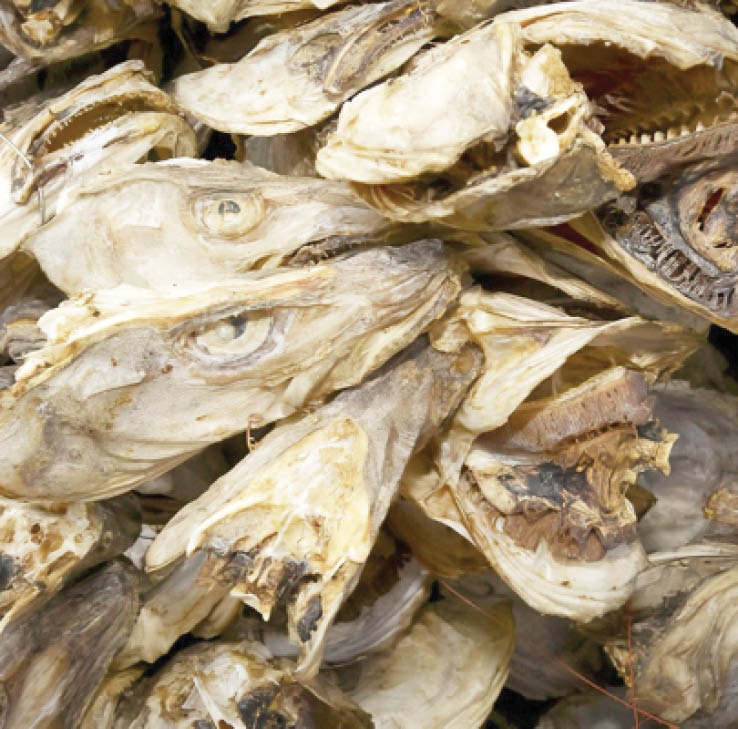
Stockfish
Traders in Lagos and Ogun states are warning that stockfish – a popular dried codfish sourced mainly from Norway – may soon slip beyond the reach of the average Nigerian household. Although demand has remained relatively steady, retail prices and import costs have nearly doubled over the past year. Traders point to foreign exchange scarcity, high import duties and rising logistics expenses as the primary drivers.
At Berger market in Lagos, Mama Tawa (pseudonym) said a stockfish piece that once sold at N200 now goes for N1,000. “This fish doesn’t come from here. It comes from Norway, Scotland, all those places. Maybe it is the dollar rate or import cost, but it is expensive now. Not everyone can afford it,” she said.
It is a similar situation in Agege market, where Mrs Veronica said a full bag of stockfish, once priced at N250,000, now sells between N300,000 and N350,000. Compared to N1,200 per handful previously, retail portions now range from N3,000 to N5,000. “People still buy because it matters to them when it comes to cooking traditional meals, but the economy is forcing them to adjust,” she noted.
At Mile 12 market, Madam Becky told Weekend Trust that customers buy smaller quantities, explaining, “We now sell stockfish in bits, priced between N300, N500, and N1,000. The big ‘one‑hand’ stockfish is now between N60,000 and N70,000 – it is no longer for everyone.”
In Sango market, Mama Ebere highlighted how most traders now rely on the black-market exchange rate for dollars because the Central Bank of Nigeria (CBN) has restricted forex access. “We don’t get dollars from banks anymore. We buy at black-market rates. By the time goods are cleared at the port, the price has climbed,” she said.
Despite these pressures, stockfish, locally known as okporoko, remains deeply embedded in Nigerian cuisine. It is a key ingredient in traditional delicacies like, egusi, oha, ogbono, and banga soups and a staple at celebrations. Its fibrous texture and savory taste make it irreplaceable for many households.
Nigeria’s position as the largest global importer of stockfish underscores its significance. According to the Norwegian Seafood Council, the country absorbs nearly 10,000 tonnes of stockfish annually. However, in 2023, stockfish exports to Nigeria dropped by 27 per cent, declining from N43 billion ($103.5 million) in 2021 to N31.5 billion ($76.4 million). The fall was attributed to naira depreciation, inflation and port delays.
A trader in Ogba Sunday market who deals directly with wholesalers explained that a 30kg bag of stockfish now sells between N300,000 and N350,000, depending on the type and the day’s exchange rate.
“We used to restock twice a month, but now, I only buy once and have to sell in smaller pieces – N300, N500 or N1,000 – because people don’t always have money for the big pieces,” she said.
According to her, the profit margin on each bag is now around N40,000 to N50,000, after accounting for local transport and overhead costs. She explained that most traders don’t use refrigeration.
“We hang the stockfish on poles in a dry place and cover it with brown paper. That’s how we prevent it from going bad,” she explained.
Another seller said she bought stockfish two or three times every two months, depending on how quickly her previous stock finishes. Her supplies come through a clearing agent who imports from Norway and splits the shipment among multiple traders.
“When it gets here, we take what we can afford. A full container has hundreds of bags, but I only pick two or three,” she revealed.
She emphasised that proper storage is key in the business, saying, “If you keep it in a sack or sealed bag without ventilation, it will sweat and spoil. So we hang it up so that air would pass through and sell as fast as we can.”
In April 2023, the Central Bank of Nigeria defended its policy to restrict forex for 43 items, including stockfish, citing goals to support local fisheries and conserve foreign reserves.
Speaking at a public forum, Dr Ozoemena Nnaji, the Director of Trade and Exchange at the CBN, explained that the restriction was “to conserve forex, resuscitate domestic industries and improve employment generation.”
However, at the Nordic Nigeria Connect event in Lagos in 2023, Norwegian officials expressed concerns. Trond Kostveit, the Director (Africa) at the Norwegian Seafood Council said, “Forex ban has made the price of stockfish in local markets quite expensive, especially for consumers. Sourcing dollars on the parallel market takes a toll on stockfish imports.”
In July 2024, stakeholders, including Nigerian traders and Norwegian representatives, called for the federal government to waive duties and ease forex access for the commodity.
Back at the market level, some traders report that consumers are turning to cheaper protein alternatives like dried catfish and smoked mackerel. But many say the demand for stockfish remains intact, albeit with reduced purchase volumes per visit.
“Even low income earners will still buy it. They might not buy as much, but stockfish is not something they can remove from their food easily,” A trader said.
Stock fish remains on the menu
Among consumers, the attachment to stockfish remains strong.
Mary Joshua, an event planner and host said, “I prefer stockfish because of its versatility in cooking different dishes; and I find it worth the cost. Despite the rising cost, stockfish adds a distinct taste to our meals that I really enjoy.”
Tolulope Adeyemo, who uses stockfish occasionally also said, “I really don’t use it a lot, I only use it when I want to prepare egusi soup. I think stockfish has always been expensive, and because I buy in small quantity, I really cannot say if it has really gone up in price.”
Mrs Bernice, a retired civil servant, said stockfish remained a fixture in her kitchen.
“I buy neatly packed and sealed stockfish, unlike the ones displayed in the market, which can make it look unpleasant. I buy them and keep at home and use for my dishes. The aroma and taste is very nice and cooking without it gives a very different taste to the soup,” she said.
Cynthia Oroma, a student caterer in the University of Lagos said, “I prefer to cook with stockfish basically because of the flavour and aroma it gives to the food. If you are boiling your meat to cook your soup, let’s say you want to cook egusi and you are boiling your beef, chicken or turkey, the aroma it gives is different from when you introduce stockfish to it. I will always use stockfish. Even if I can’t buy the one of N1,000 and above, I will still go for the smaller ones of N300.”
Despite the challenges, the business of stockfish in Nigeria continues to run on cultural loyalty and consumer resilience. Traders are stretching their margins and cutting back on bulk restocking, but they remain committed. As one trader put it, “It is not just fish, it is part of the food story in this country.”