
IOCs’ divestments unlocked $5.5bn investment — FG
The Minister of State for Petroleum Resources (Oil), Sen. Heineken Lokpobiri, has stated that the recent asset divestments by International Oil Companies (IOCs) have unlocked over $5.5bn in Final Investment Decisions (FIDs) within months. He spoke just as the Nigerian Content Development and Monitoring Board (NCDMB) stated that proper implementation of the NOGICD Act, has […]
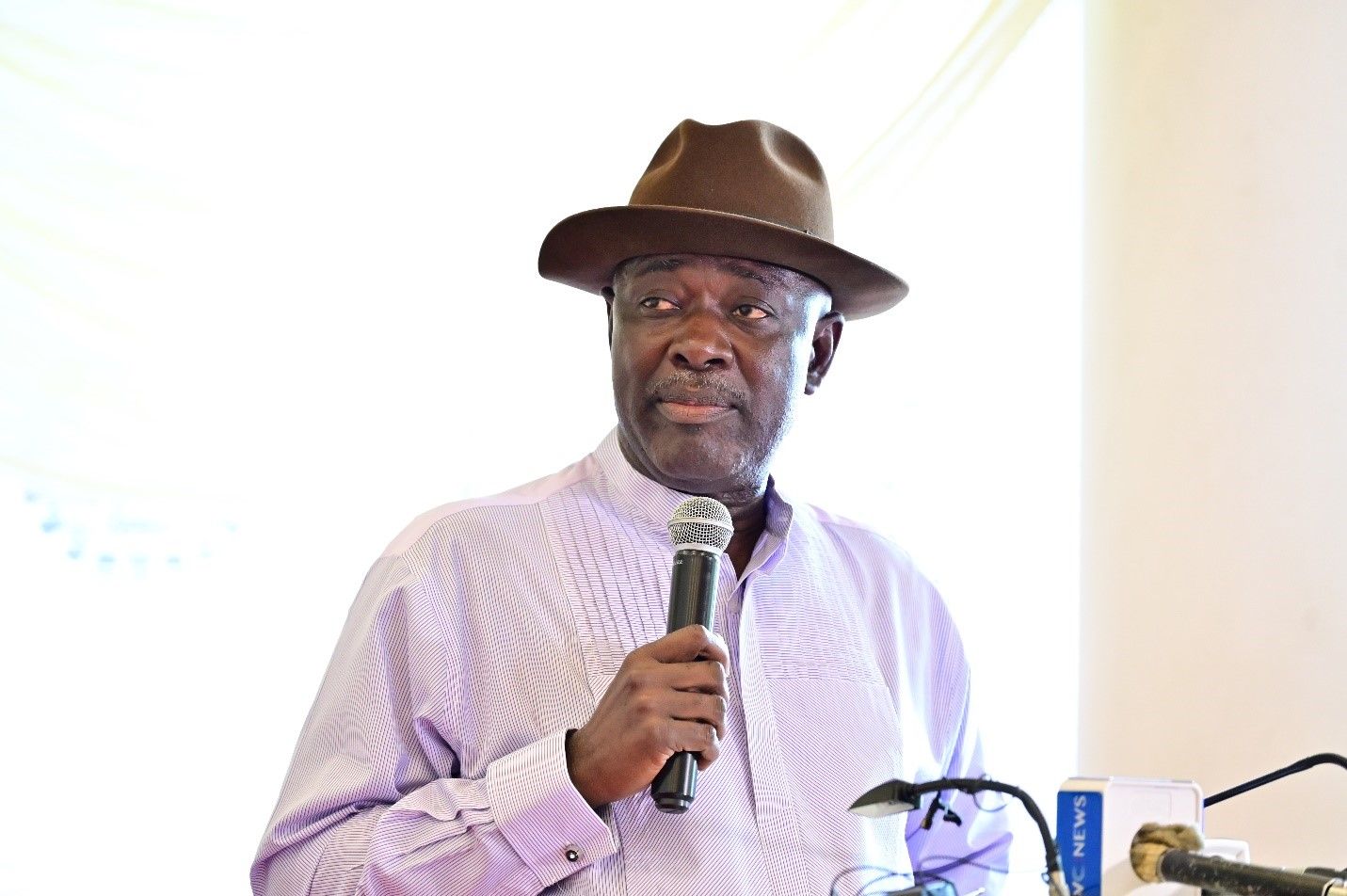
heineken lokpobiri
The Minister of State for Petroleum Resources (Oil), Sen. Heineken Lokpobiri, has stated that the recent asset divestments by International Oil Companies (IOCs) have unlocked over $5.5bn in Final Investment Decisions (FIDs) within months.
He spoke just as the Nigerian Content Development and Monitoring Board (NCDMB) stated that proper implementation of the NOGICD Act, has prepared the indigenous operators in oil and gas sector like Renaissance Africa Energy Limited, Seplat, and Oando to take over assets from IOCs, under a divestment programme, and become key contributors to Nigeria’s target to achieve three million barrels per day production by 2030.
Speaking at the Africa Energy Week in Cape Town, South Africa, Lokpobiri said the divestments are not just transfers of assets but transfers of confidence, capability, and ownership.
In a statement by his media aide, Nneamaka Okafor, he added that the divestments have already added approximately 200,000 barrels per day to national production.
“Nigeria’s upstream sector is showing signs of strong recovery. The “Project One Million Barrels” initiative, launched in October 2024, has raised daily crude oil production to between 1.7 and 1.83 million barrels per day, with a notable increase of 300,000 barrels per day in July 2025 alone. Additionally, the number of active drilling rigs has grown from 31 in January to 50 by July 2025, a clear signal that reforms are unlocking value across the sector.
The Minister declared that Nigeria is open for business and actively pursuing policies that prioritize investment, efficiency, and long-term growth in the oil sector.
“This gathering is more than a conference, it is a call to action,” he said, stressing that Nigeria is ready not just to participate in the global energy market, but to lead reform and growth on the African continent.”
Senator Lokpobiri outlined the bold policy measures implemented under President Tinubu’s administration, particularly the Petroleum Industry Act (PIA), which provides a clear and predictable fiscal and regulatory environment for investors.
On the broader African context, he urged the continent to retain more value from its hydrocarbon resources by focusing on infrastructure, industrial development, and localized value chains.
He noted that Africa spends over $120 billion annually on hydrocarbons, largely through imports, calling it a missed opportunity for economic transformation.
He advocated for stronger intra-African collaboration and financing, emphasizing that Africa holds nearly $4 trillion in domestic capital, including pension and insurance funds.
Local operators prepared to take over assets
Meanwhile, the NCDMB also identified key skill areas it would focus capacity building efforts for optimal job creation opportunities in the Nigerian oil and gas industry.
Executive Secretary of NCDMB, Engr. Felix Omatsola Ogbe, challenged African countries to ensure that the skills of citizens, the creativity of entrepreneurs and strength of their institutions define the future of African energy.
Represented by the Director Corporate Services of the NCDMB, Dr. Adbdulmalik Halilu, Ogbe in his keynote address, titled; “From Policy to Prosperity: Scaling Local Content for Africa’s Energy Future,” also shared Nigeria’s success story in local content development.
He said the skill areas for special focus include underwater welding, subsea engineering, geosciences, project management, deepwater operations (drilling, production engineers), instrumentation and controls.
Others are digitalization including Artificial Intelligence (AI), helicopter pilots, with a delivery model that is based on classroom and hands-on approach.
He noted that the local content strategy developed by the Africa Petroleum Producers Organisation (APPO) for member countries and the Africa Continental Free Trade Agreement policy of the African Union are “clear pathways towards fostering trade-based multilateral cooperation within the continent.”
He emphasized that scaling local content requires human capital development and deployment, infrastructure development, technology and innovation, cross-border collaboration and partnerships (common standards, tariff and demand), in addition to policy harmonization.
On Nigeria’s local content journey, with in-country value addition now at 57 per cent, up from five per cent in 2010, when the Nigerian Oil and Gas Industry Content Development (NOGICD) Act, 2010, the NCDMB boss said the overarching objective was to position Nigeria as the destination of choice for investment in exploration and production (E&P) but most importantly to create jobs for citizens and new industries supporting E&P value chain, while ensuring sustainable operations for future generations.
He said: “Nigeria now hosts a world-class fabrication and integration yard for fabrication of production platforms and integration of Floating Production Offloading and Storage (FPSO) vessels, high voltage cables and fiber optics for LNG trains.
“Also, production platforms are now produced from Nigerian cable manufacturers, while design engineering capacity exists for onshore, offshore, LNG, and gas gathering facilities.”
“Operators like Renaissance Africa Energy Limited, Seplat, and Oando are taking over assets from international oil companies (IOCs), under a divestment programme, and would become key contributors to Nigeria’s target to achieve three million barrels per day production by 2030.
He noted that recent Executive Orders by the Administration of President Bola Ahmed Tinubu that introduced tax incentives tied to time-bound upstream investment and cost leadership and also intended to accelerate contract processing cycles for oil and gas projects, from 36 months to six months, have birthed major projects such as UBETA Gas Development Project and Bonga North Project, among others that are in the pipeline.