
Is COVID Really Back?
The past week, headlines about the return of COVID -19 in Nigeria has been trending. People have been sending Whatsapp messages, panicking, ever since the news broke about an alleged Chinese national and his contacts were diagnosed with COVID in Cross river state. Let’s take a trip down memory lane. It’s March 2020 and hand […]
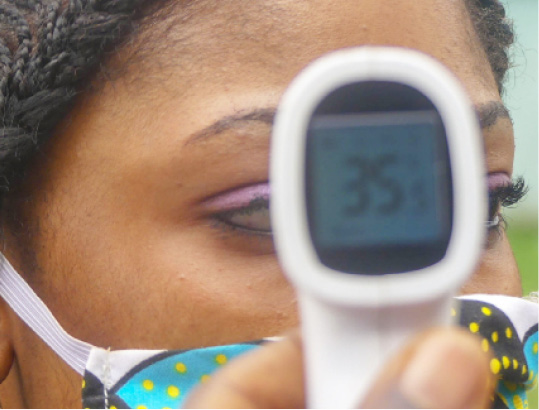
The past week, headlines about the return of COVID -19 in Nigeria has been trending. People have been sending Whatsapp messages, panicking, ever since the news broke about an alleged Chinese national and his contacts were diagnosed with COVID in Cross river state.
Let’s take a trip down memory lane.
It’s March 2020 and hand sanitizer is more precious than gold. Zoom became our second living room and the world suddenly discovered what “social distancing” meant. COVID-19 came charging in like a villain in a Nollywood thriller invisible, unpredictable, and utterly terrifying. We learned to fear our own cough, second-guessed every handshake, and watched helplessly as our bustling cities fell silent.
Five years on, the shock and dismay may have faded, but the question Nigerians are asking this week fuelled by fresh headlines is: Has COVID-19 come back?
Or, in truth, did it ever truly leave?
Let me spoil the suspense for you. No, it did not leave. And yes, in a manner of speaking, it is “back.” COVID-19 never disappeared. It didn’t pack its bags, board an Emirates flight, and leave Nigeria for good. The virus simply did something viruses do best: it transitioned. The World Health Organization (WHO) moved the conversation from “pandemic emergency” to “endemic disease”. That is public health speak for “the virus is still here, but we have learned to live with it like malaria, like flu, like common cold.”
In other words, the firestorm became a campfire. Still warm, still capable of burning if you get too close, but no longer a raging inferno consuming everything in its path. COVID-19 continued to mutate quietly in the background, occasionally causing illnesses especially among the elderly and immunocompromised while the rest of us went about our business.
Even the numbers confirm this. Between 2020 and today, Nigeria recorded over 267,000 confirmed cases and more than 3,100 deaths. But in recent years, testing dropped, reporting slowed, and the virus seemed to vanish from the headlines. That, however, was never the same as vanishing from reality.
So why are we suddenly discussing it again?
Fast forward to April 2026. News broke that a 53-year-old Chinese expatriate working with Lafarge in Akamkpa Local Government Area of Cross River State tested positive for COVID-19. He arrived in Nigeria on March 17, developed symptoms weeks later, and was swiftly isolated at the University of Calabar Teaching Hospital. Contact tracing identified 10 individuals who had interacted with him; they were placed under home isolation and monitored closely.
Cue the panic. Headlines began to swirl about a “resurgence.” But here is where we need to pause and separate journalism from alarmism. The Nigeria Centre for Disease Control (NCDC) quickly stepped in to calm public fears. Director-General Dr Jide Idris confirmed that there is no evidence of widespread transmission and urged Nigerians to avoid spreading unverified reports that could cause unnecessary panic.
In fact, the Cross River State government went a step further, debunking misleading reports that suggested 10 new infections. Commissioner for Health Dr Henry Egbe Ayuk clarified that those ten individuals were merely contacts not confirmed cases and none was showing symptoms. As one official put it, COVID-19 is “not peculiar to Nigeria,” but the situation is under control.
So, is COVID-19 “back”? One imported case effectively contained, with no community spread, does not a comeback make. But it does serve as a valuable reminder: the virus is still out there, circulating globally, crossing borders, and occasionally knocking on our door.
One reason the conversation has resurfaced again is that the virus has not stopped evolving. In 2026, two dominant variants have been making waves globally: Nimbus (NB.1.8.1) and Stratus (XFG). Both are highly transmissible meaning they spread easily, even among people with prior immunity but neither appears to cause more severe illness compared to earlier strains.
In other words, catching COVID-19 in 2026 might feel like a bad cold: sore throat, hoarseness, congestion, dry cough. For most healthy individuals, that is all it is. But for the elderly, the immunocompromised, and those with underlying conditions, the stakes remain higher.
Wastewater surveillance in countries like the United States has also shown that new variants can spread far more widely than reported cases suggest, as asymptomatic infections often go undetected. That same reality applies to Nigeria. Just because we aren’t testing as aggressively as we did in 2020 does not mean the virus has vanished.
The Good News is – It’s not 2020 anymore.
Here is the crucial distinction that many headlines miss. COVID-19 is no longer the world’s deadliest infectious disease. That grim title has quietly been passed back to an older, more stubborn respiratory illness: tuberculosis (TB). Yes, TB. The disease your grandmother used to warn you about has reclaimed its throne as the leading infectious killer globally. The pandemic disrupted TB diagnosis and treatment for years, allowing it to make a troubling comeback.
So, while COVID-19 remains a dangerous infection for vulnerable groups, the overwhelming majority of people today experience mild illness, recover at home, and move on with their lives. It is what public health experts call “managed endemicity.”
But that does not mean we should be careless.
If there is one lingering shadow that deserves our attention, it is Long COVID. Even mild infections can leave behind persistent health issues fatigue, brain fog, chest tightness, shortness of breath that last for months or even years. Recent studies show that reinfection and older age are significant risk factors for developing Long COVID symptoms. Vaccination, however, reduces the risk significantly.
So yes, while the acute danger has faded, the long-term health consequences have not disappeared. That is reason enough to remain thoughtful not terrified about this virus.
Instead of panicking, here is what Nigerians should do.
First, stop panicking. One contained case in Cross River is not a second wave. The NCDC has activated response measures, contact tracing is ongoing, and the situation is under control.
Second, remember the basics: wash your hands regularly, practice good respiratory hygiene, stay home if you feel unwell, and seek medical attention if symptoms persist.
Third, keep your vaccinations updated. Just like the flu shot, COVID-19 vaccines are now updated annually to protect against current circulating variants. They still do an excellent job of preventing severe illness and death.
Finally, stay informed through official channels NCDC, Federal Ministry of Health, WHO and ignore the doom-scrolling on WhatsApp and TikTok. Not every cough is COVID, and not every headline deserves your anxiety.
Five years ago, we faced a terrifying unknown. Today, we face a known quantity. COVID-19 did not disappear; it simply grew up. It matured from a pandemic crisis into an endemic reality. It is still mutating, still transmitting, occasionally still causing trouble. But it is no longer the world-ending villain of 2020.
The Cross River case is a wake-up call, not a fire alarm. It reminds us that vigilance matters not panic, not paralysis, just basic, sensible precaution. After all, we have survived worse as a nation. I believe in this T-pain era, Nigerians can survive anything.