
Israel ignores ceasefire offer, escalates Gaza war
Despite Hamas’s acceptance of a new ceasefire proposal brokered through Doha, Israeli forces have launched a fresh military campaign aimed at occupying Gaza City, deepening fears of a humanitarian catastrophe and raising questions about Israel’s commitment to diplomatic efforts. The operation, dubbed Gideon’s Chariot 2, marks a significant escalation in the nearly two-year war, with […]
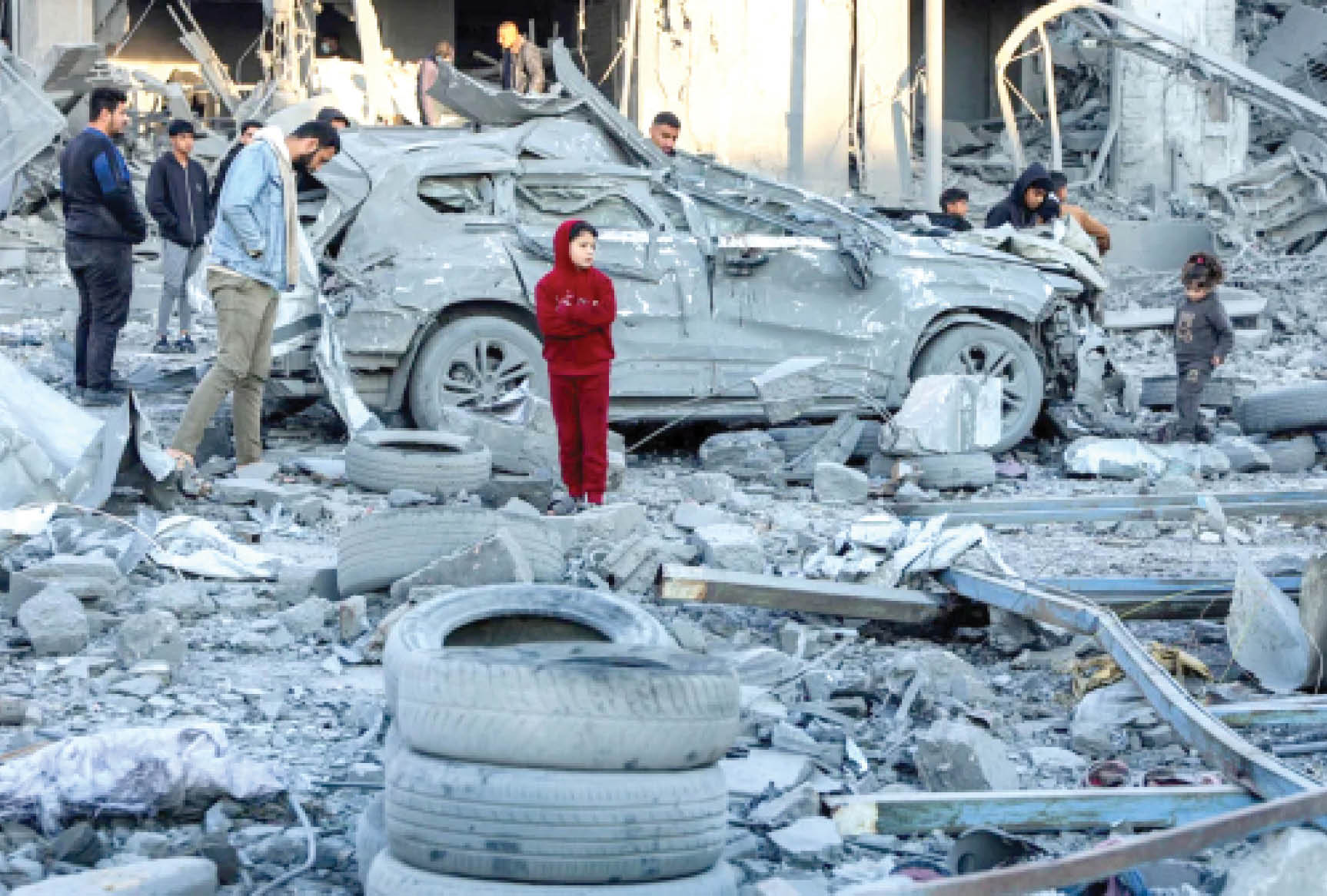
men and children stand by a collapsed building at the site of israeli bombardment on a residential block in jalaa street, gaza city, yesterday
Despite Hamas’s acceptance of a new ceasefire proposal brokered through Doha, Israeli forces have launched a fresh military campaign aimed at occupying Gaza City, deepening fears of a humanitarian catastrophe and raising questions about Israel’s commitment to diplomatic efforts.
The operation, dubbed Gideon’s Chariot 2, marks a significant escalation in the nearly two-year war, with the Israeli military announcing the deployment of 60,000 reservists and the beginning of ground advances into Gaza’s urban heart.
The renewed offensive comes just days after Hamas agreed to a ceasefire and hostage release deal mediated by Qatar and Egypt, with backing from the United States.
The proposal, described by Qatari officials as “almost identical” to one previously approved by Israel, includes the release of 10 hostages and 18 bodies, followed by broader negotiations. Egypt confirmed that “the ball is now in its (Israel’s) court.”
- Nigeria deports 102 Chinese nationals, others over cybercrime
- 2027: Micro-zoning splits southern PDP leaders
However, Israel’s response has been military rather than diplomatic. “We are not waiting. We have begun the preliminary actions, and already now, IDF troops are holding the outskirts of Gaza City,” the Israeli military said.
Prime Minister Benjamin Netanyahu insists the operation’s goal is to defeat Hamas, despite mounting international pressure to pursue a negotiated settlement.
Hamas condemned the offensive, calling it a “blatant disregard for the efforts made by the mediators.” In a statement, the group said, “The operation will fail just as its predecessors did. Israel will not achieve its objectives, and the occupation of Gaza will not be a picnic.”
The timing of the assault has raised alarm among observers who see it as a deliberate attempt to derail peace efforts.
“Today’s announcement by the terrorist occupation army of the start of an operation against Gaza City and its nearly one million residents and displaced persons… demonstrates… a blatant disregard for the efforts made by the mediators,” Hamas added.
Humanitarian crisis deepens
The military campaign has triggered a wave of displacement and intensified suffering in Gaza, where the civilian population is already reeling from months of bombardment, siege, and starvation.
The UN Office for the Coordination of Humanitarian Affairs (OCHA) warned that the forced movement of hundreds of thousands of people to southern Gaza “could amount to forcible transfer” and would have “a horrific humanitarian impact.”
Residents of Gaza City described a night of relentless bombardment. “The house shakes with us all night long, the sound of explosions, artillery, warplanes, ambulances, and cries for help is killing us,” said Ahmad al-Shanti. “The sound is getting closer, but where would we go?”
Amal Abdel-Aal, displaced from Al-Sabra neighbourhood, said, “No one in Gaza has slept, not last night, not for a week. The artillery and air strikes in the east never stop. The sky flashes all night long.”
The Israeli military has instructed civilians to flee to al-Mawassi, one of the few remaining areas not under direct control or displacement orders. However, Defence Minister Israel Katz and Netanyahu have indicated plans to eventually expel residents from al-Mawassi and concentrate them in a “sterile zone” in Rafah, where land has already been cleared.
Christian Cardon, spokesperson for the International Committee of the Red Cross (ICRC), described the situation as “intolerable.”
He said, “The intensification of hostilities in Gaza means more killing, more displacement, more destruction and more panic. Gaza is a closed space, from which nobody can escape and where access to health care, food and safe water is dwindling.”
The Gaza Health Ministry reported that at least 62,192 Palestinians have been killed since October 2023, with 157,114 injured.
In the last 24 hours alone, 70 bodies were brought to hospitals and 356 people were wounded. The ministry also confirmed that two more people died of starvation, bringing the total famine-related deaths to 271, including 112 children.
Diplomacy undermined
The renewed offensive has cast a shadow over months of shuttle diplomacy led by Qatar and Egypt. While previous ceasefires allowed for limited hostage exchanges, the current proposal was seen as a potential breakthrough.
Yet, Israel’s silence and subsequent military escalation suggest a strategic pivot away from negotiations.
Sources from Hamas and Islamic Jihad told AFP that the ceasefire deal includes a phased release of hostages and bodies, followed by talks for a broader settlement. With 49 hostages still in Gaza, including 27 declared dead by Israel, the urgency for a resolution remains high. Observers say Israel’s actions reflect a broader strategy to reshape Gaza’s demographics and political landscape. The military’s announcement that it had informed medical personnel and aid groups to prepare for evacuation underscores the scale of the planned occupation.
Late Thursday, the Israeli military said its recent manoeuvres and strikes “created the conditions” to intensify pressure on Hamas and lay the groundwork for the next stages of the campaign. However, critics argue that such moves undermine the credibility of international mediation and risk entrenching the conflict further.
As the war enters a new phase, the humanitarian toll continues to mount, and diplomatic efforts hang in the balance.
With Hamas accepting the Doha-backed ceasefire and Israel pressing ahead with occupation plans, the question remains: will diplomacy prevail, or will military ambition dictate Gaza’s future?