
Justice Uwais: A judicial titan takes final bow
Former Chief Justice of Nigeria (CJN), Justice Muhammad Lawal Uwais, has died at the age of 89 after decades of impactful leadership in the judiciary. A member of the family, Barrister Ahmed Uwais, confirmed the news to our reporter yesterday morning. He added, “We thank God for his life.” The body of the sage was […]
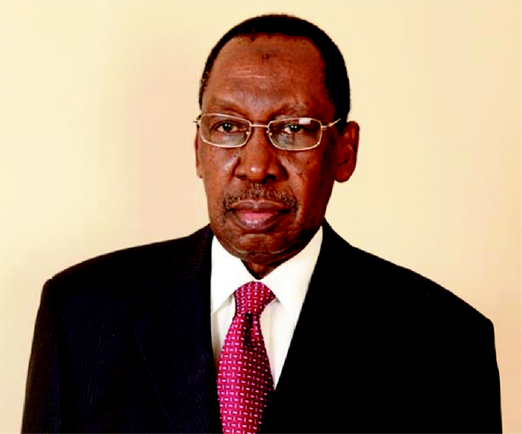
Former Chief Justice of Nigeria (CJN), Justice Muhammad Lawal Uwais, has died at the age of 89 after decades of impactful leadership in the judiciary.
A member of the family, Barrister Ahmed Uwais, confirmed the news to our reporter yesterday morning. He added, “We thank God for his life.”
The body of the sage was laid to rest on Friday after funeral rites and the Janaza prayers at the National Mosque in Abuja.
Justice Uwais was the longest serving CJN, having served for 11 years between 1995 and 2006, when he bowed out from the judiciary, but continued to provide invaluable resources to national legal development.
- Arafat: Nigerian clerics, pilgrims pray for end to insecurity
- Ondo Killings: When the ‘leopard’ fails to growl
His time on the bench was marked by several landmark judicial pronouncements at the Supreme Court, judicial and electoral reforms, which made his works relevant reference and citational materials.
Following his retirement in 2006, the late President Umar Musa Yar’adua appointed him to lead the Presidential Electoral Reform Committee, which included other national figures such as Bishop Matthew Hassan Kukah and human rights lawyer, Dr Olisa Agbakoba (SAN).
Uwais’s early life and career
Uwais was born on 12 June 1936, in Zaria, Kaduna State. He was called to the Bar at Middle Temple, London, in 1963. He began his legal career as a State Counsel in the Northern Region of Nigeria and rose through the ranks to become a Justice of the Supreme Court in 1979.
The judgements and legacies of Justice Uwais
Late Justice Uwais was a man of many firsts and legal impacts. He was the CJN who swore in President Olusegun Obasanjo as the first civilian president in the Fourth Republic on May 29, 1999 and he also delivered many landmark judgements.
Among them are: the 2001 Attorney General of the Federation vs the Attorney General of Abia State and 35 others brought under Section 162(2) of the 1999 Constitution on states’ control of natural resources located within a state.
Justice Uwais delivered the lead judgement and dismissed the preliminary objections by 11 of the states and sustained the original jurisdiction of the Supreme Court, and not usurping the powers of the National Boundary Commission under the National Boundary Commission Act 238.
In the 2000 case of Tinubu vs IMB Securities Plc on the scope of immunity by a state governor under the 1999 Constitution on the immunity of the governor, Uwais, in his contributory judgement to Justice, Iguh, ruled that allowing the interlocutory appeal, which emanated from the substantive suit at the high court, would offend Section 308 of the Nigerian Constitution, 1999, which unambiguously provided that such cases cannot proceed against a governor so long as he remained in the office.
In a 2000 appeal between the Director of State Security Services and Olisa Agbakoba, whose passport was seized on his way to the Netherlands as the president of the Civil Liberties Organisation, Justice Uwais ruled that although the Minister of Interior had the powers to cancel or withdraw a citizen’s passport, which can be delegated, under Passport (Miscellaneous Provisions) Act Cap 343, and publish same in an official gazette, the DSS did not present evidence of such delegation and therefore, it acted ultra vires its powers, and its actions were illegal and unconstitutional.
In 1983, ruling on the Ukaegbu vs Attorney General of Imo State on the right of an individual and non-governmental organisation to establish a private university, Uwais, in his contributory judgement, ruled that such was a right under Section 36 of the 1979 Constitution.
In another case in 1983, Alegbe vs Oloyo, on whether the 1979 Constitution empowered the speaker to declare vacant the seat of a parliamentarian who was absent for a given number of days, Justice Uwais ruled that the declaration was otiose and of no legal effect and not the usurpation of the powers of the state high court as it was not made in consequence of any dispute, adding that the lawmaker seat was already vacant for the number of days mentioned.
On the report of the electoral reform panel, which he chaired, it was recommended on December 11, 2008, that the establishment of the commissions is to deal with Electoral Offences, Constituency Delimitation and Political Parties Registration and Regulation. The panel recommended that the power vested in the Independent National Electoral Commission (INEC) and the State Independent Electoral Commissions would be transferred to the new commissions. The committee recommended proportional representation in elections to the federal and state legislatures and to the local government councils. The report also recommended that the head of INEC should be appointed by the judiciary rather than the president.
Yar’adua rejected some of the recommendations, especially that the INEC head be from the judiciary, and forwarded a modified version of the Uwais report to the legislature in 2009, drawing considerable criticism since many felt that recent elections had been deeply flawed and that basic reforms were required.
However, in March 2010, Acting President Goodluck Jonathan forwarded an unedited version of the report to the National Assembly for approval, by implication, saying that the recommendations should be implemented in their entirety before the 2011 national elections. The issue of power to appoint the INEC head remained controversial. Before Jonathan resubmitted the report, the Senate Committee on the Review of the Constitution had rejected the recommendation to transfer this power to the judiciary.
Parliamentarians opposed the appointment of the INEC chairman from the judiciary, including the Deputy Chief Whip of the Senate, Mohammed Mana, who submitted that letting the judiciary appoint the INEC chairman violated the principle of separation of powers, since the judiciary was responsible for hearing the cases arising from elections.
His books include: The Evolution of Constitutionalism in Nigeria; The Role of the Supreme Court Under the 1979 and 1999 Constitution, 2006; Law, Human Rights and Administration of Justice in Nigeria; Essays in Honour of Justice Muhammed Lawal Uwais, 2001; Administration of Justice in Nigeria: Essays in Honour of Justice Muhammed Lawal Uwais, CON, GCON, the Chief Justice of Nigeria, 2000.
He was a man of pedigree and integrity – Tinubu
President Bola Tinubu has described late Justice Uwais as a “phenomenal jurist and statesman” who served Nigeria with honour, courage, pedigree and exceptional personal integrity.
In a statement, which he signed on Friday, Tinubu said there were many remarkable high points of Uwais’ career on the bench, including how he superintended the judiciary with tact, patience, and a sense of duty during a challenging time.
The president said the role helped usher in the current democratic dispensation, which he ushered in as the CJN, who swore in the elected president on May 29, 1999.
“In retirement, the Federal Government called upon Justice Uwais to head a panel to investigate the conduct of our elections. Given his pedigree and personal integrity, he was the right person for that onerous assignment,” the statement reads.
“Not surprisingly, Justice Uwais led the panel to produce a critical report that contained a detailed prognosis of our electoral system.
“In active service and retirement, the late Justice Uwais maintained a dignified persona, earning him respect beyond his immediate constituency.
“May God Almighty accept the soul of Justice Uwais and admit him to Jannatul Firdaus,” the statement reads.
“I extend my heartfelt condolences to the Uwais family, the government, and the people of Kaduna State, as well as the members of the Nigerian Judiciary, over the death of this colossus.”
Uwais was a towering figure – Justice Kekere-Ekun
In her tribute, the Chief Justice of Nigeria, Justice Kudirat Kekere-Ekun, described Justice Uwais as a towering figure in Nigeria’s legal and judicial history, who was an erudite jurist, visionary reformer, and statesman whose contributions to the development of constitutional law, judicial independence, and democratic governance will forever remain etched in the annals of our national life.
In a statement she signed on Friday, the CJN said Justice Uwais, who was appointed to the Supreme Court in 1979 and later rose to serve as the Chief Justice of Nigeria from 1995 to 2006, “distinguished himself by his unwavering commitment to justice, courage in the defence of the rule of law, and the clarity and scholarship of his judgments. His post-retirement service, including chairing the Electoral Reform Committee, further affirmed his deep love for the country and passion for institutional integrity.
“I extend my heartfelt condolences to the family of the late jurist, the Nigerian judiciary, and the nation at large. I pray for the peaceful repose of his noble soul.”
Similarly, the Supreme Court of Nigeria has expressed a sense of loss on the death of Justice Uwais, who served between 1995 and 2006, “leaving behind a formidable legacy of judicial excellence and integrity.”
In a statement signed by the Director of Information of the Supreme Court, Festus Akande PhD, the apex court said Justice Uwais embarked on a remarkable journey through the legal profession having been “called to the Bar at the Middle Temple London in 1963 and quickly made a name for himself through his commitment to justice and fairness. Over the decades, he held various influential positions within and outside the judiciary.”
He added, “During his tenure as Chief Justice, he championed judicial reforms aimed at improving the administration of justice in Nigeria. He was instrumental in the establishment of the National Judicial Council, which plays a critical role in maintaining the independence and integrity of the judiciary. Justice Uwais was also dedicated to advancing legal education and was a mentor to many young lawyers and judges.
“The Supreme Court of Nigeria expresses its deepest condolences to the family of Justice Muhammadu Uwais GCON, during this moment of grief. We honour his tireless dedication to the rule of law and the improvement of the Nigerian judiciary; values for which he will always be remembered.”
Buhari, others mourn Uwais
In his tribute, former President Muhammadu Buhari said he was admired for his compassion and justice.
“He made important contributions toward making Nigeria‘s democratic fabric stronge,” he said.
“He will always be remembered by countless people for his emphasis on a meticulous approach to law as a judge and a member of the Council of States.”
In a tribute to Uwais, an Abuja-based lawyer, Kachi Okezie, said his life was a testament to the pursuit of justice and good governance, adding that his legacy was intertwined with the unfulfilled promise of the reforms he so passionately advocated.
He said despite the widespread acclaim and public demand for its implementation, a significant portion of the Uwais Commission’s recommendations has remained on paper, adding that his demise at a time of renewed debates and concerns about the integrity of Nigeria’s electoral process underscores the urgency of his unfinished business.
In their tribute, the Northern Governors’ Forum, in a statement by its chairman, Inuwa Yahaya, described Uwais as a man of “integrity, profound legal intellect, and an outstanding commitment to judicial reform and the rule of law.”
In his tribute, former Vice President Atiku Abubakar described him as an in-law and towering figure in the country’s judiciary who contributed to electoral reform.
Similarly, former presidential candidate Peter Obi described Uwais as an outstanding jurist who upheld the rule of law and ensured that justice prevailed under his watch.