
Kano varsity develops Qur’anic reading system for the deaf
Khalifa Isyaku Rabiu University (KHAIRUN), Kano, says it has developed a unique Qur’anic training system that enables deaf persons to read the Qur’an in Arabic, describing the initiative as part of its corporate social responsibility. Vice Chancellor of the university, Prof. Abdulrashid Garba, told journalists in Kano that the International Institute of Qur’anic Sciences (IIQS), […]
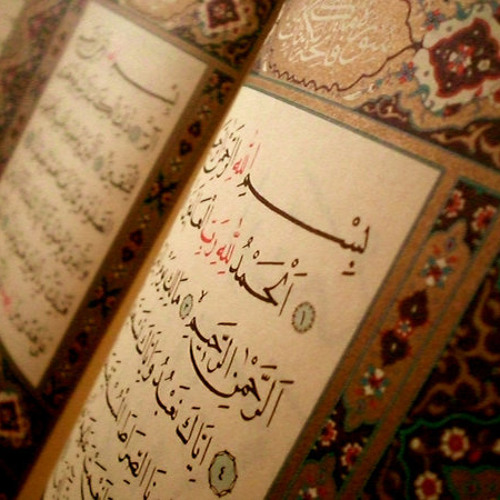
Khalifa Isyaku Rabiu University (KHAIRUN), Kano, says it has developed a unique Qur’anic training system that enables deaf persons to read the Qur’an in Arabic, describing the initiative as part of its corporate social responsibility.
Vice Chancellor of the university, Prof. Abdulrashid Garba, told journalists in Kano that the International Institute of Qur’anic Sciences (IIQS), one of the university’s research centres, pioneered the innovation.
He explained that the centre selected individuals from the community with hearing challenges and successfully trained them to read the Qur’an in Arabic rather than relying on English translations.
“We trained about 20 to 30 people, and they are now out there training others. This is our way of giving back to society,” he said.
Prof. Garba added that Qur’anic recitation is a non-credit compulsory course for Muslim students at the university, while Christian students are offered an alternative compulsory non-credit course in Artificial Intelligence to ensure inclusivity.
He stressed that this reflects the university’s emphasis on morality, entrepreneurship, international languages and Qur’an as part of its unique curricular offerings under the National Universities Commission’s Core-Curriculum Minimum Academic Standards (CCMAS).
Beyond the Qur’anic innovation, the Vice Chancellor announced that the university has completed the upgrade of 32 teaching and research laboratories to world-class standards, with 13 more at various stages of completion.
The facilities include Chemistry, Physics, Cyber Security, Nursing Science, Radiology, Forensic Science, Medical Simulation and Biotechnology laboratories.
He said the project was driven by three key reasons: compliance with regulatory requirements, meeting NUC standards, and equipping students with practical skills to become “intrapreneurs” capable of self-reliance after graduation.
The Vice Chancellor noted that the Abdul Samad Rabiu Africa Initiative (ASR Africa) has provided full scholarships to 507 students, while all students admitted between 2023 and 2026 benefited from a N500,000 tuition waiver granted by the founder.