
Key areas FG targets to drive $74bn livestock sector
The Minister of Livestock Development, Idi Mukhtar Maiha, has called on Nigerian youth to embrace the enormous opportunities within the livestock sector, declaring it “the alternative to crude oil” and a key driver of job creation, food security, and economic transformation. The minister unveiled an ambitious strategy to grow Nigeria’s livestock sector from its current […]
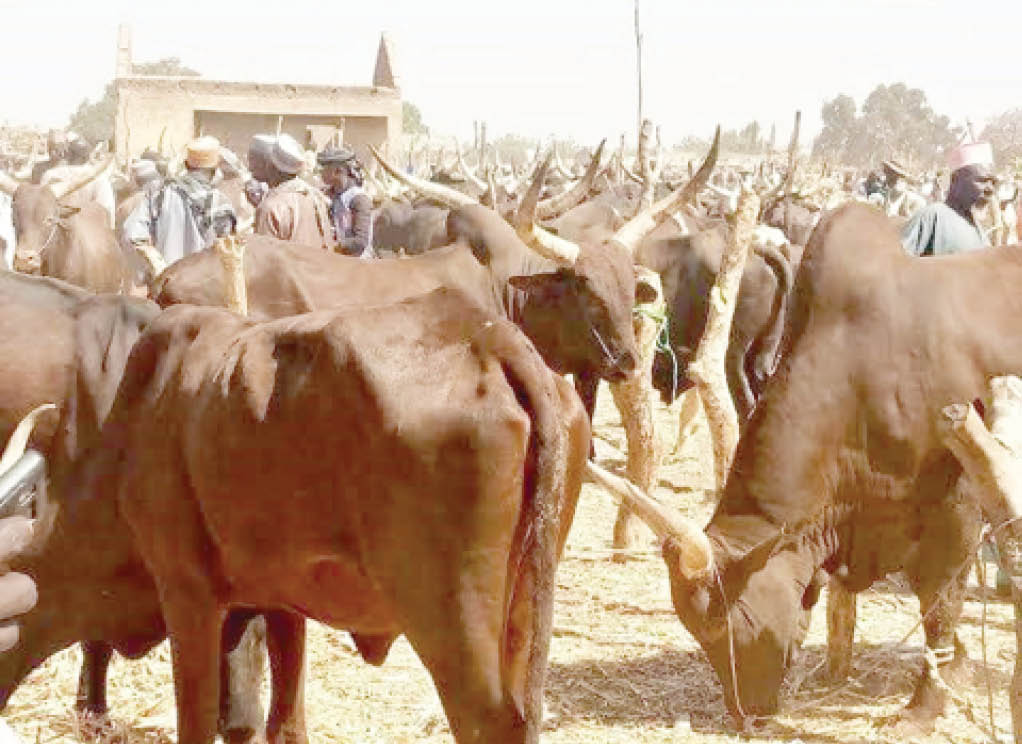
bulls at a livestock market in the area
The Minister of Livestock Development, Idi Mukhtar Maiha, has called on Nigerian youth to embrace the enormous opportunities within the livestock sector, declaring it “the alternative to crude oil” and a key driver of job creation, food security, and economic transformation.
The minister unveiled an ambitious strategy to grow Nigeria’s livestock sector from its current value of $32 billion to $74 billion by 2035, identifying youth and women as critical drivers of this transformation.
Speaking at a youth conference in Abuja, the minister outlined a series of government-backed initiatives aimed at stimulating youth-led agribusinesses, including the allocation of 51,000 hectares of land, partnerships with Gulf states for pasture exports, and plans to rehabilitate 417 grazing reserves nationwide.
“We have what it takes to eliminate hunger in this country.
- Don’t hold more than 60,000 Riyals for Hajj, NAHCON cautions pilgrims
- Web3 ai, Aptos, Sui: 3 Crypto Projects That Raised Millions Overnight & Are Still Climbing
“Fifteen million heads of cattle, 60 million sheep, 600 million chickens, 1.4 million goats, 700,000 camels, and vast agricultural land, yet we import milk.
“This is not a problem; this is an opportunity. What we need now is to activate the entrepreneurial spirit in our young people,” Maiha said.
Maiha challenged young Nigerians to reimagine agriculture through technology and precision farming, replacing traditional tools with drones, sensors, and smart devices. “We must move beyond the hoe. Precision farming is the future,” he stressed.
He also cited massive potential in school feeding programmes, noting that if each of Nigeria’s 47 million primary school pupils received just half a litre of milk daily, the demand would create over 23 million litres of dairy needs daily, translating into thousands of jobs across the dairy value chain.