
Kwankwaso’s dilemma
As Nigeria gears up for the 2027 elections, political manoeuvring is intensifying, with parties and key actors strategising long before the Independent National Electoral Commission (INEC) signals the official start of campaigns in the first half of 2026. Among those at a critical crossroads is Senator Rabiu Musa Kwankwaso, the 2023 NNPP presidential candidate, whose […]
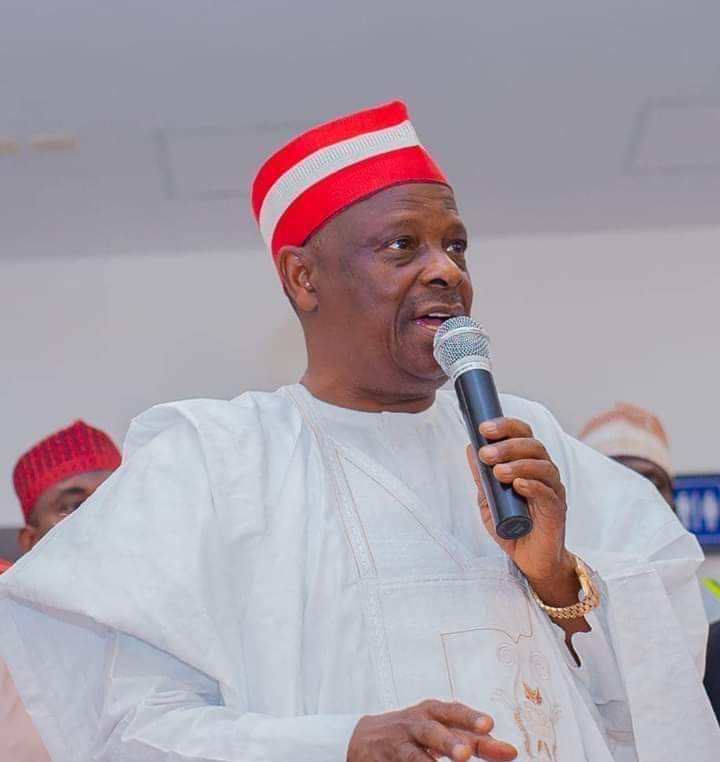
Senator Rabiu Musa Kwankwaso
As Nigeria gears up for the 2027 elections, political manoeuvring is intensifying, with parties and key actors strategising long before the Independent National Electoral Commission (INEC) signals the official start of campaigns in the first half of 2026. Among those at a critical crossroads is Senator Rabiu Musa Kwankwaso, the 2023 NNPP presidential candidate, whose next political move could reshape opposition politics in the country.
Kwankwaso, who joined the New Nigeria Peoples Party (NNPP) in 2022, faces courtship from both the ruling All Progressives Congress (APC) and opposition parties, notably the Peoples Democratic Party (PDP) and the African Democratic Congress (ADC). His potential defection has sparked intense debate among his loyal Kwankwasiyya followers.
Some supporters, including Muhammad Jamilu and Mustapha Abdu, argue that Kwankwaso should consider joining the PDP and endorse Governor Abba Kabir Yusuf of Kano State’s return to the APC. They believe that sanctioning Abba’s defection would consolidate Kwankwaso’s influence in Kano politics, resolve the lingering emirates crisis, and create a more favourable platform for pursuing his presidential ambitions, particularly since perennial contenders like Atiku Abubakar have exited the party (PDP).
The factional tensions within NNPP, compounded by claims from Dr Boniface Aniebom-led faction that Kwankwaso and Abba had been expelled from the party, have further fueled speculation about the inevitability of Kwankwaso’s defection.
- Buni-Led committee signals APC’s renewed push for internal cohesion
- PIA: Rivers host community decries non-compliance by oil firms
Professor Murtala Muhammad, of the Department of History and International Studies at Northwest University, Kano, argues that Kwankwaso’s dilemma transcends personal ambition, touching on the future of competitive democracy in Nigeria.
“The ruling APC under President Bola Ahmed Tinubu has consolidated power in a manner critics describe as hegemonic, if not quasi-militaristic. Through elite defections, centralisation of authority and strategic political bargaining, the party has created an atmosphere of near inevitability. While Nigeria is not a one-party state, it increasingly resembles a system of competitive authoritarianism where opposition parties struggle to survive,” Professor Muhammad said.
He notes that joining the APC offers Kwankwaso short-term political security, the potential to stabilise his base in Kano, and access to federal power and patronage. Yet, this option carries significant costs. The APC, he explained, is structured around President Tinubu, leaving little room for rival power centres or succession planning.
“Any expectation that Kwankwaso could bide his time in the APC until 2031 and emerge as a presidential contender is speculative at best. More likely, he would be absorbed as a regional mobiliser, sacrificing his autonomy and diluting the Kwankwasiyya movement’s anti-establishment appeal,” Professor Muhammad added.
The PDP option
Returning to the PDP presents a different set of opportunities and challenges.
With Atiku Abubakar’s departure, Professor Muhammad said, a leadership vacuum offers Kwankwaso leverage to negotiate for either a presidential candidacy or a vice-presidential slot in 2027.
“Despite its chronic internal crises, the PDP remains the only opposition party with national spread and electoral memory.
“This option keeps Kwankwaso’s national ambitions alive and could help revive competitive politics. Risks remain, including lingering factionalism, but the potential payoff is significant,” he explained.
Staying put in NNPP
Remaining in the NNPP is arguably the riskiest path but could yield the highest rewards in terms of legacy.
“A more demanding option is to rebuild the NNPP or spearhead a broader opposition coalition involving disaffected PDP elements and other reformist forces. This path carries the greatest risks: federal pressure, resource constraints, and organisational fragility. But it also offers the possibility of leaving a lasting imprint on Nigeria’s political landscape,” Professor Muhammad noted.
He stressed that in a political environment where hegemonic parties often collapse suddenly rather than gradually, creating a credible alternative could reposition Kwankwaso as a central figure in resisting soft one-party dominance.
Dr Kabiru Sufi, a political scientist at Kano State College of Arts, Science and Remedial Studies, concurs that Kwankwaso understands the intricacies of Nigerian politics. He believes the APC offers the stronger structural option but warns it does not guarantee an easy path to the presidency in 2031.
“A lot will depend on who is courting him and the options on the table. The APC provides structural strength, and many of his supporters may favour aligning with it. However, a return to PDP also offers a chance to revive its fortunes, though he would have to contend with heavyweights from the Northwest zone, including Aminu Waziri Tambuwal and Sule Lamido,” Dr Sufi said.
He added that even if Kwankwaso returns to the APC, smooth sailing to 2031 is not guaranteed. He would still have to navigate competition with Vice President Kashim Shettima or whoever is positioned to succeed President Tinubu, unless offered a ministerial role too lucrative to refuse.
Allies advocate staying in NNPP
Messages sent to Hon. Saifullahi Hassan, Kwankwaso’s media aide, regarding his principal’s next move were not returned.
However, Kwankwaso’s close ally, Hashimu Dungurawa, who is also the state NNPP chairman in Kano, dismissed speculations about defection as “amateurish,” stressing that the senator will neither join APC, PDP, nor ADC.
“It is amateurish to speculate that Jagora will defect after the NNPP recently concluded its national convention. Both PDP and ADC are enmeshed in factional crises and litigation, making it suicidal to abandon our platform. Those speculating are political amateurs,” Dungurawa said.
Abdullahi Maikano Ibrahim, former ALGON chairman and Kwankwaso disciple, also urged the senator to remain in the NNPP.
“People are tired of APC, the PDP is dead, and ADC and SDP face multiple legal challenges. The NNPP is currently the only opposition party free of pending court cases. Kwankwaso should consolidate and focus on strengthening the party,” he said.
Maikano highlighted the successes of the NNPP’s ongoing Congresses at ward, local government, state, and zonal levels, and the national Congress, noting that Kwankwaso is positioning the party to serve as a credible opposition force. “We are open to alliances with any political party, ruling or opposition, provided they do not compromise our ideology,” he added.
Electoral record and historical context
Kwankwaso finished fourth in the 2023 presidential election as the NNPP candidate, garnering 1,496,687 votes, trailing Peter Obi (6,101,533), Atiku Abubakar (6,984,520), and Bola Tinubu (8,805,655). His previous bids include the 2014 APC presidential primary, where he placed second to late Muhammadu Buhari with 974 votes, and the 2019 PDP presidential primary in Port Harcourt, where he trailed Bukola Saraki, Aminu Tambuwal, and Atiku Abubakar but led over Sule Lamido, Ahmad Makarfi, Tanimu Turaki, and David Mark.
Analysts say Kwankwaso’s next move will carry implications beyond Kano and the 2027 elections. Having ruled out aligning with the coalition-led ADC, aligning with the APC could ensure short-term survival; joining a revitalised PDP could reinvigorate national ambitions; rebuilding a coalition in NNPP or beyond offers historical relevance. In a political space constrained by hegemonic tendencies but not closed, Kwankwaso’s decision will signal whether leading actors still believe in competitive democracy or primarily in proximity to power.
For Kwankwaso, the calculus is complex. Joining the APC offers immediate access to federal resources and a degree of political security but risks subsuming his movement under Tinubu’s leadership. PDP presents the possibility of national prominence, but navigating factionalism and entrenched power blocs remains challenging. The ADC is already populated by leaders with unyielding ambitions. Remaining in NNPP or leading a broader coalition carries the greatest organisational risk but could define his political legacy, offering the chance to shape opposition politics in a way that transcends personal ambition.
Kwankwaso’s supporters, however, remain largely committed to the ideals of the Kwankwasiyya movement, emphasising the need for principled opposition over opportunistic alignment. They argue that while survival is important, the broader goal should be preserving an ideological platform that champions grassroots engagement, federalism, and political accountability.
Kwankwaso’s next steps will not only determine his political trajectory but also shape the dynamics of opposition politics in Nigeria. Whether he aligns with the APC or ADC, rejoins the PDP, or strengthens the NNPP and broader opposition coalitions, his choices will reflect the delicate balance between ambition, ideology, and pragmatism.