
Laolu Akande: What silence on insecurity means
Former presidential aide and public affairs analyst, Laolu Akande, has called on Nigerians to raise their voices against the worsening security situation across the country, warning that silence in the face of escalating violence could amount to complicity. Speaking on My Take, a segment of the current affairs programme Inside Sources with Laolu Akande on […]
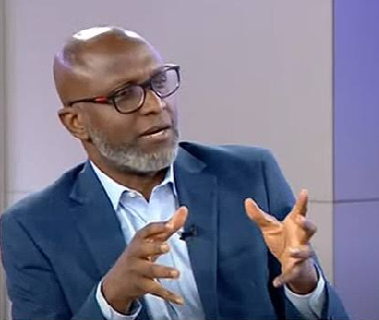
Former presidential aide and public affairs analyst, Laolu Akande, has called on Nigerians to raise their voices against the worsening security situation across the country, warning that silence in the face of escalating violence could amount to complicity.
Speaking on My Take, a segment of the current affairs programme Inside Sources with Laolu Akande on Channels Television, Akande said the frequency of kidnappings, killings, and attacks on communities has reached a point where every Nigerian who cares about the country’s future must demand urgent action from leaders and security institutions.
According to him, the growing insecurity is no longer a distant problem affecting isolated communities but a national emergency that is increasingly touching the lives of ordinary citizens across different regions of the country.
Akande observed that recent protests in cities such as Ibadan, Abeokuta, and other parts of Nigeria reflected growing public frustration and anxiety over the deteriorating security environment.
“The current circumstances that we find ourselves in as a country require all those who love Nigeria to speak up. There is no need to wait until all there is to say will be lamentations,” he said.
“Don’t let us wait for lamentations. That is why the protests in Ibadan, Abeokuta and all over the country did not come as surprises. Nigerians are watching the news of kidnappings, killings and bloodletting all over the country.”
He noted that many Nigerians who once viewed insecurity as a challenge affecting distant communities are beginning to realise that no one is immune from the threat posed by criminal violence.
His comments come amid increasing concerns over attacks on schools, farming communities, highways, and rural settlements, as well as a resurgence of kidnapping-for-ransom across several states.
The former presidential spokesman expressed concern that insecurity has expanded beyond traditional hotspots and is now affecting homes, farms, places of worship, and educational institutions.
“Insecurity has moved into our homes, our farms, into our classrooms,” he said.
Akande argued that the public outrage emerging in response to these incidents is not merely an expression of anger but a manifestation of collective grief over the loss of lives and the disruption of communities.
“Thankfully, the outrage that was supposed to follow is now following. The outrage is not anger. It is grief.”
Referring to recent reports of attacks on schools and teachers, he stressed that Nigerians cannot afford to become desensitised to acts of violence.
“When 46 students and teachers are taken from a school assembly, when teachers are killed and beheaded for teaching Mathematics, silence becomes complicity,” he stated.
According to him, the scale of the crisis demands sustained public engagement and national reflection rather than episodic reactions whenever major incidents occur.
Akande also revisited comments previously made by the General Overseer of the Redeemed Christian Church of God, Enoch Adeboye, regarding the need for greater accountability in the fight against insecurity.
He welcomed the renewed circulation of a video in which Adeboye called on the government to establish measurable timelines and performance indicators for security agencies.
“It is a good thing that the video of Pastor E.A. Adeboye calling for timelines and consequential key performance indicators is circulating again,” Akande said.
The former presidential aide noted that security agencies should be assessed against clearly defined objectives and measurable outcomes rather than broad assurances.
“Indeed, Pastor Adeboye called on the President to hold service chiefs accountable within a 90-day time limit,” he added.
Akande argued that establishing performance benchmarks for security agencies would help improve public confidence and ensure that security strategies produce tangible results.
He maintained that while Nigeria’s security challenges are complex, citizens have a right to expect periodic assessments of the effectiveness of military operations, policing efforts, intelligence gathering, and community protection initiatives.