
Lawmakers’ pay: What if Indonesians were Nigerians
Just because, last September, Indonesia’s 580-member parliament raised their allowance to 50 million Rupiah, equivalent of $3,075 (three thousand and seventy-five US dollars), hell broke loose in Indonesian major cities, when it came to the public knowledge about the pay rise. In Nigeria, their counterparts in the federal parliament (National Assembly) pocket 21 million Naira, […]
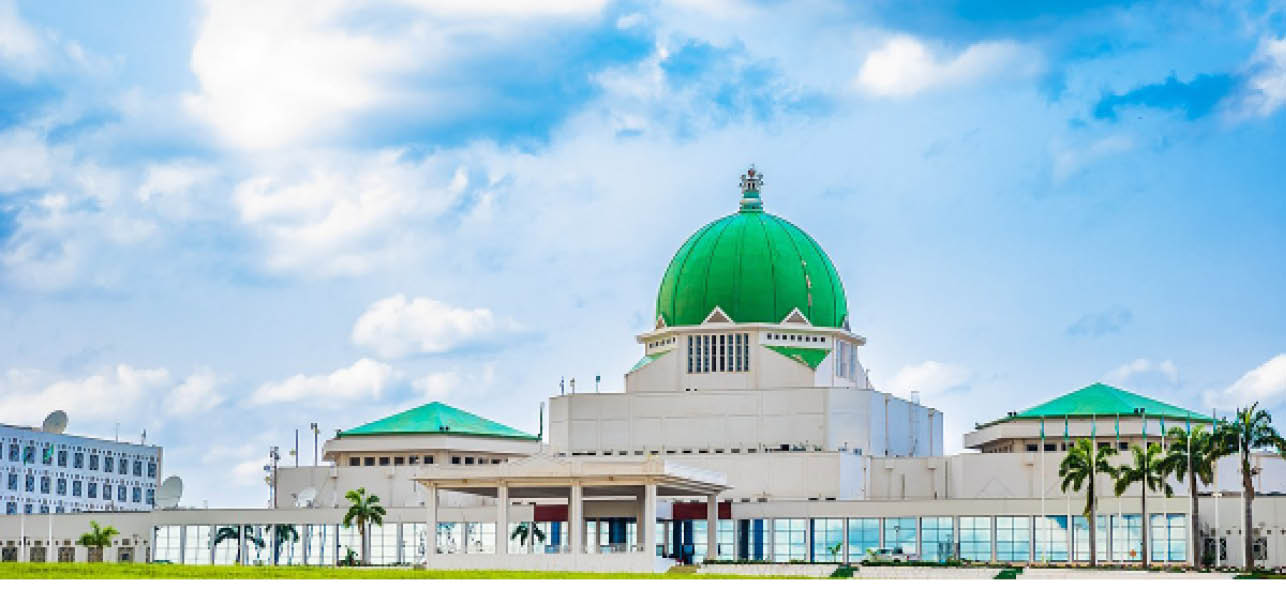
National Assembly
Just because, last September, Indonesia’s 580-member parliament raised their allowance to 50 million Rupiah, equivalent of $3,075 (three thousand and seventy-five US dollars), hell broke loose in Indonesian major cities, when it came to the public knowledge about the pay rise. In Nigeria, their counterparts in the federal parliament (National Assembly) pocket 21 million Naira, monthly, the equivalent of $13,685(thirteen thousand, six hundred and eighty-three US dollars), with even a recent talk to hike the pay packet of political office holders, which would certainly include the federal lawmakers.
The protest in Indonesia, spearheaded by students and workers, argues that the lawmakers’ pay rise is not conducive to the economic situation of the country, where the workers’ take-home pay or minimum wage is estimated at 10 times less than the lawmakers’ recent pay hike. It was considered grossly insensitive and offensive. In Nigeria, workers’ basic take-home pay or minimum wage of 70,000 naira, the equivalent of $35, is 300 times the size of a walkaway allowance of a federal lawmaker. It has just been revealed by several media reports that the monthly wage of a university professor, the highest academic rank in the university is between 520,000 and 633,000 naira, the equivalent of about 400 – 500 USD (five hundred to six hundred U.S dollars), a tiny fraction of that for a federal lawmaker, with a minimum qualifications’ requirement of an attempted WASC or GCE “O” level.
The protest and angry rioting in Indonesia have already sent shock waves to the country’s highest political echelon. President Prabowo Subiato who was to attend the regional security summit of the Shanghai Cooperation Organization (SCO) in the Chinese city of Tianjin and also participate in the elaborate ceremony of the 80th anniversary of the end of World War II in the Chinese capital, Beijing have cancelled the trip with the president sending out his apologies to the Chinese government of his inability to honour the invitation. But the Indonesian leader did not stop at just staying home to manage the situation. Having consulted with all the political parties in the parliament, he has announced to the Indonesians that the parliament is taking measures to revoke a number of its recent policies, including the size of allowances for members of parliament and even went further to announce a freeze or moratorium on overseas work trips.
The major concessions to the protesting students and workers in revoking the perks and privileges of the lawmakers represent critical institutional sensibilities to issues of public concern. It is not a show of weakness but a vital understanding of the civic pushback against power because the main issue in democracy is not so much about how to acquire power but to constrain and restrain power, with civil disobedience being the ultimate in the case of the failure of the traditional institutional checks and balances.
The Indonesian members of parliament and the executive arm, led by the president, have demonstrated by their consultation and revocation of the offending policy, demonstrated that they are truly in the service of their people. They did not walk the path of shame in either bludgeoning the protesters with heavy–handed police repression or even going shopping for hired counter demonstrators to discredit the genuine protest. They simply bowed to the popular will.
The Indonesian economic situation, which the students and workers’ protesters alluded to have being in stress and not conducive to accommodating lawmakers’ increased perks, is by far, better in shape than Nigeria because workers’ take-home pay with variations across the country’s thirty-four provinces is significantly higher than in Nigeria. An average worker’s minimum wage is $337, the equivalent of five hundred and sixty thousand naira (560,000 naira), which is around the same amount paid to a professor in Nigerian universities.
As the 2027 general elections approach, Nigerians have been in a feverish debate about which of the political parties can pull the country out of the woods. In our view, the hope placed on politicians and political parties, whether the ruling party or the opposition parties, is misplaced. The nature of power and the desperate means through which it is acquired does not suggest that any of the political parties can do better than the other and the transactional nature of political bargain which does not feature values, policies and principles simply means that the future of politics is terribly bleak and could only get bleaker if new elements do not enter the fray and fresh approaches are not radically introduced.
Popular movements like the organized labor, student, organization, academic and non-academic union in the universities, polytechnics and colleges of education, Media union, organized medium and small scale businesses, farmers are the critical and last bastions to save Nigeria and move her in the direction to fulfil her destiny of not only providing for her diverse peoples but as the pivotal force to direct Africa’s modernization and renaissance and also black man’s redemption generally.
The Academic Union of Universities (ASUU) should cease their tokenistic and beggarly approach of seeking wage rises and begin to offer intellectual clarifications and eruditions of the Nigeria in chains perpetrated by a slim minority of politicians and their cohorts in the so-called private sector oligarchy. The leadership of the academic and media unions, in revealing and clarifying the endless circus of theatre performance orchestrated by politicians and their accompanying political parties, would galvanise popular despair and anger into an actionable practice of civic pushback, the type that Indonesians demonstrated recently to claim the popular initiative in their country’s political life.
Traditional politicians of any political party cannot concede to Nigerian’s anything to improve their living conditions except under pressure. And the pressure point is the civic power of the popular movements and organisations in Nigeria. The traditional method of wage bargaining as a way to improve the lives of Nigerian working people is outdated and seemingly useless, and hopeless. To negotiate a wage rise that is terribly undercut the next day by roaring inflationary and foreign exchange pressures is equivalent to cutting one’s nose off to spite the face. It is as self-conceited as it is self-defeating.
The Nigerian popular movements must be prepared to play the long game and engage in the political space, bringing their massive civic power-capital to bear and push back at the reckless adventures of Nigerian politicians, especially in the policy arena where they deliberately undermine in the night, what they proclaimed in the daytime.
Since the policy of the removal of fuel subsidy nearly two years ago, trillions of naira have been generated and distributed to all levels of government, but no ordinary Nigerian can claim to have accessed cheaper and efficient healthcare, travelled on a better road network either in the urban centres and rural areas or the children attending a convenient and better equipped public schools with motivated school teachers. Small and medium-scale businesses and even industries are on the verge of collapse for numerous reasons, including a lack of access to credit and the topsy-turvy exchange rate, which makes planning for even one week a nightmare. Yet the tiny community of politicians and their cohorts numbering about just 1% or less of the population in the country continue to live in unfathomable exuberance and in utter display of unconscionable hedonism; certainly not for the value they create but by the subterfuge of a chaotic electoral heist they forment and practice, in which people’s votes are used to legitimize their misery and slavery.
Indonesia is a multi-ethnic and plural society and even an archipelago of over 17,000 islands with more than 500 ethnic nationalities with different time zones, but when it comes to taking back their country from the indiscretions of politicians, they speak with one voice. Popular movements in Nigeria and not foreign-funded civil society organisations (CSOs) must take the critical lead in mobilising the civic power to shape the future of the country and rescue it from the stranglehold of politicians, their political parties and cohorts.
Nigerian popular movements were the historical force even before the political parties in the pushback against colonial domination and for independence, and now that the country is facing something even worse than colonial plunder since the more than two decades of return to the so-called civil rule, Nigerian popular organisations should regain their historic vanguard role, once again and save the country.
Mr. Onunaiju contributed this commentary from the FCT, Abuja.