
Life without Abba Kyari
As vacuums go, the one left by Malam Abba Kyari, Chief of Staff to President Buhari will compete with the biggest in the history of our nation. We have lost military and civilian heads of state in the past, their deaths in office creating major watersheds in politics and governance. Balewa’s murder was part of […]
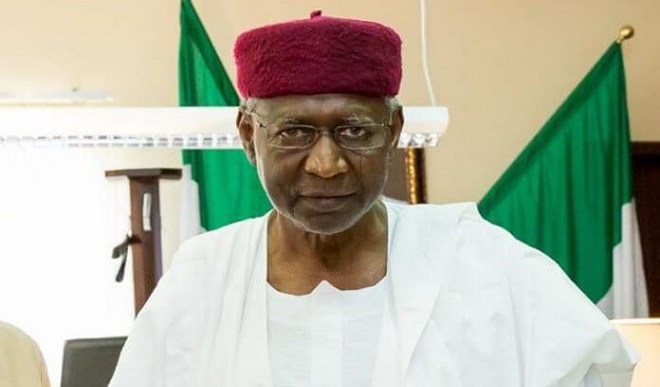
As vacuums go, the one left by Malam Abba Kyari, Chief of Staff to President Buhari will compete with the biggest in the history of our nation. We have lost military and civilian heads of state in the past, their deaths in office creating major watersheds in politics and governance. Balewa’s murder was part of series of tragic events that were to plunge the nation into major crises for many years. Murtala’s assassination created the mystique of a short-lived radical military regime, but the man who succeeded him changed gears to run a routine military government. Abacha died at the precise moment the nation was to be married to his ambitions for life, setting into motion a stampede by the military to withdraw from the political arena.’YarAdua’s presidency showed flashes of the unusual and the mundane, but his successor lowered the bar below the ground, providing much of the impetus for the election of a successor whose legacy could be one of high expectations and disappointing results.
Malam Abba Kyari was of that generation that was part spectator, part participant in struggles to affect the manner Nigerians laboured to come to terms with a colonial legacy that was pregnant with great dreams and the potentials for major failures. Obviously possessed of a brilliant mind and a huge capacity for hard work, he prepared well for leadership roles in the private sector and a brief stint as a Commissioner in his home state, about the only public office he held before he became the most powerful Chief of Staff to a Nigerian President. He acquired extensive experience in top positions in the financial sector and a brief romance with the media, maintaining the type of distance that could only have been a reflection of a character that placed premium in low visibility. When he burst on the public domain, not a few people must have said, ”Abba who?” He did not have a visible front seat in Buhari’s long and tortuous journey to the Presidency. He was part of a small, tight circle in Kaduna that schemed behind heavy shields, and he became the face of this powerful circle that spawned the “cabal” that more or less decided everything of importance in the Buhari Presidency.
Malam Abba was the perfect foil to deploy in a presidency that had to create strong buffers between a president that was vulnerable to multiple influences, yet lacking in large quantities of trust for new faces and distrust for sharp bends in his affairs on the one side, and a world that could not wait to exploit all the president’s personal and political weaknesses on the other. The President had very close confidants who felt that with Malam Abba, the Presidency was safe, but only if he exercised huge powers. He was that safe bridge between a president who described him as his lifelong friend and demonstrated this with his unquestioning reliance him, and a small circle that enjoyed even greater confidence of the President. He had the added advantages of a strong will, unalloyed loyalty to his principals, the courage to take bullets for them and unparalleled stomach for control and the industry that went with having to manage a span of control that will challenge the best with even better health than him.
You needed three things to be the phenomenon that Malam Abba was. First, the total trust and loyalty of your principals. You needed to know they will stand by you when poisonous letters from other loyalists like el-Rufai and others who had less visibility but a huge appetite for access and influence attempted to create cleavages, and immunity from bitter vitriol from the President’s wife and others who felt they could poison a seemingly pristine relationship. Second, you needed some type of personality and level of competence to retain this loyalty, exercise judgments and take decisions for a minimalist President challenged by age and health condition, and unlimited capacities to convince principals that the only colour is white. Third, you need a finely-honed instinct for dangerous palace intrigues and fights that will be permanent features of life in this position. Just think: Malam Abba edged out an elected Vice President in substance and visibility, outlived the former SGF BD Lawal and strongman Lawal Daura, saw away two Heads of Service, locked out powerful allies or former allies at will, survived the endemic skirmishes with the NSA and multiple assaults from the First Lady. His legendary resistance and survival record in turn gained for him a long line of powerful people who knew that the fear of Malam Abba was the beginning of wisdom. History may record that his highest achievement in that office was that he survived all adversaries.
The death of Malam Abba has a toll the nation will take a long while to count. For President Buhari, this will be a loss difficult to measure, but very likely disastrous in consequences. He has relied so much on this loyal aide, and had done so increasingly as the personal challenges of age and health made it necessary to off-load the burdens of the office. Rather than lean harder on the Vice President, he chose to build up an un-elected personal aide to be the engine room of his administration. There could not be a worse time to lose a familiar and reliable aide than now to shield the President further from everything going wrong at the same time: the rising toll of COVID-19 and chaotic approaches to dealing with its consequences; crash in prices and dangerous depletion in revenues from crude; increasing pressure from states for more from a federal government that is virtually broke; the dangers of mass revolt against safety and preventive measures by citizens hard-pressed for some support to stay at home; a decade-old insurgency that will not roll over and multiple internal security challenges that weaken the citizens’ perception of the worth of the state.
President Buhari is likely to recede further the Villa as routine administration slows further without Malam Abba. It was never really the most efficient administrative set-up: the Presidency was basically the person of Malam Abba and a few hands and the awesome powers he wielded over the entire government. There were, consequently, many gaps in routine administration and decision-making that were left unattended. Even if President Buhari appoints a new Chief of staff soon, (s)he will take a long while to gain the president’s attention and confidence to be a small fraction of Malam Abba; stamp his authority on the vast territory that he controlled; send signals that he will not be poodle to the domestic influences of the Villa and many attempts from outside to lower the very high defences that the President was comfortable behind; resist ambitious Ministers and politicians who think there should be new systems in place to give them a little more breathing room; and keep the ship of state afloat at a most challenging period without stretching the limited capacities of the President to irritation levels.
The bottom line is this: if the powers wielded by an un-elected aide to the President created bottlenecks and absence of openness and transparency in governance, the nation should be prepared for worse. For Malam Abba was the perfect reflection of President Buhari’s idea of governance, and a new person will just have to attempt to be like him. This will take a lot of time and many skirmishes that have to be won. Time, however is what the nation does not have.
May Allah grant Malam Abba Kyari Aljanna.