
Lineage and Leadership: A Reflection on the Emirship of Kano
Deep within the heart of Kano, a saga unfolds that echoes through the corridors of time—a narrative of familial ties tested by the tug of authority and the pursuit of glory. Two cousins, Aminu Ado Bayero and Muhammad Sunusi, locked in a contentious battle for the revered Emirship of Kano. As the dust settles on […]
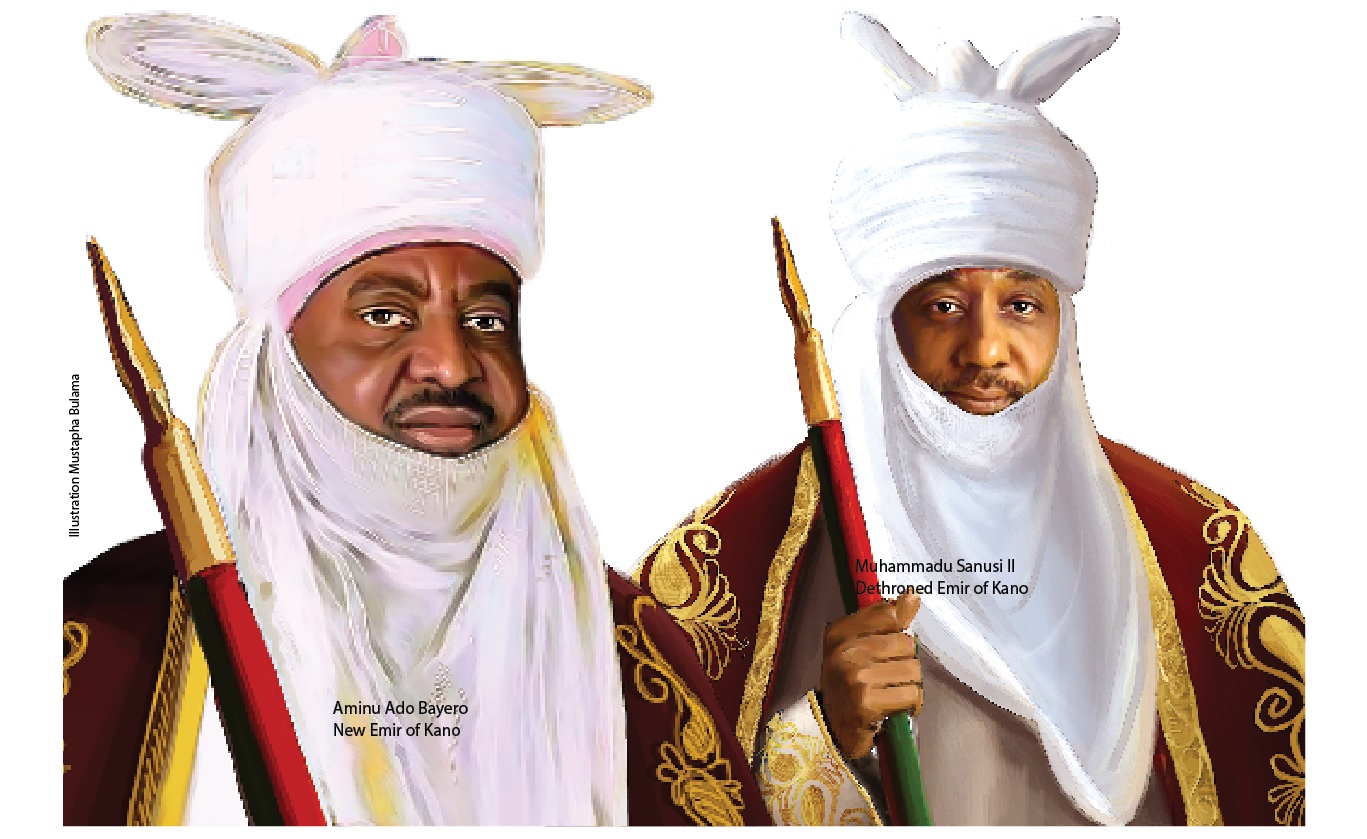
Aminu Ado Bayero
New Emir of Kano and Muhammadu Sanusi II
Dethroned Emir of Kano
Deep within the heart of Kano, a saga unfolds that echoes through the corridors of time—a narrative of familial ties tested by the tug of authority and the pursuit of glory. Two cousins, Aminu Ado Bayero and Muhammad Sunusi, locked in a contentious battle for the revered Emirship of Kano. As the dust settles on this modern-day epic, where the past and present converge in a delicate balance of power and prestige. It’s hard not to draw parallels with the ancient Roman myth of Romulus and Remus.
In the annals of history, Romulus and Remus, the legendary founders of Rome, epitomise the struggle for power and the complexities of sibling rivalry. Aminu Ado Bayero is a prince through and through, who, as a young prince, was appointed in the 90s and rose through a system that embraced him. Adored by the Kano people who would cheer him on with “sai kayi,” no other prince drew a larger crowd. Aminu Bayero, has contributed to the development of the emirate and Kano from the reign of his father and more recently to that of Sunusi from 2014 to 2020. He was the first to give ‘Bay’ah’ (pledge of allegiance) to Sunusi when he was controversially appointed. While Kano burned, while protesters were on the streets, and while other princes stayed away, Aminu Bayero courageously submitted and paid allegiance to the new emir on the throne that most people felt should have gone to the sons of Ado Bayero. But politics played its part in placing Sunusi on the throne and, six years later, the same politics played a part in his dethronement.
Consequently, Aminu Bayero was appointed Emir of Kano while his brother, Nasir Bayero, was appointed Emir of Bichi. Sunusi plotted and schemed to return to the throne by ousting his successor and removing all other emirs, just to satisfy his ego. Both brothers supported Sunusi during his reign; their only crime was ascending to a throne Sunusi was relieved from, which was theirs by right. Although claiming to accept the will of God, Sanusi did everything in his power to disrespect the throne he was desperate to return to. Furthermore, he disrespected the emirate by using royal paraphernalia reserved only for emirs. He also attempted several acts of sabotage, including supporting the NNPP to emerge “victorious” in the just concluded Kano state elections, among other schemes, simply to return to the throne and have the last laugh—or so he thinks.
I cannot help but draw comparisons between Sanusi and Remus. While Aminu Ado Bayero represents the sanctity of tradition and the continuity of a lineage steeped in heritage, Sunusi Lamido Sanusi emerges as the ambitious contender, fuelled by his own aspirations to ascend the throne through cunning and scheming.
The parallels between these narratives extend beyond mere coincidence; they speak to timeless themes ingrained in the human experience. Just as Romulus and Remus grappled with envy, pride, and connivance, so too do Aminu Ado Bayero and Sunusi navigate the intricate web of tradition and ambition. Yet, amidst the clamour of power struggles and familial discord, one cannot ignore the profound lessons embedded within these tales.
For Kano, the Emirship is not merely a title; it is a symbol of cultural identity and historical continuity. As such, the rightful heir embodies the legacy of generations past, carrying the torch of tradition into the future. Conversely, the challenger draws from a dark moment in history, which symbolises and rewards wittiness, connivance, hate, and betrayal.
While ambition may burn bright, it is the flame of legitimacy that withstands the test of time. Just as Romulus emerged as the rightful ruler of Rome, so too must Ado Bayero, emerge as the rightful, legitimate, undisputed Emir of Kano—the prince who became even before he became. Sai Kayi Sarki Aminu kafin Allah.