
Making TETFund corruption-free not rocket science — Sec
Executive Secretary of the Tertiary Education Trust Fund (TETFund), Dr. Abdullahi Bichi Baffa, says N78 billion from cancellation of discretionary allocation What led to the decision to reposition TETfund? The history of TETFund before the coming of the present administration clearly shows that to reset the operations of the agency, the main concern must […]
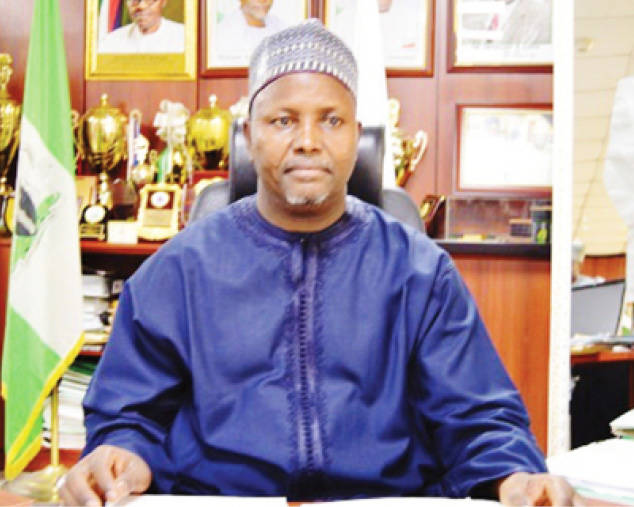
Dr Abdullahi Baffa Bichi

Executive Secretary of the Tertiary Education Trust Fund (TETFund), Dr. Abdullahi Bichi Baffa, says N78 billion from cancellation of discretionary allocation
What led to the decision to reposition TETfund?
The history of TETFund before the coming of the present administration clearly shows that to reset the operations of the agency, the main concern must be to fight corruption, deal with fraud, incompetence and insincerity that was endemic in some of the operations of the agency.
I must say that we have taken the anti-corruption drive of the Buhari administration as the number one priority as far as our operations are concerned. And I must say that within reason, the assessment and judgement of our stakeholders are very clear for all to see; the culture of corruption, the culture of impunity are dead as far as the operation of TETFund is concerned.
How do you plan to ensure corruption does not crop up again after the reforms?
It is not rocket science. It comes from the top. Once the head is firm, qualitative and focused, the followership will cue in. And once you are determined to prevent corruption and fraud from taking place, you will not even have cause to penalise or discipline anyone because it is not going to happen, in the first place.
And if there were some isolated cases where people went out of their way to flout financial regulations, or engage in improper actions, despite every preventive measure that we have put in place, we take firm disciplinary actions. We set examples with them so that it serves as deterrence to others.
We have fundamentally two documents as far as TETFund is concerned, namely: the law establishing the agency and its Operational Guidelines. We always go by them strictly.
What was TETFund like when you assumed office?
When we came, the house was almost upside down. Upside down in the sense that we met an agency where its primary purpose of intervening in specific areas regarding investments and financing was relegated to the background.
The Annual Direct Disbursement (ADD) for the Year 2015 allocation was only 20% of the total allocation for that year, while Special Intervention which is discretionally was 80% of the allocation for that year.
That is a recipe for corruption, impunity and fraud. Against this background, what we first did was to suspend projects under Special Intervention. For all the Special Intervention allocations for year 2014 and 2015 for which money had been disbursed already, we approved that they continue but ensured that they were done in accordance with the approval given.
However, all other allocations and discretionary allocations for which TETFund had paid no money were cancelled. Interestingly, we made good savings of about N78 billion from that cancellation. We plowed that money into the year 2016 allocation, and we were able to pursue the completion of those special projects as approved in the ‘Approval-in-Principle,’ and as approved in the Bill of Quantities for which the tertiary institutions and the vendors have agreed.
Also, in many instances, we found situations where the contractors refused to even make available the Bill of Quantities to the beneficiary institutions. Contractors were acting like demigods; we are bringing money to you, so we will do what we like with it. We have changed all that.
How did you address the issue of dubious contractors?
In one of our meetings with the heads of institutions, we got them to involve law enforcement agencies because there were cases where contractors collected first tranche payment and disappeared and also where they deployed to the site, started work but disappeared.
There were cases where contractors did not do up to half of the project, and want to be paid the close-out amount so that it would be taken as though they have completed the projects.
There are also cases where the things that were in the bill of quantities were not what were supplied to the institutions. We identified all these cases, and we were able to resolve all of them.
In many instances, contractors would come to me and say, for these and these things or projects, we have not been paid and I will tell them that we at TETFund, don’t deal with contractors.
Many of them realized that we have eyes and ears beyond the formal process. So they returned to site; if they manage to complete the work, we pay them.
Others returned to sites and supplied the missing items, equipment, and procurement items which they ought to have provided. When they do that, we have no problem with them, because ours is to protect the public interest and obtain value for money.
We have to ensure that what was approved is what is done before we pay. And I am delighted to say that the heads of some institutions had to bring in the ICPC, EFCC, and the police before they eventually got some contractors to go back and complete their projects. Indeed, some of these projects are now being completed. Yes, we were able to tackle these infractions decisively.
In what other areas did you find rot?
Another area where we met real mess was in the implementation of the TETFund scholarships, called the Academic Staff Training and Development (AST&D).
The scholarships are part of the capacity building intervention for universities, polytechnics and Colleges of Education to create an opportunity for them to pursue higher degrees for master’s and PhD’s at home and abroad.
But we realized that in quite some beneficiary institutions, the guidelines were being implemented but in the breach. Beyond violating the guidelines, many of the beneficiary scholars who were given money to go and pursue their studies abroad refused to go and spent the money on something else.
We further realized that some institutions were not giving the scholars the total money that was approved for them. They deducted certain percentages using different sorts of names like administrative charges, and all sorts of illegal deductions.
There were also scholars that were given the approval to go to Europe or the US but they ended up going to some African countries. Some scholars were given the authorization to do PhD, but they went and registered for master’s degrees. But the worst of them were scholars who will collect the money and refuse to go.
What are you doing to the scholars and the institutions involved in the violation?
We have identified all of them. What we did was to conduct what we call scholarship audit. Once we identify a violation or a breach of the terms of the guidelines by the beneficiary institution, we will not give you any money again for subsequent years until we have seen sufficient evidence that you are recovering the funds that you have paid to these defaulting staff or scholars.
Right now we are making progress with recoveries of funds from quite a number erring scholars.
Has the agency suspended High Impact Allocation meant for selected institutions?
No, it was never suspended. In fact, we have given six polytechnics, six colleges of education and 12 universities the Special High Impact Allocation. We are spending about N36 billion on that, aside the over N132 billion already spent on it, making a total of N168 billion. And these projects have all sprung up across the beneficiary institutions’ landscape, and we are happy to say that we have thousands of projects all over our 202 beneficiary institutions that are ongoing at the moment.
Quite a number of them have been completed, a number of them I have commissioned already, a number are on the queue waiting to be commissioned.
There was a report that about N500 billion is yet to be accessed in TETFund, what is the real situation?
There is never such a figure, or such amount at TETFund. Perhaps the person that made such allegation of a N500 billion lying somewhere in TETFund may be referring to the N273.9 billion that was borrowed from TETFund by the government during the previous administration.
Already President Buhari has given approval to securitize the said amount so that TETFund will be refunded, but that money has not yet been refunded to TETFund.a