
Malaria: Nigeria set for local production of mosquito nets – Pate
Nigeria will soon begin local production of insecticide-treated bed nets as part of efforts to reduce its dependence on foreign supplies in the fight against malaria, the coordinating Minister of Health and Social Welfare, Prof Muhammad Ali Pate has disclosed. Speaking at a high-level meeting on malaria elimination in Abuja with the theme: “Harnessing Africa’s […]
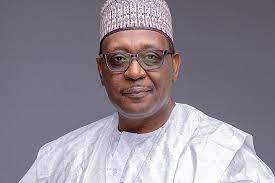
Muhammad Ali Pate
Nigeria will soon begin local production of insecticide-treated bed nets as part of efforts to reduce its dependence on foreign supplies in the fight against malaria, the coordinating Minister of Health and Social Welfare, Prof Muhammad Ali Pate has disclosed.
Speaking at a high-level meeting on malaria elimination in Abuja with the theme: “Harnessing Africa’s Central Role for the Big Push Against Malaria,” Pate said the world’s largest manufacturer of bed nets was set to establish a plant in Nigeria, marking the first time the country would produce the critical malaria prevention tool locally.
- Politicians who parted ways with benefactors
- Over 83% of NABTEB candidates score five credits, above
The event was organised by the National Malaria Elimination Programme (NMEP) of the Federal Ministry of Health, in collaboration with partners, such as the African Leaders Malaria Alliance (ALMA) and the RBM Partnership to End Malaria.
The minister said: “For 20 years, more than 600 million nets have been distributed here. This is textile, but it was not produced in Nigeria. That must change. With new investments, we are beginning to domesticate our response, retain economic value and create jobs.”
Pate also revealed that a plant with the capacity to produce 600 million malaria test kits annually had already been established near Abuja following licensing agreements with European partners.
He noted that such initiatives were vital for reducing reliance on external actors and ensuring that Nigeria tailors its malaria response to local realities.
Acknowledging the billions of dollars poured into malaria programmes in Africa by donors, such as the Global Fund, the US president’s Malaria Initiative, and the Gates Foundation, Pate stressed that external financing has overshadowed domestic investment, leaving Africa vulnerable.
“For 70 to 78 years, Nigeria has had a malaria programme, long before our independence, yet we still carry a third of the global malaria burden. Fundamentally, malaria is an African problem. Ninety per cent of the global burden is here. Unless we own it and finance it ourselves, no one else will solve it for us,” he said.
The minister emphasised that malaria accounted for roughly 30 per cent of Nigeria’s disease burden and one-third of visits to health facilities, making it central to the country’s health system. He called for stronger political leadership, community engagement and sustainable financing mechanisms, including tax reforms to drive long-term progress.
“There is no magic bullet. Even vaccines, now being piloted in Bayelsa and Kebbi, must be layered on top of other interventions like bed nets, vector control, affordable medicines and better data use,” he added.
Pate also urged African governments to push for the relocation of coordination bodies like Roll Back Malaria (RBM) from Geneva to African capitals, such as Abuja or Dakar.
“Malaria is not a global problem, it is Africa’s problem. And if we don’t own it, we will remain stuck,” he declared.
On his part, the Minister of State for Health, Dr Iziaq Adekunle Salako called for innovative solutions to address emerging challenges in the fight against malaria in the country and on the continent of Africa.
He identified the rise of insecticide resistance in some areas of the country as one of the obstacles to the malaria control efforts, adding that mosquitoes are increasingly developing resistance to commonly used chemicals for residual spraying.
Also speaking, the national coordinator of the NMEP, Dr Nnenna Ogbulafor, said the local production of bed nets would not only support Nigeria’s malaria elimination campaign but also stimulate political will and galvanise multiple sectors to contribute actively.
“This is about galvanising the government and ensuring that all hands are on deck. It is not just about speaking now but being hands-on. The government will sit up in areas where it has to work and I and you will also sit up where we have to,” she said.
The coordinator further cautioned Nigerians against trivialising malaria, stressing that the disease remains a serious threat.
“We all have to really understand that malaria is not our friend. So those phrases like ‘it’s my malaria’ when you go to the hospital are no longer acceptable. All hands must be on deck for this push,” she added.
The chairman of the House of Representatives Committee on AIDS, Tuberculosis and Malaria, Amobi Ogah, said that African parliamentarians were concerned over the threat malaria has continued to pose to citizens.
To this end, Ogah said its committee had proposed a collective and holistic approach to solving public health issues in Africa.