
Malnutrition: beyond paste and drugs
Rufa’atu started getting ill last Ramadan and it wasn’t because the child was observing the fast. Her mother, Huse Mamma, 30, got on a journey with the toddler and bussed hundreds of kilometres from their village of Tsafanade in Dange, Shuni local government area of Sokoto state. They wound up at a centre where Rufa’at […]
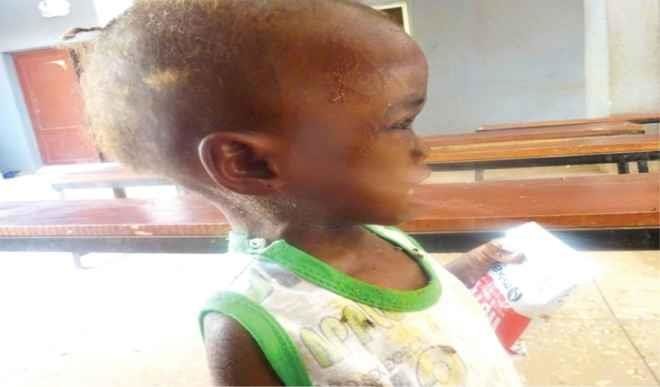

Rufa’atu started getting ill last Ramadan and it wasn’t because the child was observing the fast.
Her mother, Huse Mamma, 30, got on a journey with the toddler and bussed hundreds of kilometres from their village of Tsafanade in Dange, Shuni local government area of Sokoto state.
They wound up at a centre where Rufa’at was diagnosed with severe acute malnutrition.
Gidan Dahala is one of many around Sokoto local government area, and only nine council areas in the state have provisions for treating children with malnutrition.
The clinic for treating, managing and preventing malnutrition runs one day a week, but other centres fill up other days of the week individually.
Rufa’at was immediately put on treatment, taking drugs and a specially formulated “power food”—a paste of milk and groundnut packed with vitamins and minerals to help malnourished children tag on some weight at the start of their treatment.
Because Rufa’at came from a far, she got double the usual portions. This is her third visit to the centre.
“She is responding to the treatment, the plumpy nuts [power food] and some drugs,” her mother says.
Severely malnourished children can take up to four sachets of power food a day, but even their numbers have started reducing in recent times than at any other point since community-based management of acute malnutrition started in Sokoto in 2010.
Around 24,230 children have been hospitalised with acute malnutrition; 23,540 have come off it with complete recovery, according to official Sokoto figures, concentrating on just the nine—of out 23—local governments where the intervention exists.
”The Sokoto state government in partnership with international donor agencies are all out to fight the disease,” says Muhammad Hamza, nutrition officer for Sokoto’s Health Care Development Agency.
The agency has taken up programmes pushing better feeding for infant young children, community awareness campaigns to control malnutrition, and community management of the disease.
The last is impossible without drugs (antibiotics and antimalarials) and ready-to-use therapeutic food—the plumpy nut that the United Nations Children’s Fund flies in from South Africa.
Local government areas still face financial challenges transporting the donated packs to centres like Gidan Dahala where children like Rufa’at need it.
Without the power food, up to 300,000 children across the country could die from malnutrition.
Sokoto is considering producing special diets of local foods to give nutrients similar to RUTF, and eyeing a partnership with Dangote Group for local production of RUTF.
It is also training healthworkers to fill the gaps at CMAM facilities, while community volunteers comb through communities for children who might be malnourished.
Fatima Mohammed, a community health extension worker who heads the Gidan Dahala centre, has seen fresh cases of malnutrition fall.
“Initially, we attend to as many as 20 children with fresh cases but today, they are not up to 10 cases.”
Success in controlling malnutrition comes in part from parents abiding by what they are taught during monthly health talks, says Dahiru Sani, officer in charge of malnutrition at Gidan Dahala.
Sadiya Bashir, from Modawa village, has seen success with her one-year-old daughter Rabia. The child was critical when she came, and “I’m happy that she is responding to treatment,” Bashir says.
She has one request though: adequate drugs at the centres so patients can get them with ease.