
Mararaba and urgent need for urban renewal
At the time Nasarawa State was created, precisely in 1976, Mararaba, in the present Karu Local Government, was virtually a village. There was nothing there, but it presented an opportunity for planning and would have developed based on a master plan, not the way it presented itself today. However, given its proximity to the FCT, […]
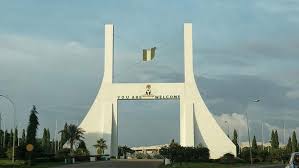
FCT
At the time Nasarawa State was created, precisely in 1976, Mararaba, in the present Karu Local Government, was virtually a village. There was nothing there, but it presented an opportunity for planning and would have developed based on a master plan, not the way it presented itself today.
However, given its proximity to the FCT, Mararaba has in one way or the other, benefited or suffered from the relationship.
FCT has over time influenced the growth of Mararaba. It may be safe to conclude that without FCT Mararaba could not have developed the way it is today, meaning that there is either a symbiotic or parasitic relationship between them. It is evident that every morning, you will notice the number of commuters moving in to work in FCT and in the evening going back to reside in Mararaba.
If Abuja exists as a functioning urban center, why is Mararaba different? It is now a community that is highly and increasingly populated with a high level of crime, absence of infrastructure, poorly managed liquid and solid waste, noise pollution with prospects of being volatile, and general insecurity.
These are issues that characterise unplanned urban development. Therefore, Mararaba as an unplanned urban center, and is a time bomb, with features for future disaster not only for Nasarawa but Nigeria.
It is, however, possible to stem the tide through interventions. One, we have to agree that it is not possible to stop the growth of Mararaba, which is mainly driven by economic factors that are many to mention. So, how do we control the growth, and how do people harmoniously and functionally live is what matters.
As it is, the Nasarawa State government has established an agency called Greater Karu Area Planning Development Authority (GKAPDA) but they may not be well equipped in terms of funding and capacity given the magnitude of the problems posed by the community, so government needs to look at the resources deficiency of GKAPDA to enhance its capacity.
The federal government should also be appreciated for establishing the North Central Development Commission (NCDC) which has a lot of job to do. NCDC was created mainly to intervene in such scenario, to tackle the issues of insufficient healthcare facilities, schools, water etc. that are insufficient or not available.
The population of Mararaba alone is more than the population of Nasarawa State capital, Lafia, and it keeps growing.
Another area of intervention is in urban renewal, though necessary, and should be considered when things are as bad as they are today. It is not uncommon to see persons build on a waterways, road corridors. These must be removed to achieve public good.
Mararaba is the last city and gateway to FCT for the entire North East, South East and a section of North Central Nigeria. It may take barely four hours to travel from Enugu to Keffi, but would take another three hours to pass through Mararaba traffic alone. This must be stemmed.
There was a time when urban renewal was solely a government activity. Now, in contemporary market economies, urban renewal can be driven through private capital. There are a lots of private entities that would be willing to invest in such a programme in cities such as Mararaba.
There is a mismatch between the value of the land and structure on them, therefore, is an investment opportunity, thus private capital has a way of supporting urban renewal. The entire Mararaba can be planned, it is doable, there are private capitals available for it, and it can be profitable to the investor, to the government, and to the people.
Esv. Adamu Kasimu is an Abuja based Estate Surveyor and Valuer [email protected]