
Midterm review of Tinubu’s presidential mandate
With the current administration of President Bola Tinubu due to mark its second year and midterm of its tenure by the end of this month (May), not a few Nigerians are already taking stock of the journey so far and what lies ahead. For an administration whose leader came to office after hyping Nigerians with […]
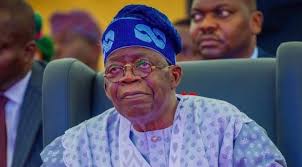
Tinubu
With the current administration of President Bola Tinubu due to mark its second year and midterm of its tenure by the end of this month (May), not a few Nigerians are already taking stock of the journey so far and what lies ahead. For an administration whose leader came to office after hyping Nigerians with a combination of antecedents in the country’s struggle for the enthronement of democracy and a promise of renewing hope in the country’s potential to get better, great expectations from its proclivities remain justified. Besides, having succeeded the Muhammadu Buhari administration, which scored low in virtually all indices of good governance, the Tinubu dispensation was expected to serve as a healing tonic for the frayed nerves of Nigerians.
Since the president is now at the middle of its four-year term, with spirited efforts at securing a second term in office come 2027, a review of the journey so far remains imperative – more for the administration, as well as the citizenry. This is more so, given the raging twists and turns in the country’s political turf, spawned by the tussle for balance and expression by the contending interests of the country’s profusion of disparate ethnic nationalities, as well as other sundry stakeholders.
Interestingly, with respect to a review of the run of the administration since inception, the swing and thrust of public opinion swings as a pendulum. For the leading lights of the administration and the voices of the ruling All Progressives Congress (APC), it is a pass mark for the administration, yet across the streets of Nigeria, the story is different, courtesy of the unmistakable serial decline in living conditions of Nigerians, with vociferous laments and protests by the citizenry.
Incidentally, President Bola Tinubu himself had set the stage early in his tenure for heightened concern of Nigerians in the run of the administration when he shocked the country by withdrawing fuel subsidy on May 29, 2023, being the first day in office and followed up with a cocktail of equally austere measures aimed at restructuring the Nigerian economy.
- Press freedom: AI under scrutiny as N’Assembly, media executives discuss future of journalism
- Beware of the non-liquid intoxicants
However, the complement of deleterious impacts of such measures on a wider cross-section of Nigerians only betrayed the administration as having been ill-prepared for the reform exercises. The administration simply launched Nigerians into such a debilitating state of affairs bereft of forward planning and remediation measures for aiding them to survive the vagaries associated with the measures.
Seen by not a few, while the withdrawal of the fuel subsidy may have served a strategic purpose for the Nigerian economy, its implementation was disastrous as it vested unjustified hardship on generality of the citizenry, which persists till date – two full years after its launch.
In the face of the anticlimactic outcomes of the Bola Tinubu reforms, the citizens expected a more responsive disposition of the government towards remediation of sorts. Given that the government of a country is hardly a one man’s show, no matter the dexterity of the leader, it was clear that glitches and instances of mis-governance could arise from the indiscretion of any of the numerous officials that run a typical administration. Hence, whereas Bola Tinubu could be president, not all weaknesses and failures of governance would be directly traced to him. And if there is one feature the current federal government parades without qualms, it is the play-out of impunity by any one privileged to be within the corridors of power.
While the citizenry expected some modicum of remediation of the deleterious outcomes of the Bola Tinubu reforms, all they get is a gesture of stonewalling by the president and the leading lights of the administration. And as if such mismatch between the president’s enterprise with citizens’ expectations was not grievous enough, the administration resorted more to the profusion of official propaganda sorties, whose apparent aim remains the veneration of the president – warts and all, as well as the inviolability of his serving a second term in office, even if the heavens fall. Interestingly, the propaganda venture enjoyed spirited involvement by even the president’s wife, Oluremi Tinubu and his son, Seyi.
At this point of midterm review, the most notable features of the Bola Tinubu administration are at least two. In the first place is the lackluster governance style, which has kept the wider cross-section of the citizenry yet to find their feet – that is putting it metaphorically. Second is the rather distractive detour into the pursuit of a second term agenda – a venture which has literally thrown the country’s entire political terrain into a spin with tectonic fallouts.
In the context of securing a second term for Bola Tinubu as president have been a progression of deft and manifest maneuvers, which had roots that even preceded his advent as president and have been manifesting from embryo to more advanced states over time, and now remain unmistakable. For instance, it is in the context of the second term agenda that several tendencies associated with the Bola Tinubu administration have been manifesting. In one form is the play-out of destruction of the opposition front – an agenda that has literally killed the main opposition party, the Peoples Democratic Party (PDP). In another dimension is the more assertive style of outright state-capture as has been playing out in Rivers State since 2023 through the instrumentality of the arrow head role by Mr Nyesom Wike, the former governor of the state and now Minister of the Federal Capital Territory (FCT). Also fitting into that mould of state capture is the recent unprecedented instance of mass defection by the entire leadership structure of the PDP in Delta State to the APC. Just as well is a similar scenario playing out in Kano State in preparation of the ground for the state’s takeover by the APC come 2027.
In the final analysis a midterm review of the Bola Tinubu administration indicts it as abdicating its core mission of fostering good governance, thereby renewing hope in the country for Nigerians, Rather its core concern now is self-perpetuation in power.
The question here is: Would President Bola Tinubu not fare better with driving good governance, which is his legitimate mandate and earn the second term on a softer landing? That option may yet to be on his radar.