
Minister, EU, UK urge N/Assembly to pass Special Seats Bill
The Minister of Women Affairs and Social Development, Hajiya Imaan Suleiman-Ibrahim, the European Union and the United Kingdom envoys on Thursday renewed their calls on the National Assembly to pass the Special Seats Bill for Women, ahead of the anticipated vote on constitutional amendment proposals. They made the call in Abuja at a high-level stakeholders’ […]
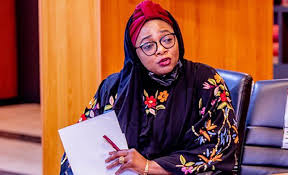
hajiya imaan suleiman ibrahim
The Minister of Women Affairs and Social Development, Hajiya Imaan Suleiman-Ibrahim, the European Union and the United Kingdom envoys on Thursday renewed their calls on the National Assembly to pass the Special Seats Bill for Women, ahead of the anticipated vote on constitutional amendment proposals.
They made the call in Abuja at a high-level stakeholders’ roundtable on “Countdown to the vote on the Special Seats Bill”, organised by the Policy and Legislative Advocacy Centre (PLAC) with the support of the European Eunion.
.
The bill seeks to create additional constitutional seats in the Senate, House of Representatives and state legislatures exclusively for women for a limited number of election cycles, aimed at increasing female representation through affirmative action.
Speaking at the meeting, Hajiya Suleiman-Ibrahim expressed concern that although women constitute more than half of Nigeria’s population, their presence in governance remains extremely low.
She said only 21 women currently serve as federal lawmakers and 48 at state level, with no woman on the National Economic Council in 26 years of democracy.
“Can men alone fully understand the nuances and challenges around maternal health, menstrual hygiene management, gender-sensitive education and policies?” she asked, arguing that women’s lived experiences are crucial to designing workable national solutions.
Suleiman hailed President Bola Tinubu and First Lady Oluremi Tinubu for prioritising inclusiveness under the Renewed Hope Agenda and commended both chambers’ leadership, thanking Senate President Godswill Akpabio, Speaker Tajudeen Abbas, Deputy Speaker Benjamin Kalu and other supporters across party lines.
Calling the bill “a meaningful Christmas gift” that could signal progress ahead of next year’s UN Commission on the Status of Women, she urged lawmakers to “give Nigerian women something to cheer about” and ensure democracy is reflective of all citizens’ realities.
“This is a defining moment to correct longstanding structural imbalance in governance,” she said, calling on lawmakers to support the reform.
EU Deputy Ambassador to Nigeria and the ECOWAS, Zissimos Vergos said Nigeria ranked near the bottom globally in female parliamentary representation and described the constitutional amendment as “a critical opportunity” to align with global standards of inclusion.
“The century belongs to Africa, to youth and to women’s political and financial participation,” he said.
Vergos noted that Nigeria’s representation figure of 7.4% women in the National Assembly places the country near the bottom of global rankings and warned that democracy risks remaining exclusionary if it does not evolve.
He said the constitutional amendment offers a “critical opportunity” to adopt a framework that reflects contemporary demands for equality, arguing that legislative backing must align with shifting societal expectations.
UK Deputy High Commissioner to Nigeria, Gill Lever stated that international experience shows improved outcomes in governance where women are represented.
She said creating special seats “does not diminish existing representation” but addresses systemic barriers that have shaped political access.
Lever described the bill as a progressive strategy, not a threat, noting that additional seats “do not take away from men” but correct an imbalance.
She said the United Kingdom’s own journey to gender parity took time but is now paying off, with women occupying half of cabinet positions and leading key government ministries.
Lever warned that Nigeria’s current political gender index, which is almost at par with that of Afghanistan according to her does not reflect the nation’s talent or global contributions.
“That’s not how I see Nigeria,” she said, referencing prominent Nigerian women such as Amina Mohammed and Ngozi Okonjo-Iweala who lead globally but were not afforded equal opportunities at home.
Evidence, she said, shows societies perform better with women in leadership: faster economic growth, improved social policy, more durable peace agreements and lower corruption.
On her part, Chairman of the House Committee on Women Affairs and Social Development, Hon. Kafilat Ogbara, said mobilisation within the legislature was ongoing ahead of the vote. She disclosed that consultations and signature drives were being coordinated to secure passage of the proposal.
PLAC’s Executive Director, Clement Nwankwo said the initiative had generated global attention, with stakeholders from other countries engaging Nigeria on representation models.
He said if approved, Nigeria would join Rwanda, Senegal, Tanzania and Uganda, which have adopted special seats to increase women’s participation in parliament.
The roundtable coincided with the 16 Days of Activism Against Gender-Based Violence and ended with a renewed call for lawmakers to determine the outcome when the bill is presented for consideration.