
More women join Israel”s army combat units
Irit Bibi has long, chestnut-brown hair, carefully applied eyeliner and a warm smile – hardly the stereotype of a tough warrior. But the 21-year-old in the olive-green uniform is a training instructor in the Caracal Battalion of the Israeli army, in which woman and men serve side by side. "I’m a warrior," the young woman […]
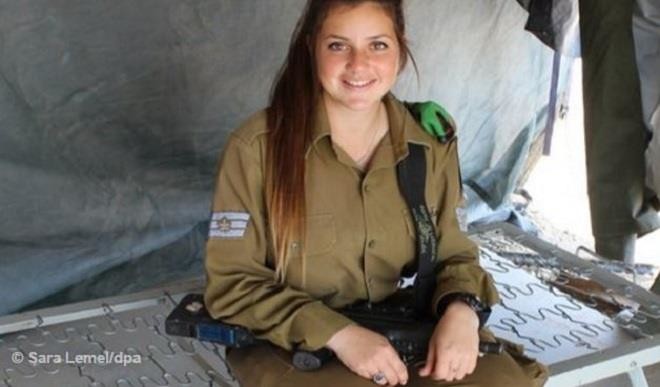

Irit Bibi has long, chestnut-brown hair, carefully applied eyeliner and a warm smile – hardly the stereotype of a tough warrior.
But the 21-year-old in the olive-green uniform is a training instructor in the Caracal Battalion of the Israeli army, in which woman and men serve side by side.
"I’m a warrior," the young woman says confidently.
"This way I can make the biggest contribution in the army."
Israel is one of the few countries in the world where women also have to perform compulsory military service.
Israel’s army is seen as an important career springboard, increasingly also for female recruits.
Carrying her gun at her side, Staff Sergeant Bibi guides visitors with a sure stride through the austere military camp near Tze’elim in southern Israel.
The recruits sleep on iron beds in communal tents, while the commanders’ offices are in several white containers.
A decommissioned tank, with its gun pointed towards the sky, greets you at the entrance.
Bibi is one of four sisters, of whom three serve in combat units – part of a growing trend. The number of female soldiers who are trained for combat has risen significantly in recent years.
"Seven per cent of the women in the Israeli army, 2,100 in total, are combat soldiers," says Lieutenant Colonel Oschrat Bachar, adviser to the Israeli Chief of General Staff on equality issues.
This is up from 2.5 per cent in 2012.
The military service obligation is normally two years for women. If they serve in combat units, they voluntarily extend it to two years and eight months, which is the standard for men.
There are no women-only units. Female combat soldiers serve in three mixed units alongside men: the Caracal (desert lynx), Bardelas (cheetah) and Lions of Jordan battalions.
Bibi’s unit is stationed at the border with Egypt, where there is a threat of attacks by drug smugglers and Egyptian terrorist groups.
Female soldiers from the Caracal Brigade have twice killed attackers in fighting at the border.
Bachar says there is a clear policy in the army to open up ever more operational areas to women. She says that this month, recruitment begins for a fourth mixed unit for women and men.
So far, 85 per cent of all areas of operations in the Israeli army are open to women. Service in the elite units has not been allowed so far.
But Bachar says she is an optimist and thinks it is quite possible that there will be a female Chief of General Staff in the future.
"Our goal is complete equality," she says.
"In my view, there is no role in combat units that women cannot perform."
But there are problems too. Every year, hundreds of female soldiers complain about sexual assaults in the army, and this number has also risen in recent years.
Last year, the case of a high-ranking commander accused of the rape and sexual assault of two female subordinates caused outrage. The rape charge was eventually dropped as part of a deal.
According to a new survey by the Women’s International Zionist Organization (Wizo), 60 per cent of Israelis are in favour of women serving in combat units.
Meanwhile, 25 per cent are against, as the Walla news website reported.
Around half of those opposed to combat missions for women said their reason for this was that women are physically incapable and the deployment could harm them physically.
Bibi is annoyed by such objections and considers them ignorant.
"We carry just as heavy loads as the guys in our unit," she says.
"On training missions, the female soldiers also carry backpacks of around 20 kilos with equipment and provisions," she says.
But Bibi admits that she also finds it tough sometimes. She has broken into tears a few times during particularly hard training, she says.
"That happens to everyone, that’s just how it is in the army," she says with a shrug.
"And I really hate crying in front of other people." (DPA)