
My year working with Vice President Shettima
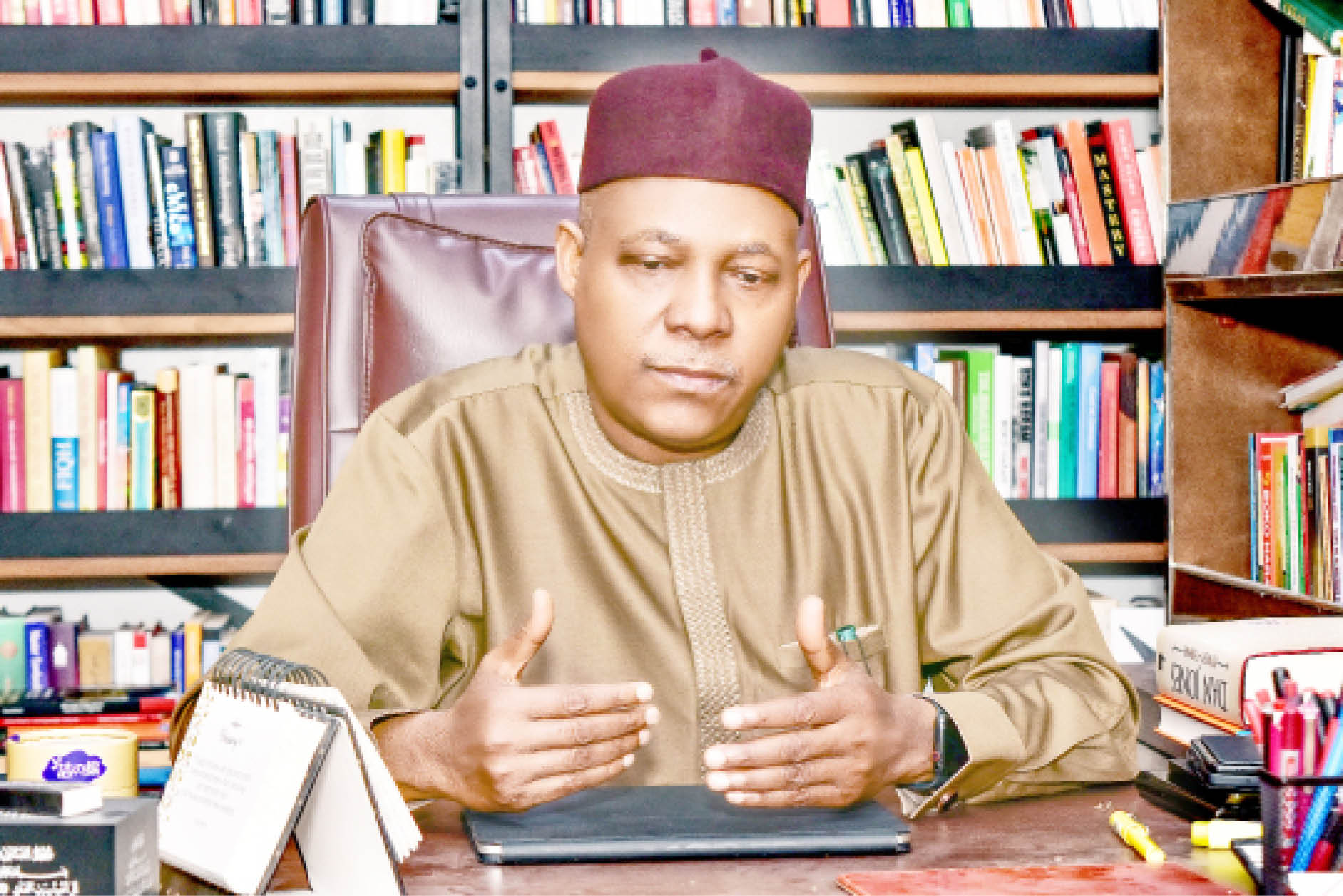
It’s 2:47am, and the study lamp is still on in the Vice President’s library at home. I know this because I have just received an email, the second for the night, with detailed comments on a subject matter that is due for consideration at the National Economic Council meeting scheduled for later that day. “Stanley, […]
Sen Shettima
It’s 2:47am, and the study lamp is still on in the Vice President’s library at home. I know this because I have just received an email, the second for the night, with detailed comments on a subject matter that is due for consideration at the National Economic Council meeting scheduled for later that day. “Stanley, reach out to him, let them send the final copy to the secretariat first thing in the morning and that would be my final copy” the message reads.
This is Senator Kashim Shettima, a man who doesn’t just work for Nigeria but wrestles with the nation’s challenges through the quiet hours while most of the nation sleeps.
As the year ended, I find myself reflecting not on the policies, programmes, or public engagements that have defined 2025, but on the man I’ve had the privilege of working with. The cameras capture the Vice President mounting the podium, in the council chambers, and at state functions. But they don’t capture the 11pm phone calls to check on a staff member whose parent fell ill, or the way he insists on knowing the names of every visitor or official that comes to the office with genuine interest.
Working with Vice President Shettima means recalibrating your understanding of work-life balance, fully aware that for him, work and family is the life. I have watched him review MSME grant applications at midnight, personally reading through cases to ensure deserving businesses weren’t overlooked. I’ve seen him demand revision after revision of policy documents not out of perfectionism for its own sake but because “these policies affect real people, Stanley; real mothers trying to feed their children, and real farmers staking their livelihoods on our decisions.”
During the rollout of MSME Clinics across the states in 2025, he insisted on receiving daily reports, not sanitised summaries, but real data. When we discovered that women-owned businesses in rural areas were struggling with documentation requirements, he convened a virtual meeting to redesign the process.
I have accompanied the Vice President to many places to know that his calendar is not just a schedule but a map of Nigeria’s pain points and possibilities. Whether it is a conference in Abuja at dawn or a stakeholder meeting in Kano by evening, he shows up. But it’s not him showing up that strikes a chord in me; it’s the impact of his presence.
When clashes erupted in Benue State, he was on a plane within hours, not for a photo opportunity, but to sit with community leaders from both sides. I watched him employ what I now recognise as his signature approach: he doesn’t pick sides; he stands with Nigeria. “You’re both right to be angry, and you’re both wrong to be fighting,” he told them. “But while you fight each other, your children go hungry, and those who wish Nigeria ill are celebrating. Is that what you want? We are all united by our common heritage of poverty and destitution. We should be fighting poverty,” he said.
If there’s one quality that defines Senator Shettima’s approach to leadership, it is his fervent commitment to reconciliation. I’ve seen him spend time on phone calls mediating between feuding political leaders, not because it’s his job, but because he believes that Nigeria’s diversity is a strength only when we choose unity over division.
I can recall a moment that captured everything about working for Vice President Shettima. It was during preparations ahead of one of his recent international engagements. We had been working for days, writing drafts upon drafts, and everyone was exhausted. When he came out and saw many of us sitting and facing our computers in the meeting room, he asked, palpably surprised: “Why are you all still here?”
“Your Excellency, we’re finalising plans of activities for your departure,” the Director of Protocol explained. He looked at us and said, “Go home now. That’s an order. The planning can wait until morning. Your families can’t.” When we protested that the deadline was tight, he smiled and said, “I’ve been in office long enough to know that exhausted people don’t do excellent work; they just do exhausted work. Go home and come back fresh. Nigeria needs your best, not your burnt-out.”
But don’t mistake his humanity for softness. Vice President Shettima demands excellence with the intensity of a man who believes that mediocrity is a betrayal of national duty. I have had documents returned with more red ink than black text. I have been in meetings where he has dissected presentations with surgical precision, questioning every assumption, and challenging every conclusion. He has taught me that excellence is not about perfection; it’s about relentless improvement.
During preparations for the financial inclusion initiative, he rejected the first presentation. And the second. And the third. “This reads like we’re doing people a favour,” he explained. “Financial inclusion is not charity; it’s justice. People have a right to economic participation. Rewrite it within that perspective,” he had instructed the aide in charge. When it was rewritten and finally gotten right, his smile was worth the six drafts.
Perhaps what strikes me most about working with Senator Shettima is his unshakable belief in Nigeria. Not a naive belief that ignores our problems, but a clear-eyed faith that believes our possibilities are greater than our challenges.
“Stanley, do you know why I do this?” He asked me one evening as we flew back from another state visit. “It is not about legacy or history books. It is because I have seen what Nigerians can do when given half a chance. I have seen farmers triple their yields with just a little support. I have seen young people build tech solutions that rival anything in the world. Nigeria doesn’t lack potential; it lacks people willing to consistently work to unlock that potential.
As 2025 comes to a close, I find myself grateful, not just for the professional experience of working in the Office of the Vice President but for the human education of working with Vice President Kashim Shettima. He has taught me that leadership is service, that excellence is a moral obligation, that reconciliation is more powerful than conquest, and that Nigeria’s problems are solvable if we bring both intellect and empathy to the task.
Having gone through the rigours of a dedicated, focused and staunch working life of a boss like VP Shettima, emerging more intellectually equipped and mentally resilient, what more can one ask for from a true leader?
Nkwocha is the Senior Special Assistant to the President on Media & Communications (Office of the Vice President)