
N/Assembly’s late rally on Rivers rescue: Matters arising
Given this author’s record as having served for the longest period as a Director of Information and Publications in Nigeria’s National Assembly, the fortunes of the institution, whether for good or otherwise, resonate closely with his soul as much as his heartbeat. In the same vein have recent outings of the institution in respect of […]
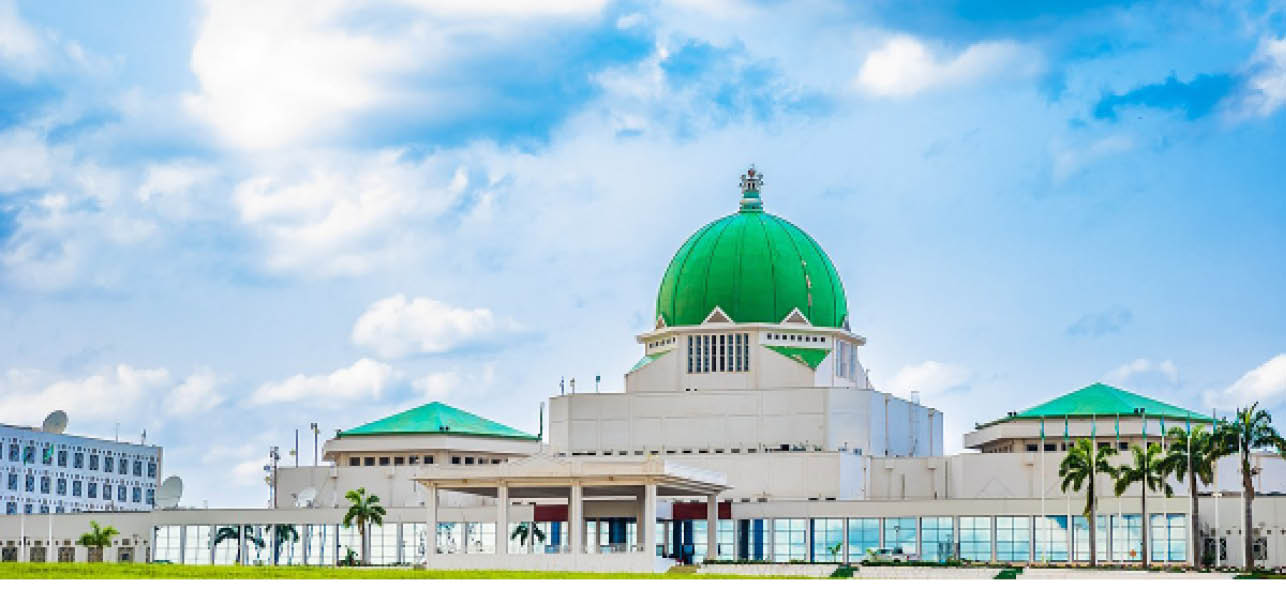
National Assembly
Given this author’s record as having served for the longest period as a Director of Information and Publications in Nigeria’s National Assembly, the fortunes of the institution, whether for good or otherwise, resonate closely with his soul as much as his heartbeat. In the same vein have recent outings of the institution in respect of which it had faced significant reputational challenges attracted significant pathos for him, as well as scores of concerned others who have been associated with the institution, either as past and serving legislators, staff, visitors and even countless Nigerians who, out of sheer patriotism, hold the institution in its deserved esteem.
In that context, therefore, of burning concern has been the role of the National Assembly in the daily deepening political crisis in Rivers State, which had kept the country on edge since October 30, 2023 and recently took a new twist on March 18, 2025 when President Bola Tinubu declared a state of emergency in the state, suspended the governor, Siminalayi Fubara, deputy governor, Ngozi Odu, as well as members of the Rivers State House of Assembly (RSHA) and appointed a retired naval officer, Vice Admiral Ibok-Ette Ibas as a sole administrator for the state for an initial period of six months.
Meanwhile, all along, the course of the Rivers State crisis, disposition of the National Assembly to the situation, had been on the public radar, given the constitutional provision that the institution remains empowered as the only legal entity that could intervene in the fray and change the narrative positively; hence, not a few Nigerians were disappointed over the less than assertive disposition of the National Assembly on the Rivers State matter, at least not until the president declared the state of emergency and in patent violation of the constitution, removed the democratically elected leadership in the state. To deepen the dismay of many Nigerians was the rather casual manner with which the National Assembly further handled the processes associated with endorsing the state of emergency in Rivers State.
Seen in perspective therefore, the situation in Rivers State had since imposed a constitutional burden on the National Assembly to do the needful in rescuing the institutions of democratic governance, which are being desecrated in the state of emergency and with the worrisome proclivities of the sole administrator since his appointment.
It is in that context that the recent appointment by the Speaker of the House of Representatives, Tajudeen Abass, of a 19-member committee to intervene and oversight the Rivers State sole administrator qualifies as the right step forward. That is even as it is a late rally in remediating the distressing scenario.
However, while the House of Representatives committee was assigned a formal mission of intervening to rescue democracy in Rivers State, it is also by implication saddled rather informally with recovering some of the lost glory of the National Assembly, due mainly to its earlier below-par handling of the Rivers State crisis. And that is perhaps one of the significant takeaways for the National Assembly, with respect to the Rivers State crisis – timeous, proactive and affirmative response to emergent political challenges from any part of the country. And there is, of course, a legion of these currently – genocides, insurgency, human rights abuses etc.
In any case, given the sheer complexity of Nigeria as a country, with its hundreds of ethnic nationalities who, even after over 100 years of sharing a common national identity, are still contesting the protocols for co-habiting, it remains the height of self-deceit to expect less than perpetual turbulence and fireworks in the outings of its central legislature – the National Assembly.
Whereas the constitution assigns to the National Assembly the exclusive function and powers to make laws for the good governance of the country, not a few Nigerians ascribe shortcomings in governance to the omissions and commissions of the institution, even with most of its critics unmindful of the fact that with all its constitutional endowments, it is still people – Nigerians who run its processes. And given the principle of group dynamics, which holds that a country will always throw up leaders that reflect its collective persona, the institution will hardly operate beyond the play-out of the humanity of Nigerians – that is shorn of perfection or one-to-one correspondence with the extant prescriptions of the constitution.
Just as well, seen in perspective, the state of emergency, which has assumed the iconic status of a hanging ‘Sword of Damocles,’ which is at the disposal of President Bola Tinubu to descend with on any ‘errant’ state governor, has proved to be a wake-up call that the National Assembly henceforth needs to be more vigilant and assertive in its interface with the executive arm.
Given the snobbish disposition the President had displayed over the Rivers State scenario and other instances where compliance with the constitution was thrown overboard by him, trusting him with unquestioned exercise of power remains an existential danger for the country.
Right now, the unanswered question in the minds of most concerned Nigerians is: ‘Who can stop Bola Tinubu, if, and when he goes on political power overdrive? For most Nigerians, not the National Assembly in its current soft state of malleability in the hands of President Bola Tinubu.
What a pity!