
NASS and eroding art of governance
The recent Senator Godswill Akpabio/Natasha controversy, though fading gradually, has triggered much discourse, which necessitates the need to look at whether the Senate, nay, the Nigerian National Assembly, is derailing from its mandate. There is no parliament all over the world that is immune to scandals, but the ability to enforce an ethics code is […]
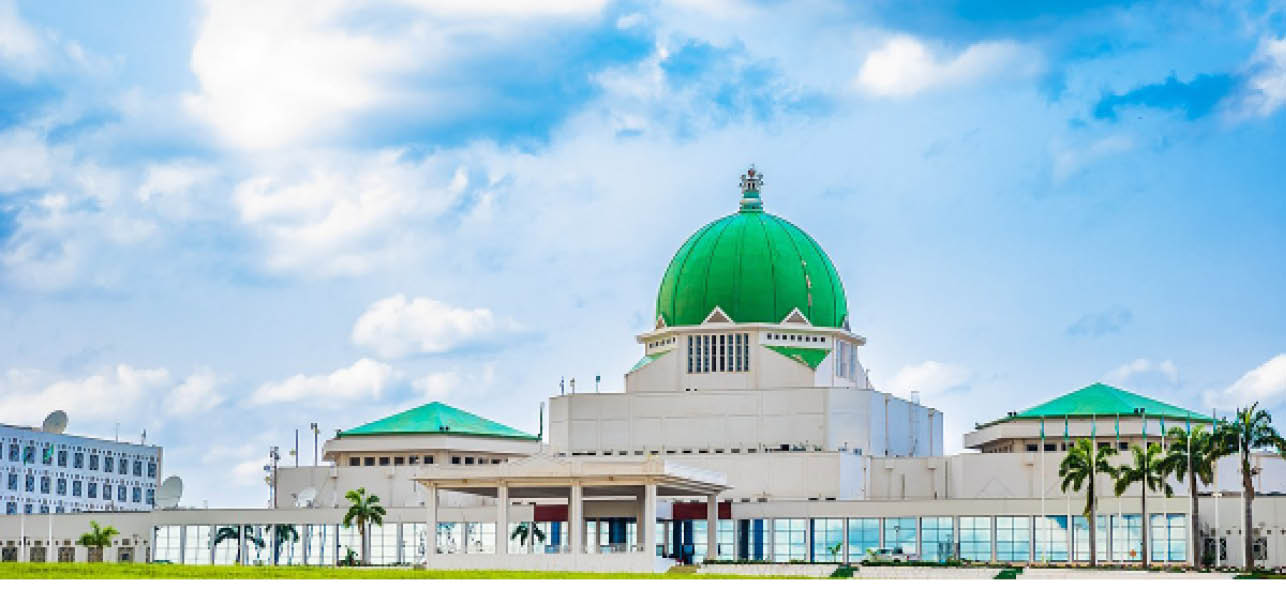
National Assembly
The recent Senator Godswill Akpabio/Natasha controversy, though fading gradually, has triggered much discourse, which necessitates the need to look at whether the Senate, nay, the Nigerian National Assembly, is derailing from its mandate.
There is no parliament all over the world that is immune to scandals, but the ability to enforce an ethics code is what sets many apart.
Constitutional jurisdiction dictates that Nigeria’s National Assembly shouldn’t be only a place of wheeling and dealing, nor a parliament filled with sycophants and elbow-hangers, but a place for debate and where weighty decisions are made.
Though there is no doubt about some achievements and progress made by Nigeria’s 10th National Assembly, it pales into insignificance when there is credence to allegations of members being bootlickers and rubber stamp of the Executive, thus turning itself into a cesspool of irrepressible conflict, controversy and corruption.
Former Senator Bala Ibn Na’Allah it was who recently shed light on the financial challenges facing some Nigerian lawmakers after leaving office, revealing that many struggle to meet basic obligations like paying their children’s school fees.
Na’Allah emphasised that the glamorous image associated with the National Assembly is far from reality. “Some of them ventured into the National Assembly believing that it is a place to make money, only to discover that they are going to end up poorer,” he said.
As author Robert V. Remini states, “political power invites corruption, the dispersal of money entices the weak, the corrupt and the arrogant who think they can escape detection”.
Our current Distinguished and Honourables should therefore glaringly display a strength of purpose and the commanding presence to bring about a revitalised legislature that could continue to shape national policy.
They should demonstrate that though members can rave and rant at each other, yet beneath the surface agitated by the storms of politics, devoid of pretensions, those sympathies that tend not to obfuscate people, but rather en noble humanity, remain undisturbed.
Historian Henry Adams said, “Congress is inefficient and shows itself more and more incompetent, as at present constituted, to wield the enormous powers that are forced upon it”.
NASS leadership, rather than mellow, should reassert its independence from the Executive. The leaders must stand guard for any encroachment by the President. In the early 1960s, when US President JFK was addressing the House of Representatives, he said, “Now, I’d like to talk about the Rules Committee”, House Speaker Rayburn’s hand-hit the table hard saying “No Sir, that is House business…the White House has no business there at all.”
NASS membership is hierarchical. They have their own traditions and rules. To succeed as a legislator, members must always remember that access equals power; they should work hard, specialise, do their homework, be in attendance on the floor, keep silent until you know what you’re talking about, follow their committees, participate in the process, learn parliamentary procedures, and, without malice, be courteous to colleagues.
A former US Speaker, Sam Rayburn said, “A congressman should never forget his district”, which may be why many legislators have failed to return to our National Assembly; due to dereliction of duty or their shoddy treatment to their electorate, who refuse to send them back, except through shady deals.
Chairmen of committees of course are powerful but power flows from the Senate President or House Speaker. Rarely does a speech on the floor change a single vote. The trick is the art of compromise, to learn to disagree without being disagreeable. Otherwise, some bills will pass before some members are even aware of what they are voting for. Many members vote on bills they haven’t read. They simply go with the flow.
In our National Assembly, do we have sufficient bills introduced, and if yes, how many die at committees?
Politics, like US House Speaker Tip O’Neill said, is the art of repackaging. By sheer brute persistence, or intense partisanship, members can rise and have an impact, out of all proportion of probability.
However, the questions still remains, are National Assembly members there to serve or be served? Must we continue to be circumspect on whether our legislators are making any meaningful difference in the life of the ordinary Nigerian?
It was US President James Madison who stated, “The aim of every political constitution is, or ought to be, first, to obtain for Rulers, men who possess most wisdom to discern, and most virtue to pursue the common good of the society, and to take the most effectual precaution for keeping them virtuous, while they continue to hold their public trust”.
Therefore, our democracy continues to evolve. When the story of Nigeria’s National Assembly is written, and rewritten, let it be said that its profile has risen, for Nigerians deserve the best from its legislators, who have the rare privilege of service, hence the need for them to be reminded of their obligation in the relatively brief time to make a difference.
Nasir Imam, a media practitioner, wrote from Abuja