
National Assembly and the burden of taxation
As the 9th National Assembly (NASS) is soon to be inaugurated its’ clearer by the day that Nigerian legislators, either truly don’t appreciate the increasing contempt within which they are held, or they simply just don’t care. A new leadership of NASS is scheduled to be inducted and before long members of the two chambers […]
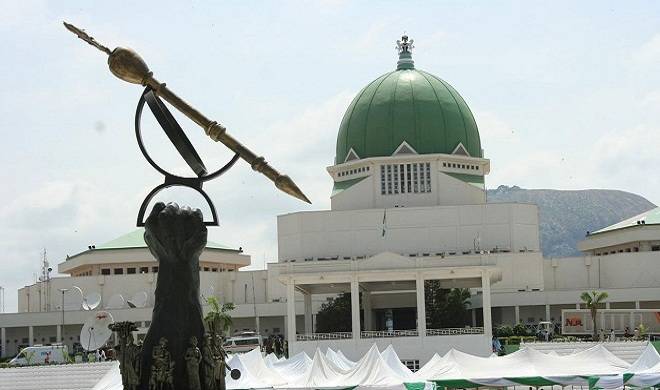
House of Representatives
As the 9th National Assembly (NASS) is soon to be inaugurated its’ clearer by the day that Nigerian legislators, either truly don’t appreciate the increasing contempt within which they are held, or they simply just don’t care. A new leadership of NASS is scheduled to be inducted and before long members of the two chambers will become preoccupied with their usual shenanigans motivated by self-interest. It’s important to remind legislators that it is on recorded that not once have the lives of Nigerians been positively affected as a result of any law enacted by the NASS.
Legislators have become civil engineers content with commissioning boreholes, market stalls, school classrooms and solar lights! There is a long standing resentment against a NASS awash with cash. As a parting gift, the soon to be defunct 8th Assembly approved a new minimum wage of N30,000 per month as being “sufficient to keep a family at a reasonable standard of living”. Their own emoluments should be re-evaluated in light of this figure. While Nigerian workers continue to slide further down below the poverty line, lawmakers continue to enjoy the perks of office as well as multiple allowances each of which is far in excess of the minimum wage! These allowances include accommodation, vehicle loan, furniture, motor vehicle fuelling and maintenance, constituency, domestic staff, personal assistant, recess, utilities, newspapers and periodicals, house maintenance, wardrobe, severance gratuity and of course entertainment! Although Civil Servants suffer irregular payment of salaries and sometimes “modulated salary payment” (better understood as half-salary) the “regular” allowances of Legislators are paid promptly along with their basic salaries, while the “non-regular” are paid as and at when due.
Nigerians were shocked by revelations from Senator Shehu Sanni that Senators are “entitled” to monthly expenses of N13.5 million in addition to their more than N700,000 monthly salary. Quite absurdly, despite the majority of the population living below the international poverty line, Nigerian Legislators are amongst the highest paid in the world! With regard to funding the new national minimum wage, Legislators had proposed an adjustment of the revenue allocation formula to redirect funds away from Federal Government towards State Governments to enable them foot the bill. Having no intention of curbing their own financial excesses, the Executive have decided instead on the potentially economically disastrous path of raising VAT and taxes.
The National Leader of the ruling All Progressives Congress (APC) Bola Tinubu joined others in openly opposing this plan. Speaking at his 11th National Colloquium in Abuja he said increasing VAT will reduce the purchasing power of Nigerian consumers and is “capable of increasing hardship in the nation”. The Emir of Kano, himself a former Central Bank Governor, also advised against the move saying that instead of increasing VAT by 50%, funds can be raised by members of the Executive and Legislature reducing their emoluments by 50%. In a democracy legislators are supposed to be the people’s representatives. They are supposed to have the interests of the people at heart in everything they say or do. The needs and pains of ordinary citizens are supposed to be theirs too, so that they understand what legislation is required to improve conditions within society as a whole.
Rather than share the needs and pains of the people, Nigerian legislators go to great lengths to immunize themselves. Everything they do, including budget approval appears to be for their own personal benefit, and it doesn’t look as if this is about to change with the 9th Assembly. Complaints over the undeserved wealth of Legislators at the expense of poor citizens didn’t start today. Admittedly they invest a lot of money in election campaigns, but the financial rewards of victory are massive. Nigerian legislators are millionaires thanks to monies received as “servants” of an impoverished people! It’s been estimated that Nigerian workers on minimum wage must work for between 44 – 60 years to earn the annual emoluments of a Member of the House of Representatives or Senator. The argument by some Legislators that in some countries such as Chile and Kenya the gap is bigger than in Nigeria, really doesn’t hold water.
It’s really no defense for this outrage especially in light of the government’s declared intention to raise funds for the new minimum wage by raising Value Added Tax (VAT) and taxes. An increase in VAT will inevitably impact on consumption and indeed VAT compliance. Economic experts have warned that contemplating an increase at this point in time is inconsistent with current economic reality and the nation should not dig one hole simply to cover another one! It’s time for legislators to reduce their emoluments and be seen to make some sort of sacrifice. They must cease behaving as if the coffers of the treasury are a “National Cake” for them to cut and divide as they see fit. If not then the 9th Assembly will be just as much a hindrance to national progress as all the previous ones.