
NGO tasks governments on security, democratic stability
The Lead Generation Initiative (LGI) has called on federal and state governments to urgently address Nigeria’s worsening security and political instability, warning that the unchecked violence and erosion of democratic principles threaten national cohesion. At its Quarterly General Assembly and National Socioeconomic and Security Roundtable held in Abuja, the LGI condemned the surge of killings […]
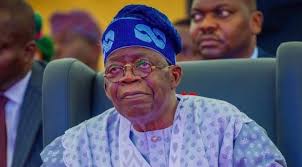
Tinubu
The Lead Generation Initiative (LGI) has called on federal and state governments to urgently address Nigeria’s worsening security and political instability, warning that the unchecked violence and erosion of democratic principles threaten national cohesion.
At its Quarterly General Assembly and National Socioeconomic and Security Roundtable held in Abuja, the LGI condemned the surge of killings in Plateau, Benue, Edo, and Gombe States, which have claimed over 100 lives in less than a month.
The extrajudicial killing of 16 individuals suspected of kidnapping in Uromi, Edo State, was described as a gross violation of human rights and an alarming rise in jungle justice.
The Assembly drew attention to the emergence of the ‘Mahmuda’ terrorist network in the North-Central zone, reportedly active around Kainji Lake National Park in Kwara and Niger States.
Believed to be a splinter of Boko Haram with foreign links, the group was said to have carried out multiple deadly attacks, including the killing of over 15 local vigilantes in Kemanji.
The National Team Lead Jedidiah Kolade, and the South South Director, Prince Ukuanovwe Godstime made the call for community-based security interventions, urging the government to adopt grassroots policing structures, reinvigorate neighborhood watch systems, and foster trust between citizens and law enforcement agencies.
They also recommended youth empowerment schemes to address unemployment and dissuade vulnerable groups from criminal recruitment.
The Assembly also called for urgent judicial reforms, noting that without a responsive and independent judiciary, the fight against insecurity would remain ineffective. They highlighted the need to invest in socioeconomic development — including infrastructure, education, and healthcare — particularly in conflict-prone regions.
On the need for legislative balance, the duo of Kolade Prince Ukuanovwe urged a thorough review of existing anti-grazing laws to reduce tensions between nomadic herders and farming communities. They also emphasized the need for a centralized national security database and improved real-time information sharing between agencies.
Raising concerns about the political crisis in Rivers State, the Assembly denounced the federal government’s declaration of a state of emergency and the six-month suspension of Governor Siminalayi Fubara, his deputy, and members of the State Assembly.
The move was described as unconstitutional and damaging to democratic governance.
They warned that reinstating Governor Fubara under unclear terms could render him politically subservient and erode the autonomy of state institutions.
They cited the Nigerian Bar Association’s criticism of the move as unconstitutional, insisting that the judiciary must safeguard its independence and convene immediately to examine the legality of the developments.
On energy, the Assembly noted the Presidential Villa’s recent transition to solar power amid worsening grid collapses and rising electricity tariffs.
The panel of speakers, including public affairs analyst Emmanuel Agada, highlighted the disconnect between government policy and citizen welfare, questioning the equity of a system where communities pay for infrastructure but remain without electricity.
They condemned the discriminatory electricity banding policy and the continued export of electricity while many Nigerian communities live in darkness.
“Nigeria cannot afford to normalize violence or allow any part of the country to become a lawless zone.
“Judicial independence is the last safeguard of democracy and must not be compromised under any circumstance.
“The solution to Nigeria’s insecurity is not just more force but smarter governance, anchored on local trust and inclusive development.
“Unless power sector reforms are rooted in justice and access, the energy crisis will continue to widen the gap between government and the people.” they said.