
Niger Delta Summit
A two-day national stakeholders’ summit on the Niger Delta region, which was earlier billed to hold in Abuja on Monday and Tuesday, was postponed at the last minute, apparently due to protests by some important stakeholders. The forum, whose theme was “Towards Sustainable Peace and Development in the Niger Delta” had as its objective to […]
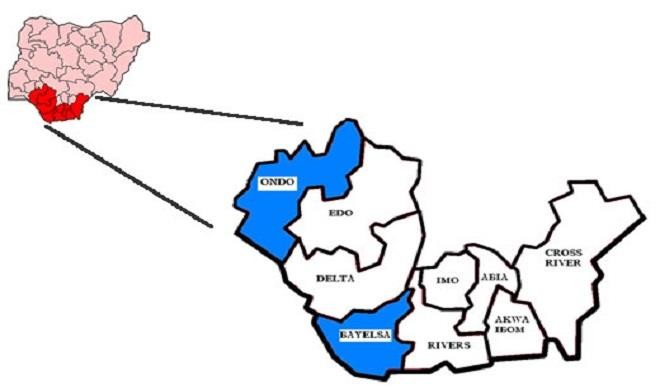

A two-day national stakeholders’ summit on the Niger Delta region, which was earlier billed to hold in Abuja on Monday and Tuesday, was postponed at the last minute, apparently due to protests by some important stakeholders. The forum, whose theme was “Towards Sustainable Peace and Development in the Niger Delta” had as its objective to contain restiveness in the region through providing an enduring political blue print geared towards a more lasting peace in the region. It was also aimed at working out an acceptable security framework for consolidating and sustaining peace and stability in the region. More than 500 participants were expected to attend the summit, which was organised by the Office of the Vice President in partnership with government agencies that have “core functions in the Niger Delta region.”
The forum has now been postponed indefinitely but it is our hope that the organisational problems will be solved and it will reconvene soon. Apart from the legitimacy crisis, the summit as earlier envisaged may achieve limited dividends due to factors associated with its conception, organisation and participants. For one, its theme does not properly read the mood and history of the region. It is also an indictment of past peace building initiatives in the region.
Since colonial times, the Niger Delta region has entertained a deep fear of marginalisation and exclusion of its indigenous communities from the country’s scheme of affairs. It was for this reason the colonial rulers set up the Willink Commission of 1957-58, which was to address the fears of Niger Delta and other minorities that were denied regions of their own on the eve of independence in 1960. The Commission however created a discretionary treatment for the Niger Delta region by successive governments. That unsatisfactory arrangement persisted and was the root of the region’s dilemma until the Yakubu Gowon administration created states in 1967.
Since then, many other development initiatives had been launched by successive administrations including the Niger Delta Basin Development Authority (NDBDA), Oil Mineral Producing Areas Development Commission (OMPADEC), allocation of 13% Derivation Fund, Niger Delta Development Commission (NDDC), Presidential Amnesty Programme as well as a full blown Ministry of Niger Delta Affairs. Under each of these initiatives, copious flows of public resources were delivered to the region. In addition, more resources flowed from other actors such as oil companies and foreign development partners.
The fact that agitation by every generation of youths in the region has been unrelenting shows that something was desperately wrong. Despite all these initiatives, the grinding poverty and environmental spoliation in the region are still very much evident. This suggests that successive administrations in the country, including the present one, misread the Niger Delta situation and failed to deliver credible programs to address the problems. The poor culture of resource management and unmitigated theft by bureaucracies and political actors compounded the problem. The situation therefore demands a new approach, different from the present option seemingly centred on a military solution.
For instance, a recent audit of contracts awarded in that region by the Ministry of Niger Delta Affairs between 2009 and 2015 showed that over N700 billion was spent by the ministry on 427 contracts while only 8% of expected impact was achieved. This scenario is believed to be typical of resource management culture in virtually every aspect of intervention in the region. A rescheduled Niger Delta Summit, when it eventually holds, will serve a better purpose if it addresses itself to a review of past initiatives for the transformation of the region with a view to synchronising same towards a more attainable set of deliverables, instead of seeking new options that may go the way of similar initiatives.