
Nigeria has passed through shifting fortunes – Ndoma-Egba
A former Senate leader, Senator Victor Ndoma-Egba, has described the journey of Nigeria from independence till date as passing through shifting fortunes. Speaking on ‘The Exchange’ podcast hosted by the former spokesman of the Nigerian National Petroleum Company Limited (NNPCL) Femi Soneye, the former lawmaker, who turns 70 soon, said being born just four years […]
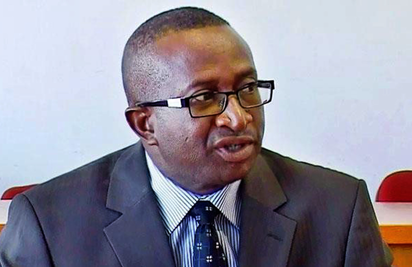
senator victor ndoma egba
A former Senate leader, Senator Victor Ndoma-Egba, has described the journey of Nigeria from independence till date as passing through shifting fortunes.
Speaking on ‘The Exchange’ podcast hosted by the former spokesman of the Nigerian National Petroleum Company Limited (NNPCL) Femi Soneye, the former lawmaker, who turns 70 soon, said being born just four years before independence allowed him to witness the full arc of Nigeria’s history – from the high hopes of nationhood to the turbulence that followed.
Ndoma-Egba recalled the immense excitement of October 1, 1960 and the widespread belief that “everything will be fine” as the country was free.
He said the early post-independence years, particularly in the mid-1960s, were marked by optimism and impressive economic performance, with Nigeria ranked among the fastest-growing economies in the world, and the Eastern Region specifically cited as the global leader in growth by 1965.
That optimism, however, was shattered by political tensions and the military coup of January 15, 1966, which ushered in the civil war. Ndoma-Egba said he found himself “right in the centre” of the three-year conflict. In the aftermath, the country rallied round General Yakubu Gowon’s policy of “reconciliation, rehabilitation and reconstruction,” guided by the spirit of “no victor, no vanquished.”
The post-war era saw another period of economic promise when Nigeria’s major challenge was famously described as “not money, but how to spend it.”
Ndoma-Egba reminisced about his university days when students enjoyed a pampered life with made beds, laundry services and efficient public institutions, reflecting a time of national affluence.
However, successive military interventions soon reversed those gains. New, unsettling vocabulary such as “retrenchment” entered public discourse, while the proliferation of states – from 12 to 19, then 21, and finally, 36, coincided with deepening economic woes.
“The problem, which was once how to spend money, shifted to how to find the money,” he observed, capturing the transformation from post-war prosperity to present-day hardship.
According to Ndoma-Egba, the experiences that would typically span several generations in other countries – independence, civil war, oil boom and prolonged military rule – have all unfolded within one Nigerian lifetime.
“All these diverse, sometimes contradictory experiences, put together make my life in Nigeria the most exciting. It has been a cocktail of the good, the bad and the ugly, all in one lifetime,” he said.