
Nigeria unveils its boldest climate plan
On the sidelines of the United Nations General Assembly, Nigeria launched its most ambitious climate target to date, committing to reduce emissions by 32% by 2030. With this move, Nigeria sets a new regional benchmark as the first country in West Africa and the fifth in Africa to submit the third iteration of its Nationally […]
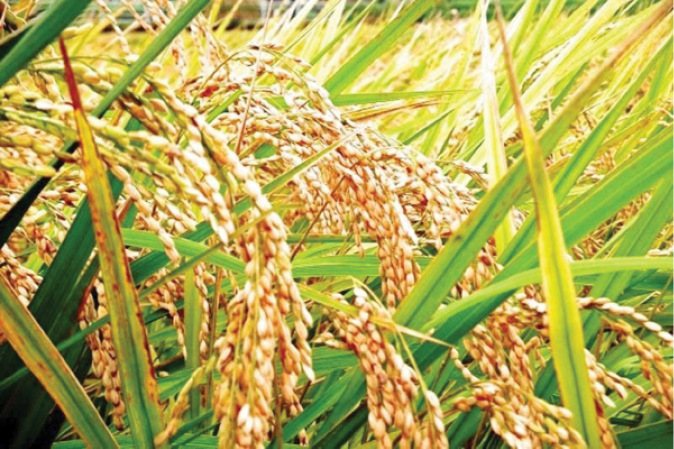
Rice is one of the crops witnessing the develoment of improved seeds
On the sidelines of the United Nations General Assembly, Nigeria launched its most ambitious climate target to date, committing to reduce emissions by 32% by 2030.
With this move, Nigeria sets a new regional benchmark as the first country in West Africa and the fifth in Africa to submit the third iteration of its Nationally Determined Contributions (NDCs). Under the Paris Agreement, countries are required to submit NDCs every five years, outlining how they will contribute to lowering global temperatures.
Marking this important milestone, Mrs. Tenioye Majekodunmi, Director General of Nigeria’s National Council on Climate Change, emphasized that NDC 3.0 represents a departure from a business-as-usual pathway towards an absolute, economy-wide emission reduction approach—the highest level of ambition yet.
“With the ambition of reaching net-zero by 2060, this new climate commitment is both a bold declaration of intent and a roadmap for action. The targets are clearer, and they will be supported by a dedicated investment plan developed for NDC 3.0,” said Mrs. Majekodunmi.
She explained that NDC 3.0 is grounded in the latest science from the IPCC and aligned with Nigeria’s socio-economic and developmental priorities. “This NDC is the result of rigorous consultation, cross-sectoral collaboration, and the unwavering leadership of President Bola Tinubu’s administration,” she said.
Nigeria estimates that US$337 billion will be needed to deliver on NDC 3.0, alongside technology transfer, development, and capacity building. The country aims to mobilize domestic resources to fund the unconditional 20% (US$67 billion) of the target, while the remaining 80% (US$270 billion) will require international support.
“Delivering on these commitments will require partnership, technology, and finance at scale. Ambition alone is not enough. Proper implementation of the NDC is essential for success, and that is where Nigeria is ready to roll up its sleeves. We therefore call on the international community—governments, the private sector, civil society, and development partners—to stand with us, invest with us, and walk this journey with us,” said DG Majekodunmi.
Vice President of the Federal Republic of Nigeria, Kashim Shettima, lauded the move as a clear commitment to climate governance that cuts across sectors and puts into context the economic imperatives of Africa’s biggest economy.
“As Africa’s leading economy, our updated Nationally Determined Contributions under the Paris Agreement represent a clear signal of ambition and accountability. They show that Nigeria is firmly in control of its climate destiny—and that we are prepared to lead the continent with development-friendly, economy-wide climate governance. Over the past two years, this administration under President Bola Ahmed Tinubu (GCFR) has laid a foundation for national recovery and growth; now we are extending that into the green economy. Our aim is to make Nigeria a top destination for green investment globally. We have the people, the resources, and—crucially—the policy framework now in place to deliver on our vision of a net-zero transition by 2060.”
At the unveiling of Nigeria’s NDC 3.0, Honourable Minister Balarabe Abbas Lawal, Minister of Environment, Federal Republic of Nigeria said the milestone is a culmination of over a decade’s effort from the Federal Ministry of Environment to mainstream climate change into our national and economic development planning. “With a President who is adept at economic innovation and supported by a dexterous cabinet, we have delivered an economy-wide climate plan. With this framework firmly in place, the Federal Ministry of Environment, alongside the National Council on Climate Change, will work with other stakeholders and the private sector to drive Nigeria’s climate ambition. As a ministry, our doors are open to welcome global development and financial partners to partner with us to transform this plan to visible action through investible opportunities that support growth and economic development for the most vulnerable Nigerians on the frontline of climate impact,” Hon Balarabe Abbas Lawal said.
Aside from the scale of the ambition, the NDC sets the framework for a climate development green growth-compliant approach to climate governance to engineer a future that is green, resilient and inclusive, not just in development and economic terms but also one that build resilience for the most vulnerable in Nigerian society.
Nigeria has made the call to the global community, particularly the developed nations and multilateral funding agencies, in ensuring that global climate goals are met through shared responsibility and collective action as Nigeria embarks on implementation of its NDCs by 2035.
Highlights from Nigeria’s NDC 3.0
▪ Nigeria commits to meeting the net-zero commitment of the country by 2060.
▪ Increase the adoption and use of cleaner alternatives, especially in Manufacturing and Industries, by increasing self-captive generation capacity using cleaner fuels by installing 7 GW (50% renewable and 50% natural gas)
▪ 100% electricity access by 2030, with 50% renewable energy share in the generation mix by 2030.
▪ Economy-wide absolute emissions reductions representing 29% and 32% of net national emissions of 2018, in 2030 and 2035, respectively.
▪ Zero routine gas flaring achieved by 2030 and 95% reduction in fugitive emissions (leaks and venting) by 2035.
▪ Lower deforestation rate by 60% – Increase area under forests through reforestation and afforestation at the rate of 250,000 ha, and plant 25 million trees.