
Nigerians can tell who’s criticising Tinubu just to grab power — Uba Sani
In this interview on Trust TV’s 30 Minutes programme, Governor Uba Sani of Kaduna State speaks candidly about the growing wave of criticism and coalition moves against President Bola Ahmed Tinubu’s administration. He also reflects on his own path to re-election in 2027 and outlines his government’s efforts in the areas of security, healthcare, and […]
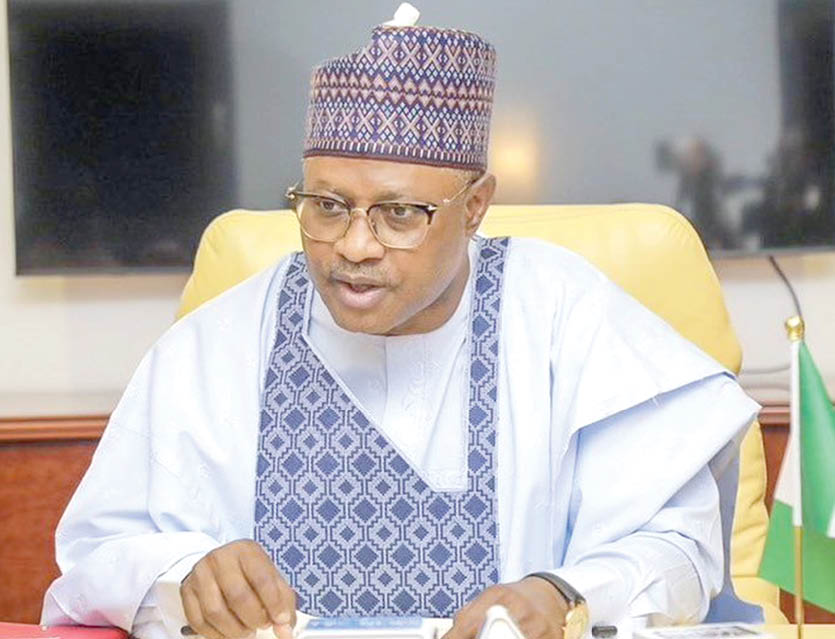
Uba Sani
In this interview on Trust TV’s 30 Minutes programme, Governor Uba Sani of Kaduna State speaks candidly about the growing wave of criticism and coalition moves against President Bola Ahmed Tinubu’s administration. He also reflects on his own path to re-election in 2027 and outlines his government’s efforts in the areas of security, healthcare, and education. Excerpts:
You started out as an activist. How has the transition been, now that you are the man in charge of an entire state, dealing with all its affairs — from security to the economy to day-to-day issues and so on?
I would say it has been a very difficult transition, but so far, I can say it has been successful. I was among the few Nigerians who fought for the entrenchment of democracy in Nigeria, alongside some of my colleagues. Some of them are still alive, while we have lost others like Chief Gani Fawehinmi and Dr Beko Ransome-Kuti.
Today, some of our colleagues with whom we fought for the entrenchment of democracy are still pushing for the rule of law, justice, freedom, and equity in our country. Because of my background as a civil rights activist, that was the reason I made it clear to everyone that we must relegate politics and focus on governance.
- Governor Abba Kabir Yusuf Distributes 10,000 Free JAMB Forms to Secondary Students
- Over 12,000 women suffer cervical cancer annually in Nigeria – Pate
But is that not another form of politics in itself?
I know it’s difficult, but I believe it’s the best approach — and we’ve seen the results.
When I assumed office, I made it clear that I wasn’t going to focus only on those who voted for me. I was going to focus on everyone. For instance, after the election, most of the people who voted for the PDP were from the southern part of Kaduna.
But I had to sit down with my people from all parts of Kaduna, and I made it clear that we would take development to every part of the state — irrespective of religious, political, or party affiliation. Today, I’m happy. We’ve been able to achieve a lot, and that is why, as I speak with you, members of the PDP in the House of Representatives, who were elected on the PDP platform, have now defected to the APC.
But the people who voted for you claim they are getting the wrong end of the stick. They say it’s strange that you seem to be bending over backwards to serve those who didn’t vote for you.
Those who voted for me have also been taken care of. The only difference is that we’ve decided to share the projects equally.
In the past, many governments in Kaduna State focused only on areas that voted for them. But I told the people, look, when we took the oath of office, anyone who sits down and clearly understands the meaning of that oath will know it’s about carrying everyone along. Governance is for everyone.
In fact, there are people who have nothing to do with politics — but as long as they live in Kaduna, as citizens of Kaduna, they must also be included and benefit from the basic provisions of governance. So it doesn’t matter whether you’re a politician, a businessman, a farmer, or someone who has no interest in politics — as long as you live in Kaduna, as a citizen of the state, you must be treated equally. I made that clear to everyone because this is about governance.
At the end of the day, I will stand before Almighty Allah and account for what I did as Governor of Kaduna State.
What about projects begun by your predecessors that remain uncompleted? I can give you a good example — in your hometown of Zaria. There’s the overhead bridge that looks like a monumental eyesore.
I’m really happy you brought this up, and I want to take this opportunity to give a lot of credit to the peaker of the House of Representatives, Right Honourable Tajudeen Abbas. If you go to Zaria now, all the previously abandoned projects are being worked on. In the last three months alone, we’ve returned four contractors to site. Moderncat has gone back and completed most of the roads connecting Zaria and Sabon Gari.
As for the overhead bridge, the Speaker himself — Right Honourable Tajudeen Abbas — came to my house and spoke to me. Don’t forget, I was a member of the Senate — the 9th Senate — and I know what it means to be a Speaker of the House of Representatives. That’s why we came together and agreed that Kaduna State needs someone in that position. Today, I’m happy to say he has secured substantial funding in the national budget to complete the overhead bridge.
And that’s what governance means — synergy. If you go around Kaduna State, we are working to complete the Kabala overhead bridge. We’ve also mobilised CCECC to complete the railway stretch from Rigasa station to Rabah Road Phase 2. That’s a major project, and it’ll cost us over N15 billion to complete.
Don’t forget, most of these projects were abandoned when they were just 20% or 30% completed. The Kabala bridge was left at 30%, the Rigasa line at about 35%. But as we speak, we’ve mobilised the contractors and given them close to N20 billion to get them done.
What about health? You appear keen to speak on that.
When I assumed office, I made it clear that healthcare must never be a privilege. It is a fundamental right of the people of Kaduna State, particularly those at the grassroots. So what did we do?
Today in Nigeria, we are the only state—let me say this clearly, without fear of contradiction—that has upgraded our primary healthcare centres from level one to level two, totalling 250. The next closest state has only managed to upgrade 100.
In Kaduna State, we are making that transition. And it’s significant, because once upgraded, a woman can go into that hospital and deliver safely, with all necessary facilities in place. Drugs are available. Healthcare personnel are present.
That’s why we moved those 250 centres from level one to level two. Following that, just last week, I directed the recruitment of 2,000 additional personnel for our primary healthcare centres. We’ve raised the bar.
For our doctors, we now pay them the prevailing salary structure. Beyond primary healthcare, I also focus seriously on our secondary healthcare centres. I can’t, as governor, sit by and watch people travel to neighbouring states for treatment when they have serious illnesses.
We reviewed the status of our 32 secondary healthcare facilities, and found that in the past 18 years, over 25 of them hadn’t been upgraded. Because of that, we’re now upgrading at least 20. As we speak, 13 of them are being remodelled, reconstructed, and fully equipped.
Due to these efforts, the Federal Ministry of Health has now agreed to convert the General Hospital in Kafanchan into a Federal Medical Centre.
Let’s pick it from there. Kafanchan and Southern Kaduna appear to be central to the political game ahead of the 2027 elections, not just in your state but at the federal level too. President Tinubu seems to be courting groups previously disenchanted with him. Are you clear about your own second-term ambition?
I think, for me in Kaduna, I can say frankly that I haven’t seen any major opposition. I’m a politician, and I want to be sincere. If there’s a problem, I’ll tell you.
When I assumed office as governor, PDP had more members in the House of Representatives from Kaduna than the APC. Most of those PDP members represented constituencies in Northern and Southern Kaduna. But just last month, the member representing Igabi Local Government—which is one of the largest in Kaduna—Hussaini Jalo, left the PDP and joined the APC.
But your predecessor as governor, Nasir El-Rufai, has also left your party for the SDP. Doesn’t that matter?
I can tell you—as someone who has fought for the expansion of political space in Nigeria— don’t forget, I was among the few Nigerians who took INEC to the Supreme Court, with Gani Fawehimi, Balarabe Musa and M.D. Yusuf, all of blessed memory. I was part of that group.
That’s activism. We’re talking real politics. In Kaduna State, this man—El-Rufai—was governor before you.
Yes, and I’m giving you an example from my understanding of politics. SDP? Let’s be frank and sincere—what is the SDP today?
But even before the APC merger, what was the APC?
When we talk about mergers, we must define what we mean. Is it a merger for grabbing power, or is it for working in the interest of the people? That’s a key distinction.
If a merger aims to transform Nigeria, then I’d be concerned. But if it’s just about seizing power, I can tell you Nigerians are very smart. They’re wise and they know the antecedents of everyone. That’s why I’m not bothered by this so-called merger talk. And let me tell you why.
There are critics—and I was one for many years—who opposed past governments. That journey took me through a lot. You remember—I went through detention, I faced the SSS cell and even military authorities.
Why did we fight the military back then? Because we were fighting for the people, not to contest elections. We wanted democracy entrenched in Nigeria.
Yet people now say your own government resembles the military. Some have even likened Tinubu’s administration with Abacha’s.
I can tell you, this current government of Asiwaju is more liberal than many that came before. And I’ll explain why.
Even when it doesn’t allow peaceful protests?
You see, protests or criticism can be interpreted in different ways, depending on who’s talking. Let me give you examples.
Take Professor Usman Yusuf, for instance. He is a progressive figure. If he is criticising this government, I’ll say he has every right to do so. No one should harass him. Because people like that are not attacking government because they want political power. So for me, I have no issue with such individuals.
So your problem is with those who want to take power from you?
No, let me finish. People like Mahdi Shehu, I’ve no issue with. People like Bulama Bukarti—I think he’s fine. Jafar Jafar—he’s okay too.
So long as their criticism is not rooted in a desire to grab power?
No, no, not like that. It is because these people are speaking with the people’s interest at heart.
And every democracy must allow criticism, but it must be constructive, and in the interest of the Nigerian people. That’s what we did as activists—not because we wanted power.
But when you attack government and you’ve been part of it… Anyone—like I said—who is from Northern Nigeria and held a political office in the last 20 years, we all need to look at ourselves in the mirror and apologise to the people of Northern Nigeria. We let them down.
I’ll say it here today—all of us. I was a senator in this country, and the problems of Northern Nigeria didn’t start two years ago.
We’re talking about developments—or lack thereof—over the past 20 years. I can give you the data and statistics next time we meet. I chaired a committee on banking, so I know the poverty index of Northern Nigeria. I know how many people, as we speak, are financially excluded.
Don’t forget, when Buhari was president—people forget this—he spent hundreds of billions on social interventions. But I’ll tell you why the North became poorer even after that. Because 70% of the population in Northern Nigeria—especially the masses—were completely financially excluded because every human being; if you’re a former senator, a former member of the House of Representatives, a former governor, a former minister, or even a former vice president from Northern Nigeria in the last 20 years—you’re part of the problem. All of us.
And that’s why I believe we must not deceive the people of Northern Nigeria. We must not mislead them. That’s why I said earlier, I’ve no problem with people criticising the government—people like Dan Bello Galadanchi. All those individuals, I can tell you, have the moral right to criticise this government.
But those who were part of the rot and are now saying they’ve repented—please, I think that’s wrong.
What about education? I saw that a big chunk of this year’s budget is going to education. Is that going to teachers or to structures? Because people tend to focus on building mega schools but end up neglecting teachers.
I can tell you that in Kaduna, we are working towards repositioning the entire education sector. When I came in, go and verify — Kaduna State was number 12 in WAEC rankings. But today, we’re currently number 7 in the whole of Nigeria. And I can tell you, at the rate we’re going, we could be number 1 or 2 in the next year or two. The reason is clear. We’re investing heavily in teacher training and retraining. I’ve directed SUBEB and the local government chairmen — and I’m glad they’re receiving significant funding under our administration — to focus on recruiting more teachers.
What about insecurity — the big elephant in the room? I know about the efforts you’ve made in Birnin Gwari. Is the peace initiative holding? And will it be replicated in other areas?
Yes. I can tell you that, as we speak, we’ve already reached out to about four frontline local government areas. We were in Giwa. A year ago, nobody could enter Giwa — especially around Kudandan and Yakawada. That area was a no-go zone. But today, I’m happy to report that we’ve made progress there too.
And let me be clear — the reason we’re succeeding in Kaduna isn’t rocket science. In the past, there was a serious trust deficit between the government, the communities, and the so-called bandits. But today, when we started the Kaduna model, I made it clear it wasn’t a government initiative. It was a community-based one. I sat down with traditional rulers, religious leaders — they initiated the process.
I spoke with the Emir of Birnin Gwari, who told me all the bandits in the area were born in his presence. He knew them, he knew their parents. I asked him: what are the real drivers of this insecurity? What are the underlying symptoms? You can’t address this issue solely through government action. You must address the lack of trust that built up over time.
Thankfully, it was the community themselves who owned the initiative. When they approached me, I told them: before I get the NSA involved, I need assurance that we’re going to make progress this time.
But it seems to be breaking down — reports suggest increased bandit activity in neighbouring states, possibly due to movement from Birnin Gwari and elsewhere. Just two days ago, I saw a report of factional fighting among bandits in Giwa.
When we began this initiative, we never claimed we’d solve the problem in six months. It’s a process. At one point, Birnin Gwari had six to seven markets shut down. Today, all those markets have reopened.
Every day, we now have at least 25 to 30 trailers moving from Birnin Gwari to Lagos, transporting cattle. Economic activity has picked up. We reopened the grains market in Birnin Gwari, which has helped boost the area’s prosperity.
The villagers, the rural dwellers, they’re now seeing business — they’re seeing life again. For me, that’s real progress. But it’s not something you can fully achieve in just six months, or even one year.
I saw a report of some kidnap victims who were released through the Kaduna model — they’ve now been handed over to the Niger State government. They’re originally from Niger. So yes, the effort is legitimate — and it’s even helping other states.
Do you reckon appeasing criminals is a strategy that will work, given it’s not exactly new? Governors have tried it before, and it collapsed.
Let me explain this carefully, so that Nigerians can truly understand. During my time in the National Assembly as a senator, I moved not less than three or four motions insisting that the only way to win this fight is through a kinetic approach.
But before I left the National Assembly, I took time to critically examine our country’s laws, especially those affecting security. One thing that struck me was the alarming number of illegal firearms in circulation in Nigeria. It’s unacceptable. The United Nations states that out of the 350 million illegal firearms circulating in the West African subregion, about 250 million are domiciled in Nigeria. Do you know why? Because our laws are weak. The Firearms Act is clear. Only the president of Nigeria can authorise the use of AK-47 rifles. When we came in, many of us recruitment a lot of vigilantes. In the southern part of Nigeria—the Southwest—they formed Amotekun. In Kaduna, Katsina, Sokoto, Zamfara—they all established their own local security outfits, with thousands of members.
The law does not permit them to use AK-47s.
But let’s take the example of the Kuliga abductions. When 137 children were kidnapped, Kuliga alone had hundreds of vigilante groups supported and funded by the government. Yet, it took just a few bandits—armed with sophisticated weapons, some beyond AK-47s—to invade and abduct those children. So, what are we doing? We’re sending our people to their deaths.
But why are we not increasing the number of official security personnel—the military, for instance? Can’t we just double their numbers?
I asked that question more than 20 times as a senator. And that was when I began to lose hope in the kinetic approach. Let me give you a practical example. Go and ask any military officer in Nigeria—from the Chief of Defence Staff, General Musa, to the Chief of Army Staff—they will tell you that our entire military strength is less than 300,000 personnel.
So, doubling that number is impossible?
Yes, it is—because of the recruitment process. That’s what they told me when I asked.
In fact, in the 1970s, Nigeria had over 300,000 military personnel. But today, in 2025, we have fewer than that. That’s one issue. Secondly, the total number of police personnel in Nigeria today is also below 400,000. That is the reality. And this is why there are so many ungoverned spaces in Nigeria—especially in the North-West. Vast stretches of land are simply ungoverned.
I also sponsored a bill for the creation of state police. Around the world, including in the United States, you have both federal and state police forces. It’s critical. I wasn’t even a governor then—I was a senator. I pushed for state police because, unlike local vigilantes who cannot legally possess AK-47s, a state police force could. And think about this: imagine someone born and raised in Birnin Gwari—his mother, his father, his entire family are there. Do you think he’ll sit idly while one bandit comes in to rape his mother, his sister, or his wife and abduct people into the bush—when he’s a police officer armed with an AK-47? That’s not possible.
Can we talk about local governance? I want to touch on something governors often avoid: local government autonomy. Why are governors not allowing local governments to function independently?
Just two weeks ago, without any prompting, the local government chairmen in Kaduna passed a vote of confidence in me.
But have you asked whether they’ve been allowed to open their own accounts with the Central Bank of Nigeria (CBN) so their allocations go directly to them?
As far as I am concerned—even two weeks ago, I was with the Minister of Justice and Attorney General. He had a conversation with me. We sat for two hours in Saudi Arabia. He visited my room, and we sat down to talk. I told him clearly: I, for one, support local government autonomy. I come from the grassroots. I came from the trenches. I believe power must be decentralised.
So, since you’re the governor and you have the power to implement this in Kaduna, are you doing that?
We are doing that. And I can tell you: for this situation to truly carry weight and be effective, it must be holistic. That’s what I discussed with the Minister of Justice and Attorney General.
In Kaduna, if you ask the local government chairmen, they will tell you what they’re getting now is two to three times more than what they got before I became governor. They came out and said so—most of them are adults, not children—and they said it on national television.
They made it clear that they are getting. Like Birnin Gwari right now is receiving hundreds of millions.
And they’re allowed to use it as they deem fit?
I allow them that freedom. And I’m happy—just recently, I saw on social media that they are now executing capital projects. I’m pleased with that. I’ve also made it clear to them: when I give you the freedom to use your funds, use it wisely—recruit more teachers, support SUBEB, and work on projects that will truly improve the lives of our people, especially at the grassroots level.