
Nigerians react to FG’s plan to tax commercial sex workers
Nigerians have expressed mixed reactions to a recent comment by Taiwo Oyedele, the chairman of the Presidential Committee on Fiscal Policy and Tax Reforms, in a viral video suggesting that prostitutes and others engaged in informal activities may be required to pay taxes under the federal government’s new revenue drive. Oyedele’s statement, which has stirred […]
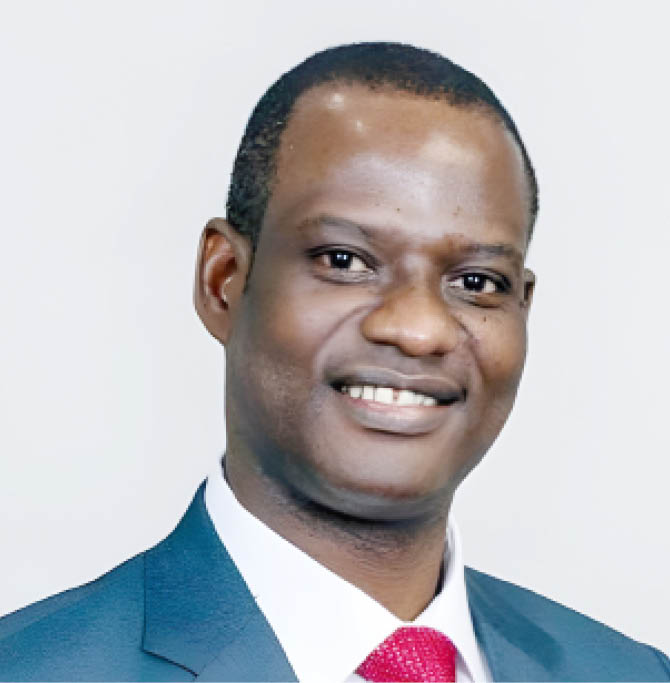
taiwo oyedele, chairman, presidential committee on fisical policy and tax reforms
Nigerians have expressed mixed reactions to a recent comment by Taiwo Oyedele, the chairman of the Presidential Committee on Fiscal Policy and Tax Reforms, in a viral video suggesting that prostitutes and others engaged in informal activities may be required to pay taxes under the federal government’s new revenue drive.
Oyedele’s statement, which has stirred debate nationwide, has been interpreted by many as an attempt to extend Nigeria’s tax net to cover even illegal or socially frowned-upon trades.
Chairman of the Presidential Committee on Fiscal Policy and Tax Reforms, Taiwo Oyedele, in a viral video from a tax education session by the Redeemed Christian Church of God, City of David, Lagos said commercial sex workers will now have to pay tax
He stressed that once payment is made for a service or product, the law requires taxation—regardless of whether the activity itself is legitimate.
He added, “If somebody is doing runs girls, right, they go and look for men to sleep with, you know that’s a service, they will pay tax on it.
“One thing about the tax law is it does not separate between whether what you are doing is legitimate or not. It just asks you whether you have an income.
“Did you get it from rendering a service or providing a good? You pay tax.”
Reacting to the development, a financial expert, Shehu Sadiq, said that while the position might be technically correct under the Nigerian tax law, it raised ethical and legal complications.
“Technically, he is right because the Nigerian tax law does not say you can only tax legal businesses. But saying if you earn, we will tax you when referring to yahoo yahoo, drug dealing, kidnapping ransoms or prostitution is misleading and dangerous. It makes crime sound like just another job and risks normalising it,” he said.
He added that enforcing such taxation would be “almost impossible,” since criminals often hide their earnings through laundering and secrecy.
“To tax them, authorities would first need proof of both the income and the crime, which turns tax collectors into investigators and creates a legal and ethical mess,” Sadiq warned.
A policy analyst who identified himself as Francis was more critical, questioning government’s priorities.
He said, “So now, Nigeria wants to tax sin but can’t even fix roads or schools? You can’t legalise the money without legalising the hustle. This is what happens when your tax base collapses and desperation meets hypocrisy.”
He argued that the government appeared more interested in cash than conscience. “How do you enforce tax laws on people who technically don’t exist in the system.” he added.
Similarly, a cinematographer, Olamide Aderiye, said the idea appeared to indirectly endorse prostitution.
“Does that mean they are encouraging prostitution? They should be striving to eradicate or reduce it,” he said.
Aderiye noted that such a policy could set a troubling precedent for the youth, swaying, “When you say you want to tax prostitutes, does that mean they are now accepted as part of the workforce? What examples are they setting for the younger generation? That means they are probably going to start taxing thieves and robbers too.”
On his part, Prof Enakhena, a macroeconomist and business consultant, warned that applying such tax principles without caution could backfire.
“If the principle that tax law doesn’t care if it is legal or illegal is strictly applied, it would mean that proceeds from armed robbery and fraud should also be taxed. That risks legitimising crime rather than deterring it,” he explained.
He stressed that while widening the tax base is important for Nigeria’s revenue, it must not be done at the cost of blurring the line between legal and illegal enterprise.
“The state’s primary role is to enforce the law and discourage crime, not appear to share in its proceeds,” he said.
However, a legal practitioner, Mrs Agnes Williams, defended the proposal, citing global precedent.
“This is a standard practice globally; and it is a smart way to disincentivise crime. Remember Al Capone? They couldn’t nail him for racketeering or murder, but tax evasion put him away,” she said.
Williams explained that the reform was not targeting low-income earners but high-profile individuals whose unexplained wealth often escapes scrutiny.
“This taxing of prostitution is not targeting people collecting Uber change. They will never meet the threshold for taxation. It is for the ones they are buying houses for, flying private jets and spraying millions,” she clarified.
She argued that the move could even expose corruption in high places, saying,
While experts and citizens remain divided, one thing is clear: the suggestion has touched a nerve. For some Nigerians, taxing prostitution sounds like government’s desperation; for others, it could be a clever tool to check unexplained wealth. Between humour, outrage and cautious support, the debate reflects deeper questions about trust in government and the blurred line between morality and money in Nigeria’s economic struggles.
Also, speaking on the issue, a real estate expert in Abuja, Anthonia Ekong, questioned the rationale behind taxing commercial sex workers when prostitution itself is an illegal venture
“I cannot really understand why the government wants to tax commercial sex workers when their services are not considered legal and is even considered as a grievous offence in some parts of the country
“The question is: How will you tax someone from earnings that are illegal?” She asked.
Ekong said the government was only trying to legalise prostitution, noting that its negative effect would encourage young girls to venture into it
“If you start taxing them (prostitutes) it will encourage young girls to also go into it because they will feel that they are remitting to government and so they have their backing,” she added.
She also raised concerns on the process or technique that would be used to collect the tax
“I think it may also be difficult to trace that income because some of them are paid via cash while others are paid via gifts; as such, it is really difficult to trace such payments. And I think it would be a herculean task for the government, except they are coming with a very robust strategy,” she also said.
She concluded by saying that instead of the government looking at how to tax commercial sex workers, it should rather establish empowerment programmes to take them off the streets
Expressing a contrary view, a finance and development expert, Christopher Otsu, agreed with government’s position to tax commercial sex workers
“I absolutely agree with the position of the government to tax sex workers because whoever renders service should also pay tax to the government
“For me, prostitution is service rendering because they meet clients and render service and get paid, so the government is right to tax them,” he said.
Otsu, however, expressed reservation on the manner the tax would be collected, urging the government to come up with a clear strategy on how to achieve that.
Similarly, a quantity surveyor, Prosper Saidu, said government’s proposal to tax income is not about recognising prostitutes because prostitution remains largely illegal in Nigeria. He said, “The law simply states that if you earn money you will be taxed. A prostitute likely won’t disclose her income source. However, the law might push tax evaders to comply and help track illicit incomes.”
In the same vein, Maryam Abdullahi, a 34-year-old businesswoman, said the government should first sanitise the system before taxing everyone
“I actually saw the video online. While I understand the logic behind widening the tax base, I think the government should first sanitise the system before talking about taxing everyone. Many people are struggling to survive, not to talk of those in illegal jobs.
“How will you ask someone doing something unlawful to declare income to the government? Does that mean the government is recognising such activities as legitimate? It is confusing. Fix the economy first before extending tax to everyone.
“If they earn money, they should pay tax like everyone else”
Also, Abdulmalik Hamza, a businessman at Kwari market said, “Honestly, I don’t see anything wrong with what Mr Oyedele said. If someone earns income, they should pay tax, whether it is from selling, driving or even touting. The government cannot continue depending on oil and big corporations alone.
“What the government should do is create a framework that formalises these informal sectors. Once they are registered and identifiable, then taxing them becomes easier. But it must come with accountability; people will only pay tax if they see where their money is going.”
Also, Malam Sani Bala, a 51-year-old a scholar, said the government should not tax immorality as it is a contradiction
He said, “Asking sex workers to declare income for tax is wrong because the act itself is unlawful and immoral. You can’t tax immorality; it is like the government collecting revenue from sin. It would mean that the state is indirectly legalising something against our faith and laws.
“Instead of taxing them, the government should find ways to rehabilitate such people, provide jobs and strengthen moral education. Nigeria cannot progress if our leaders start giving legitimacy to vices in the name of taxation.”
However, Aisha Yusuf, a 27-year-old graduate of Economics, believes that the informal sector is the biggest economy, so it is practical
“To me, what Mr Oyedele said makes sense from an economic perspective. The informal sector contributes a large share of our gross domestic product, yet most people there don’t pay tax. It is not about legitimising anyone’s occupation but ensuring that everyone earning income contributes fairly.
“However, there must be public sensitisation. Most Nigerians don’t even understand taxation. The government should educate the public and make the system simple and transparent,” she said.