
Nigeria’s billionaires of the Fourth Republic: Emergence of new wealth elite
Nigeria’s return to democratic rule in 1999 came with a mixed bag of opportunities and challenges. In the business world, there was an atmosphere of uncertainty. While it ushered in political stability for Nigeria having experienced years of military dictatorship, the fourth republic also saw the emergence of a powerful billionaire class that would reshape […]
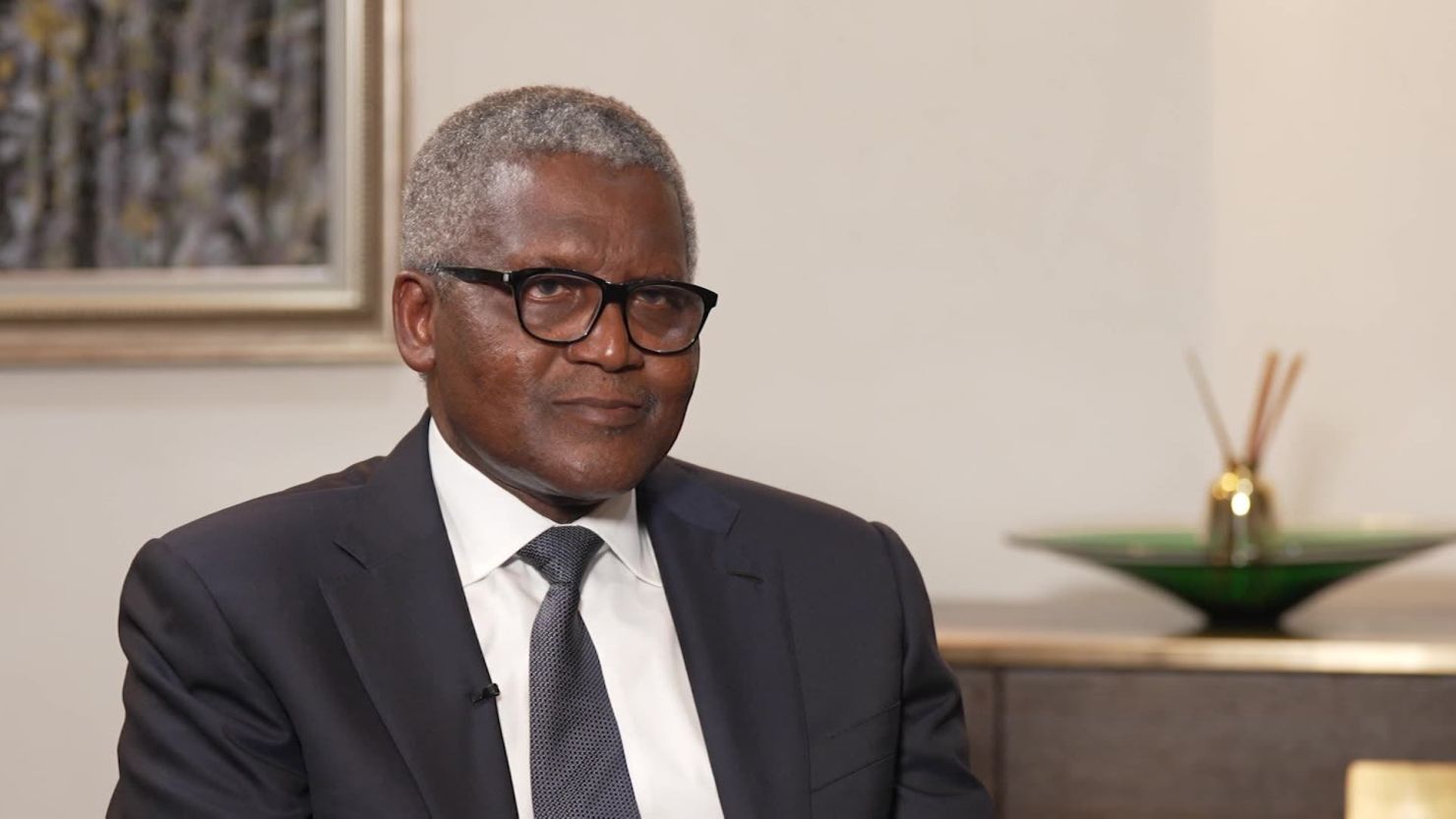
dangote
Nigeria’s return to democratic rule in 1999 came with a mixed bag of opportunities and challenges. In the business world, there was an atmosphere of uncertainty.
While it ushered in political stability for Nigeria having experienced years of military dictatorship, the fourth republic also saw the emergence of a powerful billionaire class that would reshape Africa’s economy.
Over the past two and a half decades, Nigeria has produced more billionaires than any other African country, with fortunes built in cement, telecoms, oil, power, sugar, banking and now technology.
Among the entrepreneurs who have turned their enterprises into wealth, emerging some of the most talked about billionaires in Africa, controlling conglomerates of businesses, include Aliko Dangote, Mike Adenuga, Femi Otedola and Tony Elumelu.
- Strategic silence versus strategic noise: Implications of U.S.–China competition for Nigeria
- 2025 defined NNPCL’s transformation journey – Ojulari
The transition from military rule to democracy in 1999 coincided with major economic reforms: privatisation, deregulation, banking consolidation, telecom liberalisation and trade expansion. These policies, according to experts, opened up space for private capital on a scale Nigeria had never seen.
The GSM revolution, the cement backward integration policy, the power sector privatisation, oil trading reforms and infrastructure concessions became the pillars on which today’s billionaire fortunes were built.
Aliko Dangote: The Making of Africa’s richest man
No name defines wealth in the Fourth Republic more than Aliko Dangote.
Starting from a modest trading business in the late 1970s, Dangote has succeeded, by dint of hard work and resilience, to build an industrial empire that now spans cement, sugar, salt, fertiliser and recently oil refining. His strategic use of government policy — particularly the backward integration programme in cement and sugar — allowed him to dominate Nigeria’s domestic market and expand across Africa.
He recently forayed into oil and gas when he built the $20 billion Dangote Refinery and Petrochemical Complex in Lekki, the largest single-train refinery in the world. With it, Dangote moved from being Africa’s richest man to becoming one of the most influential industrialists in the Global South.
According to Forbes, Dangote broke his government’s oil monopoly by building the largest petroleum refinery in Africa.
Today, with a net worth $26 billion, Dangote is not just Nigeria’s richest man; he is a symbol of the Fourth Republic’s capacity to create industrial capital on a continental scale.
Speaking of how he made his wealth, he said in a recent interview that his enterprising spirit is innate.
Born in 1958 to a wealthy family of traders in the city of Kano, Dangote said he began his business career on the school playground at age eight when he deployed his allowance into a small-time confectionary venture.
“I would use it to buy sweets, and I would give them to some people to sell, and they would bring me the profit,” Dangote told Forbes back in 2015.
The refinery which happened to be his biggest investment ever was to prove a point. With Nigeria’s abundant oil resource with little or no refining capacity, he believed it is high time Nigeria took its destiny in its hand by refining locally.
AbdulSamad Rabiu
Alhaji Abdulsamad Rabiu is a prominent Nigerian businessman who also hails from Kano. He founded BUA Group in 1988 and serves as its Chairman of the Board and Chief Executive Officer.
Abdulsamad Rabiu made his fortune by building the BUA Group, starting with commodity trading and expanding into key industries like cement, sugar, and food processing (rice, edible oils, flour) by acquiring and merging companies, capitalizing on import substitution, and listing major subsidiaries like BUA Cement and BUA Foods on the stock exchange.
He is also expanding his business interest into oil and gas with the BUA Refinery and Petrochemical Company coming on stream.
Born August 4, 1960, Rabiu is one of Africa’s billionaires with a networth of $9.6 according to Forbes.
Mike Adenuga
Adenuga is another Nigeria’s billionaire of note who has done well for himself in telecommunication, leveraging on the liberalisation of that sector, as well as in oil and gas business.
Adenuga made his first fortune in oil trading and exploration, but his defining legacy is Globacom, Nigeria’s second-largest telecom operator. When GSM licences were issued in 2001, few believed a Nigerian company could compete with foreign giants. But Adenuga proved otherwise.
By introducing per-second billing and investing heavily in infrastructure, Glo became a household name across Nigeria and West Africa.
With interests also in oil through Conoil Producing, banking and real estate, Adenuga’s wealth has remained resilient through economic cycles. His net worth is estimated at $6.4 billion, making him one of Africa’s most enduring billionaires.
Femi Otedola
The story of Femi Otedola is one of dramatic rises, falls and reinvention. Once a dominant force in oil marketing through African Petroleum, Otedola exited the sector after major regulatory upheavals. Many assumed his billionaire days were over. But a reinvention proved the naysayers wrong.
Otedola reinvented himself through strategic investments in power, most notably Geregu Power Plc, Nigeria’s most efficient thermal power plant. His stake in Geregu and other energy assets catapulted him back into the billionaire bracket.
Though he has recently sold his stake in the company in a deal worth over $750 million, he has emerged as one of the biggest players in the financial sector as Chairman of FirstHoldCo.
Today, with a net worth estimated around $1.6 billion, Otedola embodies the volatility — and opportunity — of wealth in the Fourth Republic.
In his book, Making It Big, he narrated how he started his business right from infancy. Though he came from an influential home, with his father being a former governor of Lagos State, he leveraged on the opportunity at the time, to build a business empire.
Like other billionaire, Otedola was very strategic to take on the opportunities in the fourth republic to expand his commodity trading into the oil and gas.
In 2003, having identified an opportunity in the fuel retail market, Otedola secured the finance to set up Zenon Petroleum and Gas Ltd, a petroleum products marketing and distribution company. From Zenon Oil to African Petroleum, Forte Oil and later Geregu Power, he has seen it all.
Also, several individuals hover around or periodically cross the billion-dollar mark. They include Folorunsho Alakija; Tony Elumelu – banking, power and investments; Jim Ovia – banking and investments, among others.
Stakeholders say a defining feature of Nigeria’s Fourth Republic billionaire class is its relationship with the state.
From cement import bans to telecom licences, from power sector privatisation to oil lifting contracts, policy has been a decisive factor in wealth creation.
What is clear is that Nigeria’s billionaires did not emerge in isolation — they are products of a political economy where government decisions and private ambition intersect, says an economist, Dr. Muda Yusuf.
“Two and a half decades into the Fourth Republic, Nigeria’s billionaire class has become a permanent feature of the national landscape. They are major employers, political influencers, philanthropists and, in some cases, cultural icons.’’
Yusuf, the Chief Executive Officer, Centre for the Promotion of Private Enterprises, in a chat with our correspondent explained that beyond the government’s policies which apparently favoured them, they were also ready to take risk.
He said, “They have guts, capacity to take risk and most of them have very strong appetite for risk taking especially Dangote and you know business is about risk, sometimes you win, sometimes you lose. If you are going to win, you win very well. If you are going to lose, you can lose fatally but their capacity to take risk is not in doubt.
“If you look at the wealthy people generally, apart from those who are professionals like Bill Gates and so on, those who are entrepreneurs, their risk appetite is always very high. So I think that is something that has worked for them. Then, they also have very good business judgement because the Nigerian economy presents tremendous opportunities for those who can identify the opportunities and those who have the foresight to take advantage of the opportunities because an economy of over 200 million people is a big economy, an economy that has the kind of resources that we have is a big economy.”
He further explained that most of the billionaires focused on essentials which many people would consume.
“They are not into luxurious things like setting up airlines or something. When you look at Dangote, practically all his businesses are things that everybody would consume whether you are rich or poor. That is why he is doing well in cement, petroleum products, sugar and basic things like that. I think that strategic decision to focus on things that have mass market and great demand really helped them. These people are not necessarily contractors to the government, they are interfacing with the market,” he added.
On the role of the government’s policy after the country returned to civilian rule, Yusuf said, “Government’s policies played a role. Our trade policy supported most of them in terms of protectionist policy. You remember during Obasanjo’s tenure, there was the privatisation policy and liberalisation of some sectors like telecoms, that also created new opportunities for private sector people to take over. So the liberalisation of the economy has helped, the trade policy regime to protect domestic industry has also helped.”