
Nigeria’s Fourth Republic: What is working and what is not
Good morning, distinguished guests, ladies and gentlemen. It is my pleasure to deliver this keynote address at the 23rd Annual Daily Trust Dialogue. I am particularly delighted that Daily Trust newspaper has consistently sustained this dialogue over the past twenty-three years, without fail, making it a catalyst for promoting national and continental integration. Over the […]
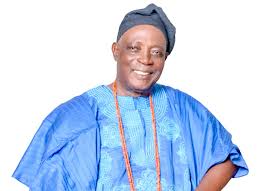
ladoja
Good morning, distinguished guests, ladies and gentlemen.
It is my pleasure to deliver this keynote address at the 23rd Annual Daily Trust Dialogue. I am particularly delighted that Daily Trust newspaper has consistently sustained this dialogue over the past twenty-three years, without fail, making it a catalyst for promoting national and continental integration.
Over the years, this series of dialogue has stimulated critical discussions among Nigerians and others on sustainable socio-political and economic development, both for our dear country, Nigeria and the African continent at large.
These discussions have attracted a diverse range of personalities, including actors in and out of government, former presidents and head of state, members of the diplomatic corps, and captains of industry among others.
Once again I commend you for your commitment.
This year’s theme, “Nigeria’s Fourth Republic: What is working and what is not? “ is particularly timely.
1 am confident that our distinguished speakers today, Malam Nasir Ahmed El-Rufai, former Governor of Kaduna State, Hon. Nnenna Elendu Ukeje, former chair, Foreign Affairs Committee, 7th and 8th House of Representatives, Mr. Sunday Dare, CON, Special Adviser to the President on Media and Public Communication, are well equipped to provide a detailed discussion on this theme. Incidentally three of them were involved in shaping the future of Nigeria In the regimes that were in this democratic experiment.
Of particular importance is evaluating whether Nigerians are truly benefitting from the Fourth Republic since 1999, a period that represents the longest uninterrupted civilian rule since independence, with significant milestones in political stability.
I will begin by providing a framework for this dialogue by categorizing the areas that are working well and those that are not in this Fourth Republic.
I trust that our speakers will provide deeper critical analysis, performance evaluations and recommendations on each of these areas.
Let me start with what is working well:
- Uninterrupted civilian rule
The most significant achievement of the fourth republic is over twenty-five years of continuous civilian government, a milestone none of the previous republics attained. This has fostered greater democratic political stability compared to the era of military coups. Of course, not without some hiccups. I can remember the doctrine of necessity.
- Peaceful transitions of power
Nigeria has experienced peaceful transitions from one democratically elected government to another. Notably, in 2015, an opposition party defeated the incumbent government, strengthening democratic norms. Furthermore, a sitting president voluntarily relinquished power even before the final results were announced, a historic first.
- Expanded political freedom
There has been a notable improvement in fundamental human rights, freedom of expression and freedom of movement. The press and civil society organisations actively question government policies, promoting accountability. Daily Trust 23rd Dialogue is itself a prime example of this freedom in action.
- Increased political participation
Citizens, especially youth, have shown a growing interest in engaging with the democratic process, reflecting a more participatory political culture.
- Strengthened democratic institutions
Institutions such as the Independent National Electoral Commission
(INEC) and anti-corruption agencies, despite challenges continue to function and evolve. While there are issues of governmental interference, gradual improvements are visible.
- Economic liberalization
Policies allowing growth in key private sectors, notably telecommunications and technology have spurred innovation, investment and economic development.
What is not working well
- Insecurity
Persistent security challenges, including ethno-religious violence, insurgency, banditry and kidnapping threaten the lives and property and also undermine national development.
- Corruption and weak institutions
Systemic and institutional flaws remain major obstacles. anti-corruption agencies often lack trust and independence due to political interference and transparency and accountability in governance are limited.
- Socio-economic challenges
Widespread poverty, youth unemployment and inequalities continue to plague the nation. Governance failures have led to infrastructure decay and a general decline in citizen’s quality of life.
- Flawed electoral process
Elections are often marred by violence, political thuggery and lack of internal party democracy, with candidates frequently imposed rather than chosen through transparent processes.
- Weak rule of law
Leaders sometimes fail to respect constitutional provisions and court rulings, creating a disconnect between democratic ideals and practice. This undermines public confidence in the judiciary.
- Political party weakness
Political parties often lack clear ideologies or programmatic ideas, focusing instead on access to power. Party indiscipline and a winner-takes-all mentality further weaken democratic consolidation.
Let me conclude that while the framework for a beneficial democratic system exists in the Fourth Republic and the continuous civil rule is a notable success, the full potential of the Fourth Republic remains largely unrealised for many citizens due to persistent governance, economic and security issues.
Let me now hand over to the three speakers for a more critical and in-depth analysis of Nigeria Fourth Republic- what is working and what is not.
Thank you for your patience
Keynote address delivered by His Imperial Majesty (HRM) Oba (Dr) Rashidi Adewolu Ladoja (Arusa 1) the 44th Olubadan of Ibadan Land and former Governor of Oyo State at the 23rd Daily Trust Dialogue held at NAF Conference Centre and Suite, Abuja on January 22, 2026