
Nigeria’s parties not founded on ideology — Speaker Abbas
The Speaker of the House of Representatives, Hon. Abbas Tajudeen Abbas, has said that political parties in Nigeria are not founded on any principle or ideology, adding that the attitude and performance of the parties indicate that they have no foundation. He said this yesterday in Abuja at a high-level technical workshop for the House […]
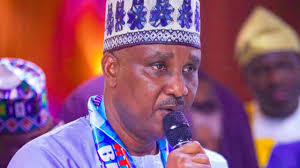
tajudddeen abbas
The Speaker of the House of Representatives, Hon. Abbas Tajudeen Abbas, has said that political parties in Nigeria are not founded on any principle or ideology, adding that the attitude and performance of the parties indicate that they have no foundation.
He said this yesterday in Abuja at a high-level technical workshop for the House (of Representatives) Committee on Political Party Matters on the Political Parties Bill (HB 1862) aimed at enhancing the governance and operational efficiency of political parties in Nigeria.
The roundtable was organised by Yiaga Africa and The Kukah Centre (TKC), with support by the European Union Support to Democratic Governance in Nigeria (EU-SDGN).
Speaker Abbas, who was the sponsor of the bill, said the nation’s registered political parties should not be seen and taken as business ventures.
- Sustaining monetary reforms to accelerate investments
- TI Nigeria backs NNPCL probe, seeks comprehensive oil sector audit
He stressed that Nigerians must find ways to make them fulfill their objectives and not be used otherwise by their managers.
He also said that the issue of political party funding or what constitutes political party membership, obligations, and funding has long been a talking point in Nigeria.
He said the decision of the house to initiate discussion through the consideration of the bill is a response to the popular demand that political parties should function as true agents of democratic consolidation in our nation.
Represented by Hon. Ishaya David Lalu, Speaker Abbas said the citizens are aware that in a democratic system, especially the presidential system being practised in Nigeria, political parties are the vehicles through which the people entrust their mandate to their representatives.
Abbas said that one of the basic tenets of democracy is the formation and organisation of political parties, and democratic practice requires that those interested in contesting for public offices belong to political parties, which are the platforms through which people contest and win elections, except in countries where there is provision for independent candidacy.
“An unregulated political environment is open to abuse and could become an instrument for destabilisation and destruction of social order.
“The registration of political parties entails regulation to ensure discipline and financial management limits. It is trite that those who register political parties must also find reasons to regulate their activities, especially their funding. This bill is meant to bridge these gaps in our legislation.
“The bill proposes that the registration and regulation of political parties will promote transparency and accountability, separate the regulatory function from government control, and domicile it in an independent body that will not be partisan in holding political parties accountable for things like campaign financing and the sources.
“It has also been said that such regulations will promote fairness and impartiality as an independent body will strictly apply the rules and continually mete out punishment for transgressions.
“This is expected to promote public trust in the political party system and improve governance as the people will become active funders of their political party. Perhaps, too, it will reduce corruption,” he said.
In his remark, Executive Director of Yiaga Africa, Samson Itodo, lawyer, said that the importance of the bill is such that it is beyond Nigeria, due to its position in Africa and the world.
On his part, the Chairman House of Representatives Committee on Political Party Matters, Hon. Zakari Dauda Nyampa said the event is a very unique day in the life of the democracy being practised in the country.
He said political parties will have their own commission and there will be regulation and there will be proper structure of the party system in the country.
Executive Director, The Kukah Centre, Fr Atta Barkindo, represented by Senior Programme Manager of the centre, Mr Esrom Ajanya, said at a time when the quality of political party operations directly impacts the integrity of the nation’s elections and the vibrancy of its democracy, this bill offers a timely opportunity to strengthen internal democracy, promote accountability, and institutionalise reforms that have long been overdue.
The nation’s 18 registered political parties, represented by the Inter Party Advisory Council (IPAC) National Chairman, Dr Yusuf Mamman Dantalle, noted that the bill is aimed at enhancing the governance, internal democracy and operational efficiency of political parties in Nigeria.
He said that the development calls for regular Constitutional and Electoral Act Amendments to correct the lapses and that the ongoing constitutional and electoral review is yet another opportunity to rectify the flaws, thus strengthening our hard earned democracy.
He however noted that the bill is yet to be uploaded online to enable citizens to have in-depth understanding of what it’s all about so as to thoroughly examine, assess, evaluate, appraise and scrutinise it and be sure it reflects their aspiration.
The IPAC leader said that meaningful discussion will take place if stakeholders grab the nexus of the bill and make appropriate contributions.
He also noted that like all democratic institutions in Nigeria, political parties have their own challenges including failure to adhere to internal democracy particularly in nomination of candidates and election of executives at all levels.