
Nigeria’s Pastoralists in 2025: Between Survival and Reform
In 2025, Nigeria’s pastoralist sector was at a historic crossroads. Long associated with mobility, resilience and food supply, pastoralism is now under intense pressure from insecurity, climate change, land scarcity and policy transition. For millions of Nigerians whose livelihoods depend on livestock, this is no longer a distant policy debate but a daily struggle for […]
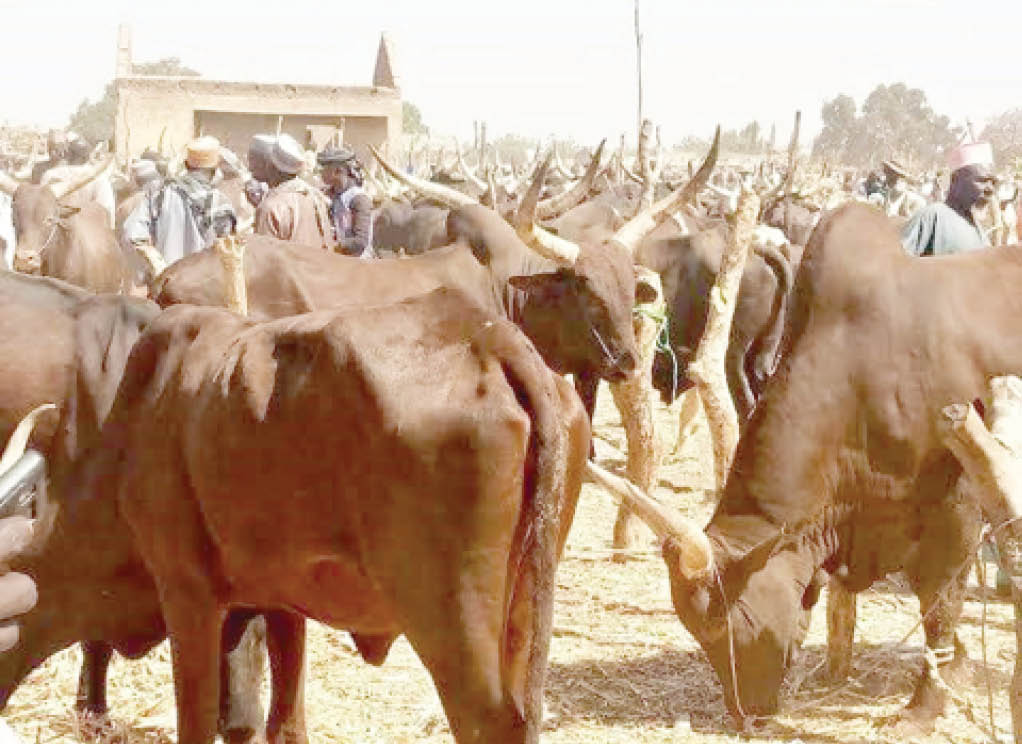
bulls at a livestock market in the area
In 2025, Nigeria’s pastoralist sector was at a historic crossroads. Long associated with mobility, resilience and food supply, pastoralism is now under intense pressure from insecurity, climate change, land scarcity and policy transition. For millions of Nigerians whose livelihoods depend on livestock, this is no longer a distant policy debate but a daily struggle for survival. As the country looks ahead in 2026, the choices made today will determine whether pastoralism collapses into deeper crisis or evolves into a modern, productive and peaceful component of Nigeria’s economy.
Pastoralism remains central to Nigeria’s food system. Cattle, sheep and goats supply meat, milk, hides and skins to markets across the country, while millions of households depend on livestock for income, savings and social security. Yet this vital sector is also one of the most vulnerable. In 2025, Nigerian pastoralists face what many experts describe as a “triple burden”: violent conflict, environmental stress and economic marginalisation.
The most visible challenge remains insecurity. Farmer -herder conflicts continue to erupt across the Middle Belt and parts of the North West, particularly during the dry season when grazing land shrinks and herds move closer to farming communities. These clashes are no longer simple disputes over crops and cattle. They have become deadlier, often involving armed groups, criminal networks and cycles of reprisal. Entire communities have been displaced, livelihoods destroyed and trust eroded. For many pastoralists, mobility once their greatest strength has become a source of danger.
Climate change has sharply worsened these pressures. Erratic rainfall, prolonged dry spells and advancing desertification are reducing pasture and water availability, especially in northern Nigeria. Traditional grazing routes that once sustained seasonal migration are disappearing due to urban expansion, farming, mining and infrastructure development. As herders are forced to travel farther and longer, they encounter unfamiliar territories, higher risks of conflict and greater exposure to livestock diseases. Climate stress is no longer a future threat; it is already reshaping pastoral life in 2025.
Economically, pastoralists remain among the most excluded groups in Nigeria. Despite managing assets worth trillions of naira in livestock, many lack access to credit, insurance, veterinary services and structured markets. Productivity remains low, particularly in the dairy sector, where Nigeria still relies heavily on imports despite having one of the largest cattle populations in Africa. Losses from disease, cattle rustling and climate shocks push many households deeper into poverty, reinforcing cycles of vulnerability.
Against this backdrop, 2025 has also marked a turning point in policy thinking. The federal government has moved more decisively toward modernising the livestock sector, shifting away from an unregulated open grazing system toward structured alternatives. The establishment of a dedicated Ministry of Livestock Development and renewed attention to grazing reserves, ranching and value-chain integration signal a recognition that the status quo is unsustainable.
Importantly, the policy direction has emphasised transition rather than outright prohibition. While several states have enacted anti–open grazing laws, the federal position acknowledges Nigeria’s diversity and the need for gradual, negotiated change. Pilot grazing reserves and ranching schemes introduced in 2025 aim to combine pasture development with water, education, healthcare and energy infrastructure. The goal is not only to reduce conflict but to improve productivity and living standards for pastoral communities.
Another notable development in 2025 has been the growing focus on data and risk management. Calls for a comprehensive national livestock census have gained momentum, highlighting the absence of reliable data on herd sizes, movement patterns and disease prevalence. Without such data, planning and reform remain guesswork. At the same time, pilot index-based livestock insurance schemes are being introduced to protect pastoralists against drought and climate-related losses. Though still limited in scale, these innovations point to a future where pastoralism is treated as a business rather than a humanitarian problem.
As moved into 2026, several trends are likely to shape the pastoralist experience.
First, livestock reform will deepen, but unevenly. Ranching and grazing reserve rehabilitation are expected to expand, particularly in states willing to invest land and political capital in reform. Where these initiatives are inclusive, well-managed and properly funded, they may begin to reduce conflict and stabilise livelihoods. However, in areas where reforms are imposed without consultation or fail to provide viable alternatives, tensions could worsen. The success of 2026 will depend less on policy announcements and more on implementation.
Second, insecurity will remain a defining challenge. Even with reforms underway, the transition period is likely to be volatile. Armed banditry, cattle rustling and communal violence will continue to intersect with pastoral mobility, especially in regions where state authority is weak. Without parallel investments in policing, justice and local conflict resolution, livestock reforms alone will not deliver peace.
Third, climate resilience will move from the margins to the centre of pastoral policy. As weather shocks intensify, the need for drought-resistant pasture, water infrastructure, early warning systems and insurance will become unavoidable. In 2026, pastoralists who lack access to these tools risk being pushed out of livestock production altogether, with serious implications for food security and rural stability.
Fourth, economic integration offers cautious hope. If current efforts to link pastoralists to dairy processors, meat markets and financial services are sustained, 2026 could mark the early stages of a more productive livestock economy. Improved breeds, veterinary care and feed systems could raise output, reduce imports and create jobs along the value chain. For pastoralists, this would mean a shift from survival to sustainability.
Finally, there is growing recognition that pastoral mobility itself is not the problem. Across West Africa, regional institutions increasingly view well-managed mobility as an asset for food security and trade. In 2026, Nigeria’s challenge will be to reconcile this reality with local land pressures, ensuring that movement is regulated, negotiated and supported rather than criminalised.
In 2025 Nigerian pastoralists were caught between crisis and reform. The old system of open grazing under conditions of population growth, climate change and weak governance is no longer viable. Yet reform, if rushed or exclusionary, risks deepening marginalisation and conflict. The year 2026 will be decisive. It will test whether Nigeria can transform pastoralism into a modern, peaceful and productive sector or whether unresolved tensions will continue to undermine national security and food systems.
The future of pastoralism is not only a pastoralist issue. It is a national question about land, food, climate adaptation and social cohesion. How Nigeria answers it will shape rural life, urban markets and national stability for decades to come.
Toro is Director, Strategic Planning , MACBAN National Headquarters, Abuja