
‘Nigeria’s progress on climate sustainability gaining global reckoning’
A member of the North East Development Commission (NEDC), Rep. Sam Onuigbo, has said that Nigeria’s efforts at mainstreaming climate change actions into national development priorities have continued to gain international recognition. He noted that at a time when the world is grappling with the realities of climate change, including desertification, environmental degradation, forced migration, […]
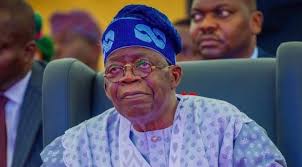
Tinubu
A member of the North East Development Commission (NEDC), Rep. Sam Onuigbo, has said that Nigeria’s efforts at mainstreaming climate change actions into national development priorities have continued to gain international recognition.
He noted that at a time when the world is grappling with the realities of climate change, including desertification, environmental degradation, forced migration, insecurity, and depletion of water resources, the country has shown determination to transition from fossil fuels to clean energy.
Speaking to journalists in Abuja on the imperatives of the Pre-COP30 Parliamentary Forum in Rio de Janeiro, Brazil, Onuigbo, who is among the 39 resource persons expected to deliver papers at the conference, said the world faces an urgent need for just transitions to net-zero carbon emissions.
Onuigbo, who sponsored Nigeria’s Climate Change Act 2021, explained that the Rio forum, which opens today, August 27, 2025, should not be seen as a mere talk shop, stressing that Nigeria’s participation reflects the level of global interest in the country’s strategic climate leadership.
He added that Nigeria has continued to be on the frontline in advocating for climate justice and is leveraging the provisions of the Climate Change Act to drive its sustainability strategies, based on REDD+ and Article 6 of the Paris Agreement, which allows countries to trade emission reductions as “Internationally Transferred Mitigation Outcomes (ITMOs).”
He stated: “REDD+ (Reducing Emissions from Deforestation and Forest Degradation, plus conservation, sustainable management of forests, and enhancement of forest carbon stocks) is anchored in Articles 5 and 6 of the Paris Agreement. While Article 5 directly recognizes the role of forests in mitigation, Article 6 provides the framework for voluntary cooperation between Parties to achieve their Nationally Determined Contributions (NDCs), including through market and non-market mechanisms.”
According to him, Article 6.2 allows countries to trade emission reductions as ITMOs, stressing that verified REDD+ results can be transferred between countries or entities to support NDCs. He further explained that Article 6.4 establishes a centralized crediting mechanism supervised by the UNFCCC, while Article 6.8 provides for non-market approaches such as capacity building, technology transfer, and finance, which are important for REDD+ readiness and implementation.
Onuigbo, who was recognised by the New York-based Business Insider as one of the Top 30 Global Climate Leaders in 2023, also commended President Bola Ahmed Tinubu for supporting Nigeria’s contributions to global climate sustainability efforts.