
Nigeria’s rotational presidency: How religion, ethnicity fuel an undemocratic power game
By Hassan Hussaini Nigeria’s rotational presidency, often sugarcoated as a tool for national unity, is nothing but a cynical ploy—a Trojan horse smuggled into politics by elites who exploit the twin poisons of religion and ethnicity to manipulate power. Far from fostering cohesion, this system has deepened divisions, institutionalised nepotism, and turned governance into a […]
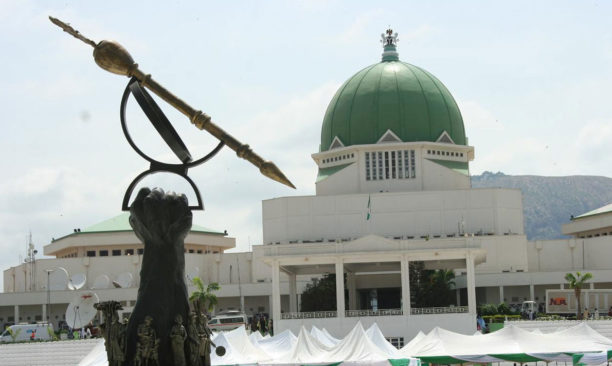
National Assembly
By Hassan Hussaini
Nigeria’s rotational presidency, often sugarcoated as a tool for national unity, is nothing but a cynical ploy—a Trojan horse smuggled into politics by elites who exploit the twin poisons of religion and ethnicity to manipulate power. Far from fostering cohesion, this system has deepened divisions, institutionalised nepotism, and turned governance into a crude ethno-religious bazaar where competence is sacrificed at the altar of primordial loyalty. The result? A nation perpetually teetering on the edge, held hostage by leaders who prioritise tribal and religious arithmetic over the people’s welfare.
The concept of rotating power between regions emerged as a fragile peace treaty after decades of military rule and the annulment of the June 12, 1993 election—a crisis steeped in ethno-religious betrayal. Olusegun Obasanjo’s 1999 presidency, gifted to the South West to pacify Yoruba anger, temporarily soothed wounds but planted the seeds of a far deadlier crisis: the normalisation of ethnicity and religion as political currency.
Today, the system has spiraled into a grotesque parody of democracy. Leaders are chosen not for their vision but for their tribe or faith. Muhammadu Buhari’s tenure (2015–2023) became synonymous with northern Muslim hegemony, as over 80 per cent of his security appointments went to northerners, while strategic agencies like the NNPC morphed into Fulani-dominated cabals. Southerners cried marginalisation, but the system shrugged—this was “their turn.”
Now, Bola Tinubu’s presidency repeats the cycle, this time with Yoruba-centric brazenness. Key appointments, and policies tilt disproportionately toward his ethnic loyalists, while the South East—systematically excluded since 1999—seethes with separatist rage. Even the ruling APC’s Muslim-Muslim ticket, an avoidable gambit to marry northern religious sentiment with South West ethnic ambition, exposed the rot. Tinubu and Shettima’s pairing was never about unity; it was a cold, calculated bid to weaponise religion and ethnicity for victory only. Critics who warned of backlash were dismissed, but the repercussions now simmer: Southern Christians feel abandoned, Northern Muslims demand perpetual dominance, and the nation fractures further.
- Questions over P/Harcourt refinery shutdown after $1.5bn rehabilitation
- Kidnappers on the prowl in Kogi, amputate victims’ limbs
The irony is tragic. Rotation was meant to quell tension, but it has only magnified it. Power shifts are negotiated in elite backrooms, not through democratic choice. In 2023, northern governors, insisted then that power “must return to the south”—not out of principle, but to retain control within the APC. Tinubu, a veteran of backroom ethnic deals, became their pawn. The PDP, too, played along, its failure to counter the APC’s ethno-religious gambit revealing a shared addiction to identity politics. Parties no longer sell ideas; they auction tribal and religious fear.
This system doesn’t just undermine democracy—it ‘’mocks’’ it. Citizens are reduced to voting for their “tribe’s turn,” not their aspirations. When Tinubu declared “emi lokan” (It’s my turn), he didn’t appeal to Lagos’s progress but to Yoruba entitlement. Likewise, Peter Obi’s 2023 surge drew strength from Igbo marginalisation, not his policies.
The message is clear: In Nigeria, your name and faith matter more than your competence.
The consequences are dire. Under Buhari, nepotism festered as terrorism ravaged the North. Under Tinubu, Yoruba favouritism thrives while inflation strangles the poor. If an Igbo president emerges next, will they too prioritise their kin? The system guarantees it. Rotation doesn’t end marginalisation—it redistributes it. Meanwhile, Middle Belt minorities, lumped into the “North,” and southern minorities, drowned out by Yoruba or Igbo majorities, remain voiceless.
Worse, religion and ethnicity are combustible partners. The Muslim-Muslim ticket didn’t unite Nigerians—it divided them. Southern Christians recoiled at the APC’s naked prioritisation of Northern Muslim votes, while core Northerners now demand a perpetual claim to power. This toxic cocktail fuels mutual suspicion.
The 2027 election looms as a tinderbox: Tinubu’s Yoruba-Muslim alliance risks alienating the Christian South East and Middle Belt, while Atiku and Obi will exploit this resentment. Even within the APC, the Northern elite grumble about exclusion from Tinubu’s circle—proof that no rotation can satisfy the hunger for tribal advantage.
Nigeria’s youth, however, are rebelling. The #EndSARS generation and Peter Obi’s “Obidient” movement reject the old logic of tribe and faith. For them, rotational presidency symbolises a broken gerontocracy—a cabal of aging elite clinging to power through division. They crave merit, not mediocrity dressed in ethnic regalia. But the system fights back: Tinubu’s government withholds youth-focused reforms, Buhari’s legacy remains unscrutinised, and Obasanjo—the original “zoning” beneficiary—still looms as a kingmaker, meddling in politics decades after his rule.
The truth is stark: Rotational presidency is a fraud. It doesn’t heal—it corrupts. It doesn’t unite—it divides. From Obasanjo’s post-presidency meddling to Buhari’s nepotism and Tinubu’s tribal cronyism, the system perpetuates a cycle of grievance. It is not democratic but anti-democratic, substituting backroom deals for the people’s will.
To survive, Nigeria must abandon this charade. Let power flow from ideas, not identity. Enforce laws against nepotism. Devolve resources to states to reduce desperation for federal might. And above all, demand leaders who serve Nigerians—not just their tribe or faith. Until then, the nation will remain a prisoner of its elite, forever rotating in circles while the world moves forward.
Husaini mni is the BoT Chairman of Jasawa Community Development Association