
No to Press Council Bill
Once again, freedom of the press in Nigeria is under threat through the proposed Nigerian Press Council Act, 2018. A public hearing on the bill which has already passed second reading at the Senate, was held by the Senate Committee on Information and National Orientation last Monday Media stakeholders under the Nigeria Press Organisation (NPO) […]
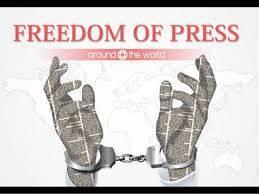

Once again, freedom of the press in Nigeria is under threat through the proposed Nigerian Press Council Act, 2018. A public hearing on the bill which has already passed second reading at the Senate, was held by the Senate Committee on Information and National Orientation last Monday
Media stakeholders under the Nigeria Press Organisation (NPO) including the Newspaper Proprietors’ Association of Nigeria (NPAN), Nigeria Guild of Editor [NGE], Nigeria Union of Journalists (NUJ) and Broadcasting Organisation of Nigeria (BON) condemned the bill, saying it was draconian and unconstitutional. They asked that it should be withdrawn.
Presenting the group’s position, NPO’s President Mr. Nduka Obaigbena, who is also NPAN’s president, said the bill among other things “seeks to criminalise journalism practice despite the fact that the laws of the country already have enough provisions and avenues for seeking legal redress…That the bill smacks of an attempt at undue interference in the operations of the media in Nigeria as businesses registered under the relevant laws of the federation…That the bill seeks for a Nigeria Press Council to usurp the powers of the courts by assuming extra-judicial powers…That the bill seeks to incapacitate the media in the exercise of the duties and obligations imposed on it by Section 22 of the constitution to monitor governance and hold government accountable to the people.”
He added, “The section states as follows: ‘The press, radio, television and other agencies of the mass media shall at all times be free to uphold the fundamental objectives contained in this Chapter and uphold the responsibility and accountability of the government to the people. That the bill violates the provisions of Section 39 of the 1999 Constitution (as amended), sections 1 and 2 of which state as follows: ‘(1) Every person shall be entitled to freedom of expression, including freedom to hold opinions and to receive and impart ideas and information without interference.’ We condemn this proposed bill in its entirety and re-echo the calls already made by other stakeholders that the proposed bill be abandoned forthwith.”
It is true that in 1984, the nation had similar laws, the infamous Decree 4 and also the Newspapers Registration Decree 43 of 1993, both of which were anti-press freedom but that was under military rule. Proposing such a bill under a democratic setting is uncalled for and to say the least retrogressive. And in any case, there is a pending suit before the Supreme Court on the Nigerian Press Council, which was created by former Head of State Ibrahim Babangida, so why the rush in legislating on a similar bill. The media is supposed to be self-regulatory and at the moment, the code of conduct for journalists, the Ethics Committees of NUJ and NGE have been carrying out those functions. Aside that, in the event that somebody is not comfortable with a story, he/she has the liberty of seeking redress in court. It is true that some journalists may be found wanting in the course of carrying out their duties, but that is not restricted to media practitioners.
Virtually every profession has its bad eggs and efforts are being made to ensure that journalists carry out their duties effectively through trainings/ seminars. The existing regulatory bodies can be urged to come up with stiffer penalties for unprofessional conducts. At a time like this where free press is being preached across the globe, we should not be seen as falling back into the dark ages. This is not the first time the 8th legislature is coming up with a bill that is aimed to gagging the media. Not too long ago, it proposed a bill aimed that regulating social media, but that did not see the light of day. It should be careful so as not to be tagged as anti- free press. The media remains the most potent agent of change in the society, so rather than toeing this path, the Senate should make laws that would strengthen journalists and the media in general so that they can continue to hold government accountable.