
NPHCDA urges evidence-based decisions as Nigeria faces rising immunization costs
The Executive Director of the National Primary Health Care Development Agency (NPHCDA), Dr Muyi Aina, has underscored the critical role of scientific evidence in shaping Nigeria’s immunization policies, warning that rising costs without corresponding coverage gains pose a major challenge. Speaking on Tuesday in Abuja at a capacity-building workshop for members of the Nigerian Immunization […]
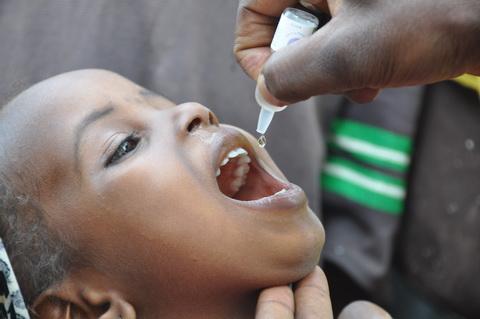
immunisation
The Executive Director of the National Primary Health Care Development Agency (NPHCDA), Dr Muyi Aina, has underscored the critical role of scientific evidence in shaping Nigeria’s immunization policies, warning that rising costs without corresponding coverage gains pose a major challenge.
Speaking on Tuesday in Abuja at a capacity-building workshop for members of the Nigerian Immunization Technical Advisory Group (NGI-TAG), Aina described the forum as central to government decision-making.
“We consider this forum a very important part of our work. You are the scientific engine behind the policies and decisions we make in our immunization programme,” he said.
He noted that Nigeria is currently at a “critical junction,” where multiple policy decisions must be made, stressing that expert guidance is essential.
“The essence of the evidence you review and the expertise this group brings is to help those of us shaping policy make the best possible evidence-based decisions,” Aina added.
While acknowledging progress in the country’s immunization efforts, particularly in polio eradication and system strengthening, he expressed concern that these gains have not translated into consistently higher vaccination coverage.
“Our immunization programme has seen significant progress over the years. However, it has also stalled in several ways. We are seeing gains, especially on the polio side, but we have not fully translated these gains into consistently higher coverage,” he said.
Aina further highlighted the growing financial burden of vaccinating Nigeria’s expanding child population, attributing the rise in costs to demographic growth, improved identification of zero-dose children, and the introduction of newer vaccines.
“At the same time, the cost of vaccinating our children in Nigeria is rising rapidly. When we consider that we are spending more—and will continue to spend significantly more—without a corresponding increase in coverage, it becomes clear why your role is more critical now than ever,” he said.
He called for deeper analysis to understand the disconnect between increased investment and limited coverage gains.
“We need your support to understand the reasons for this disconnect and to guide us toward the right decisions,” he said.
On funding, Aina said the government is working to strengthen domestic financing mechanisms to ensure sustainability and avoid disruptions such as vaccine stock-outs.
“We are working to increase domestic financing to break the cycle of delayed co-financing and the risk of stock-outs. While the government has met its obligations in recent years, we must now go further by improving not just funding levels but also the timeliness of releases,” he said.
He added that efforts are ongoing to expand allocations through the Basic Health Care Provision Fund and deepen engagement with states to encourage greater ownership.
“We are also engaging states more directly, encouraging them to take greater ownership. This may require difficult decisions, but they are necessary for long-term sustainability and accountability,” he said.
Beyond financing, Aina stressed the need to improve efficiency and reduce wastage, noting that key decisions around vaccine choices must balance cost and effectiveness.
“For example, with pneumococcal vaccines and discussions around HPV, we are weighing options such as continuing with Gardasil or transitioning to more affordable alternatives like Cecolin. These decisions require careful cost-benefit analysis—not just epidemiological considerations, but also financial sustainability,” he said.
He also pointed to ongoing deliberations on measles and rubella vaccination strategies, particularly whether to maintain combined vaccines in routine immunization or reserve them for campaigns.
“These are complex decisions that must be made in the near term as we work to ease the financial burden of the programme while remaining fully committed to vaccinating every child,” he said.
Aina emphasized that government would not rely solely on cost considerations in making such decisions.
“We do not want to make decisions blindly. We do not want to rely solely on economic considerations. We want a balanced approach—one grounded in both science and sound economics,” he said.
He concluded by commending stakeholders for their contributions to national health outcomes.
“This is service to Nigerians—service to our children and future generations,” Aina said, before declaring the meeting open.
Earlier, Hadley Ikwe of the US Centers for Disease Control and Prevention (CDC) called for sustained collaboration and practical action to strengthen immunization programmes in Nigeria.
Ikwe noted that the opportunities ahead require both technical excellence and strong partnerships.
“The opportunities ahead demand not only technical excellence but also strong partnerships and a shared commitment to impact,” he said.
He added that discussions at the workshop are expected to generate actionable recommendations to improve implementation.
“Strengthening systems, improving surveillance and data use, advancing service delivery, and fostering innovation are critical to reaching every community,” Ikwe noted.
Ikwe reaffirmed the commitment of the CDC to supporting government-led health priorities in Nigeria and across the region.
“Our goal remains to build resilient and efficient immunization programmes that will contribute to a healthier population and stronger communities,” he said.
He urged participants to sustain open dialogue throughout the workshop, expressing confidence that its outcomes would advance Nigeria’s public health goals.
Daily Trust reports that the Chairman of NGI-TAG, Ibrahim Abdu-Aguye, also delivered goodwill remarks at the event.
Goodwill messages, led by the NGI-TAG Chairman, were received from key partners and stakeholders including the World Health Organization (WHO), UNICEF, Clinton Health Access Initiative (CHAI), Solina, the World Bank, the CDC, and the NPHCDA.
The partners, represented by officials including Dr Onoriode Ezire of World Bank, Eshetu Wassie, Sobari of CHAI, Maharanjan Muthu, Mya Sapal of WHO, collectively emphasised the importance of getting immunization strategies right to improve vaccination coverage.
They commended the autonomy of NGI-TAG and its role in improving cost-effectiveness, sustainability, and co-financing of vaccine programmes, while reaffirming their commitment to supporting the group in strengthening evidence-based decision-making.
The goodwill messages also highlighted key recommendations, including that immunization decisions should be guided by the needs of the population, and that further research should explore the cost benefits of Cecolin compared to Gardasil for Human Papilloma Virus (HPV) prevention.
They also suggested the use of integrated measles-rubella (MR) or measles-containing vaccines (MCV) in campaigns to enhance cost-effectiveness.