
NUC, Council of Legal Education should close down unviable law faculties – Osipitan
Prof. Taiwo Osipitan, a renowned scholar and Senior Advocate of Nigeria (SAN) is versed in Commercial and Public Law. In this interview he speaks on the proliferation of law faculties in the country’s universities and also the public declaration of assets among others. Excerpts: How will you react to the recent mass failure in the […]
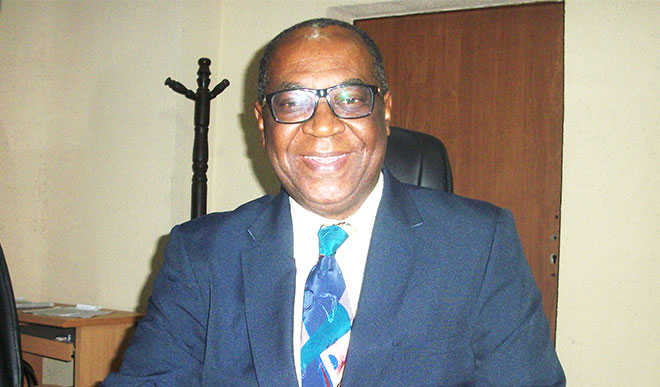

Prof. Taiwo Osipitan, a renowned scholar and Senior Advocate of Nigeria (SAN) is versed in Commercial and Public Law. In this interview he speaks on the proliferation of law faculties in the country’s universities and also the public declaration of assets among others. Excerpts:
How will you react to the recent mass failure in the Nigerian Law School?
It is becoming fashionable for every federal or state university and indeed private universities to want to have faculties of law. They see their universities as incomplete without faculties of law. But what you have is that whereas there is clamour for establishment of faculties of law, majority of these faculties don’t have seasoned and experienced law lecturers. The rate at which you have faculties of law is not been matched by the rate at which you produce law lecturers. Many of the senior law lecturers have either died or retired. But we have not been able to replace them in a way that we will have enough lecturers to go round. Consequently, you have some lecturers teaching in three or four universities at the same time. There are only 24 hours in a day, out of which you must rest. So, they are left with about 12 working hours. Sometimes, these lecturers have to travel far from one university to the other and by the time they get to their destination they are already spent. The next day they are rushing back to another university and they are tired. So, it is an issue of manpower, they do not have enough lecturers to drill and grill the students. So, what some universities do is to pass them out of the university and send them to the Law School. It is when they get to the Law School, where things are done properly that the effect of lack of proper foundation is felt.
What is the solution?
I will suggest that the Council of Legal Education and the NUC must be bold and courageous to close down as many law faculties as possible that don’t have sufficient manpower to cope with what they have. I think for now, they should also put on hold the establishment of law faculties in Nigerian universities. I believe we have had enough for now. Pending the time things will improve, there is need to do some surgical operations in terms of closing down law faculties that are not viable and also putting on hold approval for new faculties no matter who is involved.
How do you see the clamour by some Nigerians demanding that public officials must declare their assets publicly?
I don’t think it is an offence for somebody to choose to become a public officer. It is not an offence to serve the nation whether at the federal level as a minister or as a commissioner at the state level. I believe public officers are accountable for the resources and property they have. Essentially, it is between them and the Code of Conduct Bureau. The Code of Conduct Bureau has been in existence for a long time and public officials from time to time, before they take oath of office, always had to declare their assets.
There is no provision in the Code of Conduct Bureau Act or the constitution that compels you as a public official to make public your assets after declaring them to the Code of Conduct Bureau. I think it is an invasion of peoples’ privacy. Mind you, you’re not only to declare your assets, you are to declare that of your spouse and your children who are above a particular age. I think it’s carrying the joke too far by insisting that those things must be made public. I think we should give ourselves breathing space and respect the privacy of public officers.
The fact that the president has chosen to declare publicly and also that the vice-president has done the same thing is not reason for any person who does not want to do it to be compelled to. There is no provision that makes it mandatory. Neither the president nor a governor can compel a public officer to declare his assets publicly.
If we want that, then we should amend the constitution and the Code of Conduct Act.
Recently, the CJN challenged senior lawyers to come up with names of corrupt judges. How do you see this?
It a good challenge, mind you, the CJN is not saying there is no corruption in the judiciary. He has not said so and he will never say so. We all know that there is corruption in the judiciary but what the CJN is doing is like a clarion call that ‘you guys help us to fish-out corrupt ones in the judiciary, so that we can deal with them decisively’. Unless there is a report of corruption and evidence of corruption before the CJN, he cannot embark on a house- cleaning exercise. So, I believe it is a challenge and a call to lawyers to be courageous. The CJN is saying, if you have cases of corrupt judges and you are sure of your facts, you need to come and make the allegation and also substantiate the allegation.
How will you react to the call by the Nigerian Labour Congress (NLC) that corrupt public officials should face capital punishment?
Well, I believe it’s like killing a fly with a sledge hammer. That somebody is corrupt today, does not mean he or she cannot turn a new leaf tomorrow. I have never believed in capital punishment; an eye for an eye, or whatever. It depends on the school of thought which you belong to. Even for more heinous crimes there are ways of doing it than embarking on capital punishment. Look at the issue of capital punishment; someone who knows that he would die, if he is proved to be corrupt, he has an option of not releasing the ill-gotten wealth. You kill him, but does that deter other people from doing the same thing. I think what we should do is to strengthen the law enforcement agencies to be able to detect corruption at the earliest opportunity and be able to trace the proceeds of corruption. Also, they should be able to embark on forfeiture of proceeds of corruption. If those things are forfeited and repatriated back home to Nigeria and brought back into the economy, it would be for the common good of all. But the moment you kill that person, the money he has taken out of the country stays there to the benefit of the foreign countries not for the benefit of Nigerians. We should make corruption unprofitable.
Some have argued that senior lawyers often hinder the fight against corruption. Do you agree?
I don’t really agree with you. In Nigeria, the prosecution fights its cases on the pages of newspapers most of the time. In Nigeria today, I can tell you that there are only few seasoned prosecutors and I can count them on my fingertips. These are the few who know what to look for. Most of the cases prosecuted by EFCC and ICPC are lost because those who are prosecuting don’t even know what they are prosecuting. I have been involved in oil subsidy cases and defending them. I begin to show the prosecutor that he doesn’t even know the dynamics of oil subsidy. The investigators don’t even know what material to look for. Where you have a prosecutor and you also have an investigator who does not know what to look for and you are matching him or her against a seasoned defense lawyer, the result is predictable. In foreign countries governments spend money in hiring the best people to prosecute. If I prosecute a case which I believe in, because I am also a defence lawyer, I know where the loophole is. I don’t even need 40 or 50 count charges to convict. I need just two or three solid counts and stop wasting the time of the court. It is a matter of the people who are prosecuting and investigating, knowing the ingredients of the offences they are charging and knowing the relevant evidence to use. So, government must be prepared to spend money on assembling a crack-team of prosecutors. Preferably, people who have defended before and who know where the loophole is. If you employ them to join in the prosecution team, and they believe in the case, yours truly the tide will change.
Most EFCC prosecutors are senior lawyers and the commission pays heavily to hire them. Why are they not getting desired results?
How forensic are they? I don’t want to be personal, except Rotimi Jacobs (SAN) who knows what he is doing; I am yet to see highly forensic and technical prosecutors in the country. It is very unfortunate that I am being personal but we must give it to him. He is a seasoned prosecutor, but he is overworked. That you are a senior lawyer does not mean you are an expert in criminal law and evidence. Because, Jacobs has done it over and over again, he knows what to look for unlike somebody who is doing some other cases. Maybe he is involved in chieftaincy matters, and other cases, even if that individual is a Senior Advocate of Nigeria, it does not mean he is solid in investigation and analysis of cases and prosecuting cases. We all have our areas of strength and weakness.
Recently, the Vice President, Professor Yemi Osinbajo (SAN) mentioned you and others as having taught Dr. Muiz Banire (SAN) at one point or the other. How do you feel, seeing your former student becoming a Senior Advocate of Nigeria?
I feel excited. He is not the first and he will not be the last. I have some of them who became senior advocates even before me. In the last set of senior advocates, not less than five or six of them passed through me. For example, Dr. Dapo Olanipekun was my student and I also mentored him before he became a Senior Advocate of Nigeria. We still have a cordial relationship till now. He, along with about five or six others were my students at different times.
I still hope by God’s grace to welcome many of them in years coming. It is my joy and pleasure to see many of them growing either as SAN or on the Bench. On the Bench, I have so many of them as judges in the high court of Lagos, Oyo State, Osun state and Ekiti State. Some of them are chief judges in their respective states. Some are also at the Court of Appeal and one of them, by the grace of God, is at the Supreme Court. I give God the glory.
There are some lawyers who are qualified for the rank of SAN but are left out. How do you see this?
Well, the criteria for elevating people to the rank of SAN are being worked upon from time to time. Where we identify lapses, suggestions are made to the Privileges’ Committee and the CJN on how to address those lapses and these suggestions are followed up. I must tell you that it is the Almighty God that decides who to crown and when to crown who. In other words, when he says it’s time for you to arise and shine nobody can stop it. So, my plea to such people is that they should not be discouraged, their time will surely come. They should keep faith in the profession and at the right time they will be singled out for elevation.