
Nuclear power plants here?
The Federal Government recently indicated its readiness to commence the building of nuclear power plants to generate electricity in Nigeria. Minister of Science and Technology Dr Ogbonnaya Onu said nuclear power is capable of bridging the gap between the country’s energy demand and the available supply. He said when established, nuclear power plants would generate […]
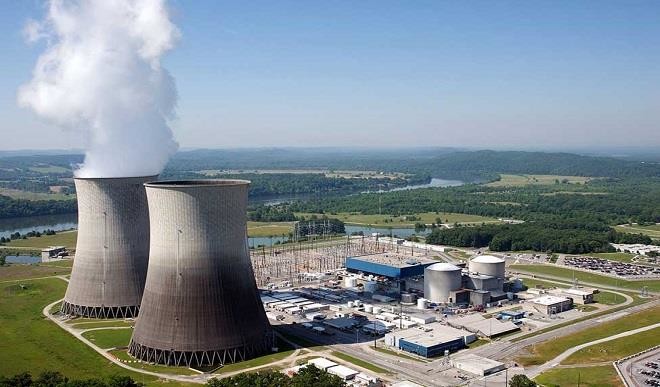

The Federal Government recently indicated its readiness to commence the building of nuclear power plants to generate electricity in Nigeria. Minister of Science and Technology Dr Ogbonnaya Onu said nuclear power is capable of bridging the gap between the country’s energy demand and the available supply. He said when established, nuclear power plants would generate energy to boost national development in areas such as agriculture, health-care, education and manufacturing.
Dr. Onu also said nuclear power is a more environmentally friendly power source since it emits far less greenhouse gases than traditional fuel plants. He said the Russian firm Rosatom has been earmarked to partner with the government on the venture and has commenced preparation of the project’s template. Onu’s announcement reminds us of this country’s past attempts at venturing into the nuclear power. This places us among the 45 countries in the world, including many in Africa, that are planning to have nuclear generated electricity.
Nigeria’s earliest venture into nuclear energy use dates back to 2004 when a Chinese reactor was installed at the Ahmadu Bello University, Zaria for research purposes. Apparently inspired by its success, the government of late President Umaru Yar’adua launched a National Nuclear Power Road Map for the country in 2007. In the course of it, a request was forwarded to the International Atomic Energy Authority (IAEA) for approval to build a 4,000MW nuclear power plant in Nigeria. Construction of the nuclear plants was to begin in 2011 at two locations in Akwa Ibom State and in Kogi State, with two nuclear plants of 1,000MW each at each location.
At a briefing on the issue on July 27, 2007 Yar’adua said, “We need to develop the capacity to utilize nuclear power for power generation. Who knows, nuclear power may be the only source of energy in the future and we must think of the future.” He was reacting to a briefing by Director General of the National Atomic Energy Commission (NAEC) Erepamo Osaisai, who said the country would suffer a power shortage of between 11,000MW and 17,000MW out of an estimated demand of 28,300MW to 31,240MW. The country’s present installed power generation capacity from traditional plants is 6,000MW while only 4,000MW is actually generated, a far cry from the planned sufficiency in this country’s electricity power endowment.
Since then progress on Nigeria’s nuclear power plans has been dogged by many handicaps, including harmonisation of the implementation template. For instance, at the time Yar’adua endorsed the project, Director General of the Nigeria Nuclear Energy Regulatory Commission (NNERC) Shamsudeen Elegba was raising serious reservations on the poor management of safety in the use of radioactive materials in the country, especially in the oil and gas industry where the materials are used for leaks in pipelines and related facilities. He cited this country’s low capacity for tracking, detection and storage of radioactive materials as well dearth of trained manpower for handling them safely.
Safety is a topmost concern anywhere in the world where nuclear plants are planned. Even in advanced countries with established capacity for operating the facilities, their experiences have been telling. The story of the nuclear reactor accident at Three Mile Island in Pennsylvania, USA on March 28, 1979 is etched in the world’s memory, as was the accident at the Chernobyl nuclear plant in Ukraine on April 26, 1986. The meltdown of Japan’s Fukushima Daiichi nuclear reactor during an earthquake and attendant tsunami on March 11, 2011 is also poignant.
It is for these reasons of safety that environmentalists and humanists all over the world have prevented the expansion of nuclear power plants in many countries and have even forced the closure of some others. Nigeria has an extremely poor record of maintaining hydroelectric, gas and diesel power plants, electric poles, cables and even meters. Please, let us not venture into nuclear power.