
NYSC mobilisation delays expose planning deficit
The growing backlog of Nigerian graduates awaiting mobilisation for the National Youth Service Corps (NYSC) has become a silent but deepening crisis, one that reflects systemic planning failures and threatens to worsen youth unemployment and economic uncertainty. Recent reports indicate that more than 500,000 graduates are currently waiting to be mobilised for the compulsory one-year […]
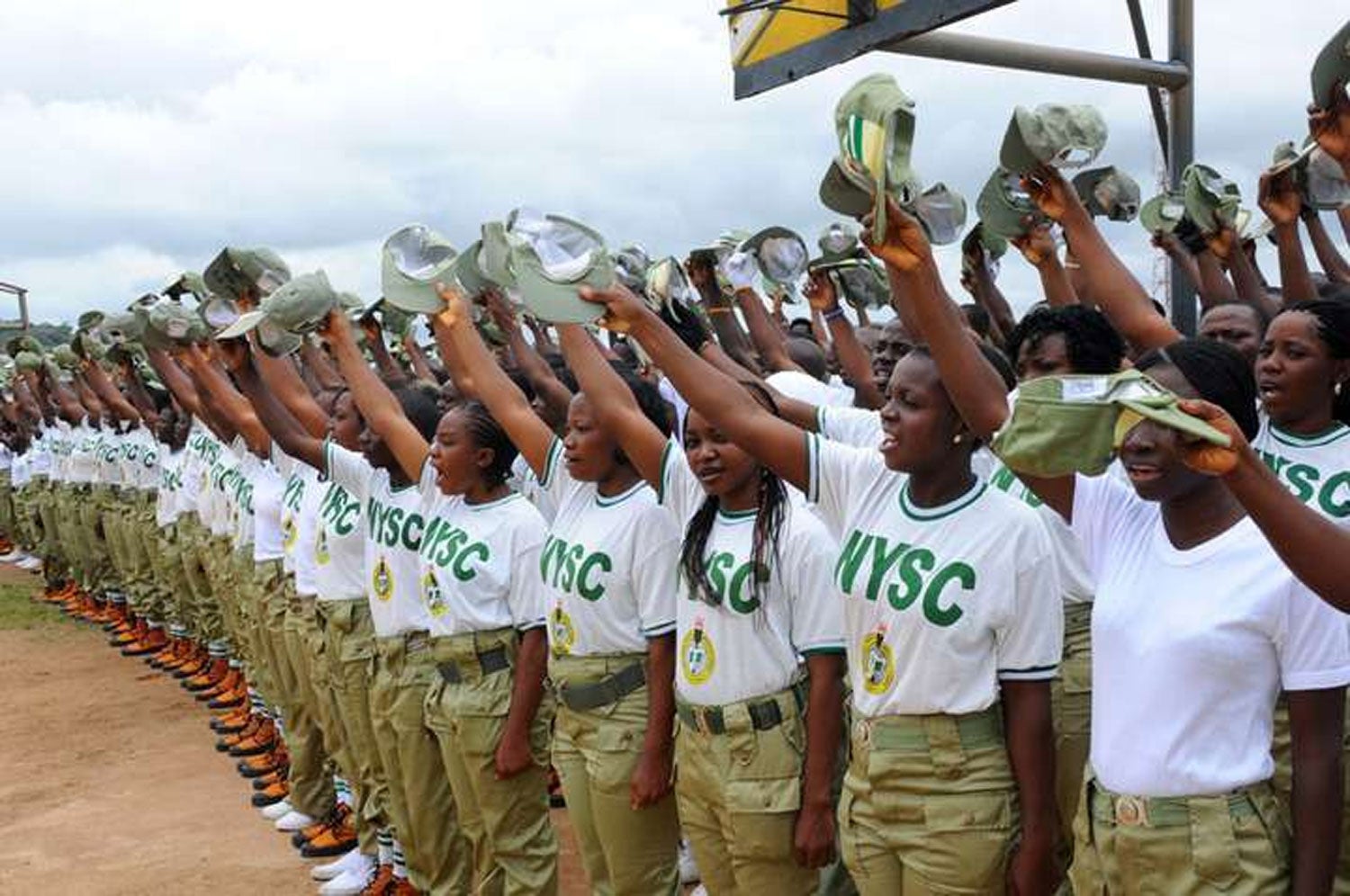
NYSC
The growing backlog of Nigerian graduates awaiting mobilisation for the National Youth Service Corps (NYSC) has become a silent but deepening crisis, one that reflects systemic planning failures and threatens to worsen youth unemployment and economic uncertainty.
Recent reports indicate that more than 500,000 graduates are currently waiting to be mobilised for the compulsory one-year service. The backlog cuts across several cohorts: about 78,000 graduates from 2022, 212,000 from 2023, 185,000 from 2024, and an additional 65,000 newly registered graduates in 2025. This accumulation is not incidental; it is the product of structural limitations and policy choices that have failed to keep pace with Nigeria’s expanding tertiary education system.
At the heart of the problem is the reduced mobilisation quota allocated to universities and polytechnics. While tertiary institutions now admit close to two million students annually and produce an estimated 600,000 graduates each year, the NYSC is only able to mobilise between 240,000 and 350,000 corps members annually. The gap is widening, and the consequences are becoming harder to ignore.
This situation exposes a clear lack of long-term planning. When the NYSC scheme was established in 1973, Nigeria’s population and university enrolment were a fraction of today’s figures. While population growth and expanded access to higher education were inevitable, investment in NYSC infrastructure has not followed the same trajectory. Orientation camps and related facilities that once catered for a few thousand corps members have seen little or no upgrade over decades, despite the surge in graduate output. It is unrealistic to expect outdated facilities and funding models to absorb the pressures of a vastly expanded system.
At Daily Trust, it is our views that the solution cannot rest with the NYSC alone. There must be a coordinated and deliberate planning framework involving key stakeholders such as the NYSC, the National Universities Commission (NUC), and administrators of universities and polytechnics. Admission figures are not speculative; they are known years in advance. With proper data sharing and collective planning, mobilisation targets and infrastructure needs can be anticipated rather than reacted to belatedly.
More importantly, the continued delay in mobilisation is unfair to graduates who have already endured prolonged academic calendars caused by repeated strike. Since national service is compulsory, the system has a duty not to further jeopardise the lives and prospects of young Nigerians by keeping them in limbo indefinitely.
The economic implications are severe. For many employers, the NYSC discharge certificate remains a basic requirement for employment. Delayed mobilization, therefore, blocks access to jobs, worsens youth unemployment and leaves thousands of graduates idle at a time when the country can least afford wasted human capital. Nigeria’s unemployment rate, particularly among young people, remains high, and policies that inadvertently trap graduates outside the labour market only compound the challenge.
There are also lingering concerns that recent increases in corps members’ allowances may be contributing to the slowdown. If funding constraints are part of the problem, the government owes Nigerians transparency. Was adequate budgetary provision made for the adjustment? Or is the delay an unintended consequence of fiscal pressures? Worse still, some fear that the backlog may serve as a quiet mechanism to reduce the number of new job seekers entering an already strained labour market. Such speculation, if left unaddressed, erodes trust in public institutions.
It is also worth recalling that the batch policy introduced about a decade ago, later expanded with multiple streams per batch, was intended to ease mobilisation challenges. If this framework can no longer cope with current realities, then it is clear that more fundamental reforms are required.
Encouragingly, the federal government unveiled a reform framework for the NYSC late last year, marking what has been described as the most comprehensive overhaul of the 52-year-old scheme. The Minister of Youth Development, Ayodele Olawande, said the draft framework seeks to modernise the scheme by prioritising skills development, strengthening governance, integrating digital innovation and improving post-service opportunities. He rightly acknowledged that the current structure no longer aligns with the evolving needs of the country or the professional capacities of Nigerian graduates, noting that deploying corps members to roles unrelated to their training represents a lost opportunity.
We observe that while these reforms are commendable, they will ring hollow if the backlog crisis is not addressed as part of the broader overhaul. Skills development and digital innovation mean little to graduates who cannot even begin their national service.
The government must, therefore, treat the mobilisation backlog as an urgent national problem. Revising the quota system, expanding and upgrading orientation camps, and aligning mobilisation capacity with graduation output are no longer optional. The cost of inaction is being paid daily by young Nigerians, tertiary institutions and the economy at large.
NYSC is one of the few enduring post civil war legacies. It must be supported to remain afloat.